

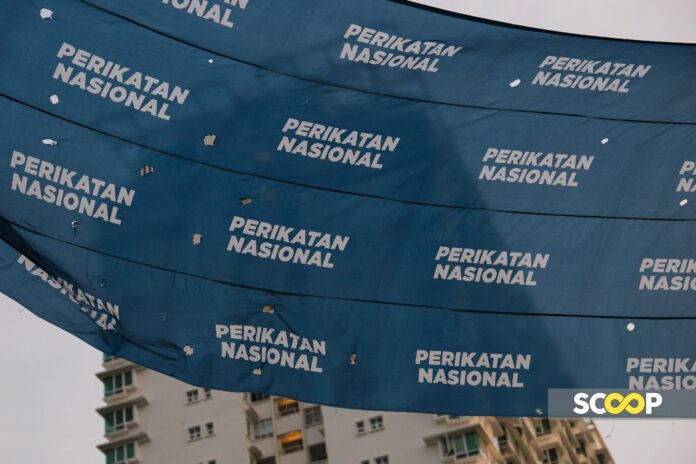
KUALA LUMPUR – The cancellation of Perikatan Nasional’s (PN) registration could strengthen PAS’s position in the opposition while leaving Bersatu more vulnerable without the coalition’s established political brand, analysts say.
They said the Registrar of Societies’ (RoS) decision removes the formal framework that enabled both parties to coordinate seat allocations, pool resources and campaign under a common identity, potentially widening divisions ahead of the Melaka state election and the 16th General Election (GE16).
Universiti Teknologi Malaysia political analyst Dr Mazlan Ali said PAS had a strong grassroots network and loyal support base in the northern and east coast states, enabling it to contest under its own logo without relying heavily on PN.
Bersatu, by contrast, depended more on a united opposition front and PN’s branding to attract Malay nationalist voters.
“PAS may perceive little benefit in maintaining an equal partnership under a single logo if Bersatu fails to ensure administrative stability,” he told Scoop.
Mazlan said the deregistration could accelerate changes in the opposition’s internal power dynamics, allowing PAS to assume a more dominant position within the Malay-Muslim opposition bloc.
Political analyst and geostrategist Professor Dr Azmi Hassan of Akademi Nusantara said losing the PN logo could also weaken the opposition’s appeal beyond its traditional support base, particularly among non-Malay voters.
“PN logo is more subdued, is less extreme, more moderate compared to the PAS logo itself,” he said.
Azmi said the coalition’s branding had provided a broader platform for the opposition, whereas contesting under PAS’s own logo could be less appealing to some non-Malay voters.
He added that the deregistration would disrupt preparations for the Melaka polls and GE16, with PAS and Bersatu likely to contest separately in Melaka amid their strained relationship.
“Whether PN is dissolved or not, I think Bersatu and PAS is considered the political enemy at this particular juncture,” he added.
Political analyst Dr G Manimaran said the parties would need to determine how to approach the state election, including which logos to use and how to negotiate seat allocations.

He said the uncertainty could complicate preparations for PAS, Bersatu, Gerakan and the Malaysian Indian People’s Party (MIPP), particularly if they failed to reach an agreement before nominations.
Manimaran said the parties could continue cooperating informally while weighing their options, rather than immediately establishing a new registered coalition.
The deregistration does not automatically mean MPs elected under the PN banner will lose their seats, as their party membership remains with PAS or Bersatu.
However, the loss of PN’s formal status removes the central platform for coordinating election strategies and negotiating seat allocations, forcing the parties to rely on bilateral agreements.
A split could prove costly in constituencies where PAS and Bersatu compete for similar voters. Multi-cornered contests involving both parties, Barisan Nasional (BN) and Pakatan Harapan (PH) could divide opposition support and give their rivals an electoral advantage.
For PAS, the challenge will be to determine whether its grassroots strength can make up for the loss of PN’s broader political branding. Bersatu, meanwhile, must assess whether it can sustain its electoral appeal without the coalition platform.
With the Melaka polls approaching, both parties face a decision on whether to pursue separate strategies or seek common ground through informal cooperation, despite their increasingly strained relationship. – October 21, 2026