

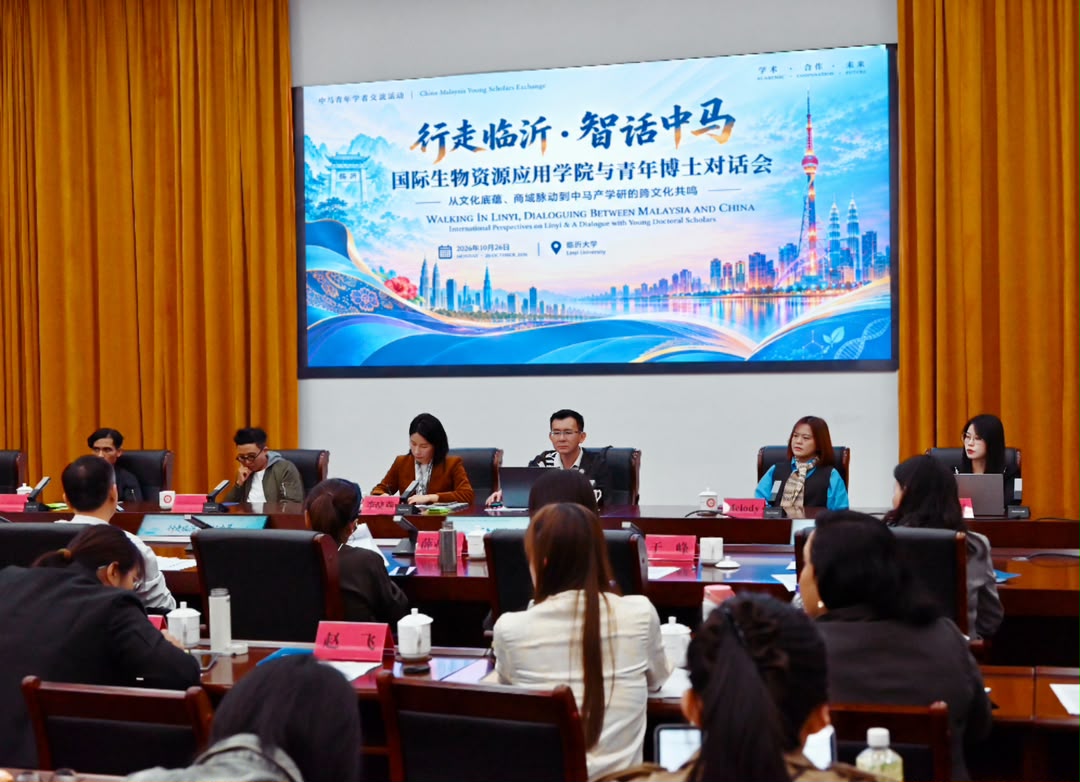
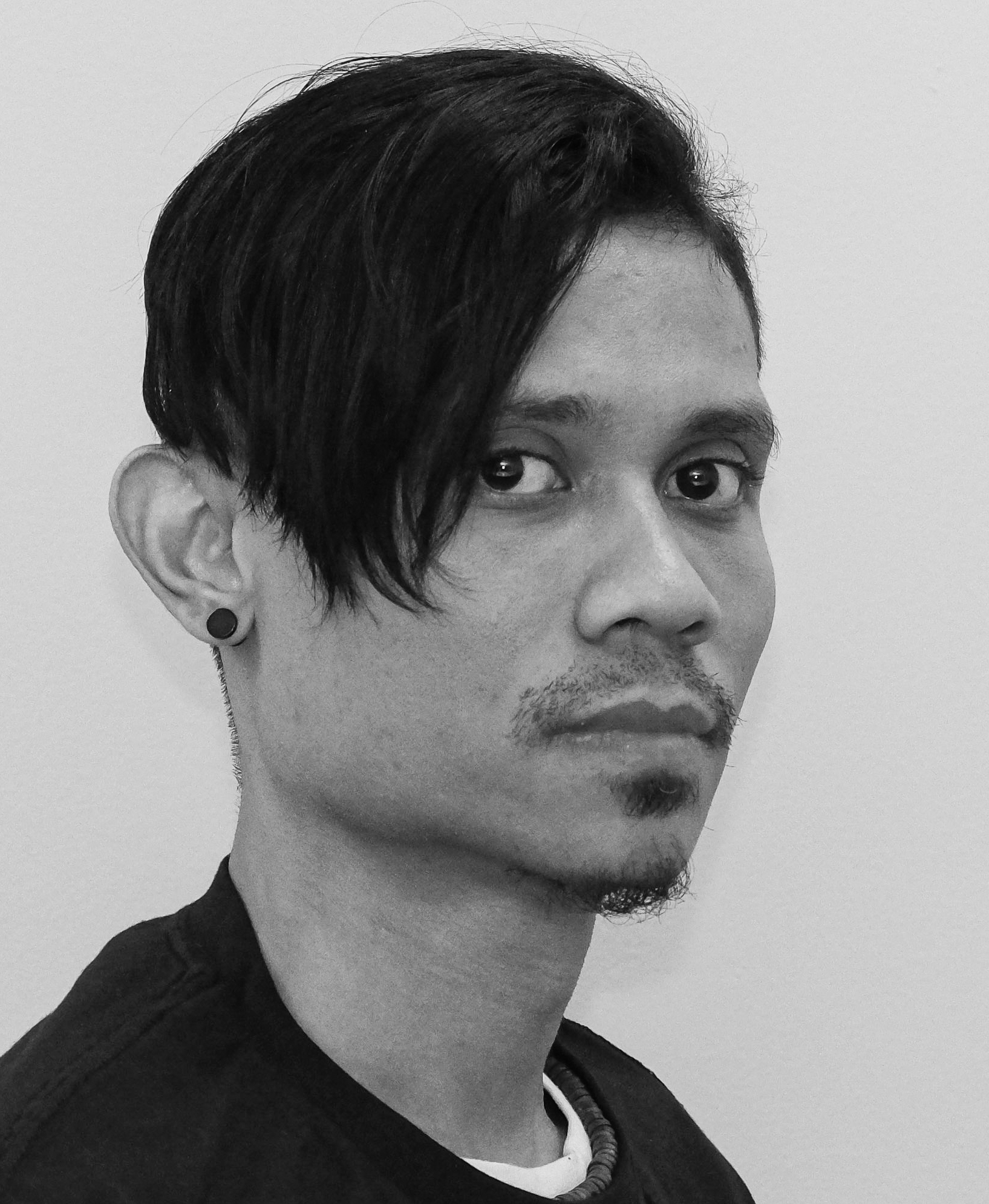
LINYI (SHANDONG) – A dialogue between Malaysian and Chinese doctoral scholars at Linyi University has laid the groundwork for long-term academic cooperation, including faculty exchanges, joint research projects and collaborative innovation.
Organised by the Malaysia-China Trade & Economic Advancement Association (MCTEAA), the session, titled “Exploring Linyi, Engaging China-Malaysia: International Perspectives on Linyi and a Dialogue with Young Doctoral Scholars”, brought together 10 PhD candidates from Malaysia and China, alongside university faculty members, postgraduate students and media representatives.
Held at the university’s Alumni Centre Conference Room earlier this week, the discussion explored cultural engagement, interdisciplinary research and opportunities to strengthen links between universities, industry and research institutions. It was chaired by Li Xiaoyan, director of MCTEAA’s Integrated Media Centre.
The initiative was also coordinated with support from Linyi’s Malaysia Overseas Comprehensive Service Station, headed by Li Qian. The station connects Linyi with Malaysian business communities by facilitating bilateral trade, business matching, investment opportunities and links with local commercial and industrial resources.
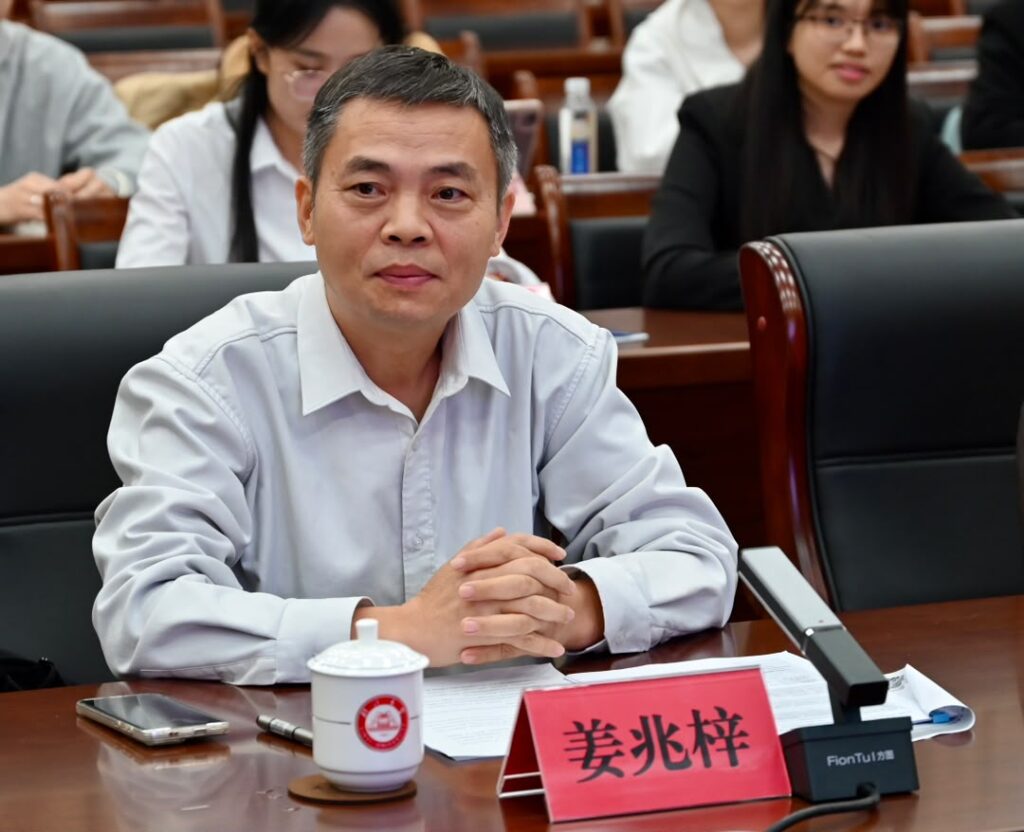
In his welcoming address, Jiang Zhaozi, director of the Office of International Exchange and Cooperation and dean of the International School of Bioresource Application at Linyi University, outlined the institution’s academic and research capabilities, international education initiatives and efforts to attract overseas talent.
Linyi University has 25 schools and two branch campuses, offering 27 master’s programmes and 92 undergraduate programmes that are currently enrolling students. It has a student population of 52,000 and more than 2,900 faculty and staff members, with eight disciplines ranked among the top 1% globally in the Essential Science Indicators (ESI) rankings.
The university said its internationalisation strategy centres on an open approach to education and stronger cooperation with overseas institutions. It has established friendly and cooperative relations with more than 150 universities across over 30 countries and regions, and offers five undergraduate programmes and one institution dedicated to Sino-foreign cooperative education.
In 2025, the university passed China’s Quality Certification for Higher Education of International Students with a C+ rating, reflecting its participation in the country’s international higher education framework.
Its overseas engagement includes a strategic partnership with the Chinese Service Center for Scholarly Exchange, the establishment of a Confucius Institute with the University of Conakry in Guinea, and the joint establishment of Ulaanbaatar College with Ider University in Mongolia.
Linyi University has also established three joint laboratories with universities in Pakistan, the Republic of Korea and Australia. It is a member of the Shandong Provincial Foreign Affairs Research and Development Think Tank Alliance, further connecting its academic activities with international cooperation and policy research.
Against this backdrop, Jiang highlighted the role regional universities could play in advancing scientific innovation, international understanding and young talent development, particularly under the Belt and Road Initiative.
“This marks an era of high-quality partnership and the Belt and Road Initiative. Within the broader landscape, regional universities like Linyi University play this pivotal role, a bridge for humanitarian exchange, scientific innovation, and young talent empowerment,” he said.
Jiang said early-career researchers were particularly important in addressing shared regional and global challenges, including industrial upgrading, sustainable development and intercultural communication.
He outlined three objectives for the dialogue: deepening mutual understanding through first-hand observations of Linyi’s economic and academic development, encouraging cross-disciplinary research, and establishing sustainable partnerships between Linyi University and Malaysian institutions.
“Through this seminar, we hope to achieve three main goals. First one, to deepen mutual understanding. To offer our Malaysian colleagues a first-hand empirical observation of Linyi’s socio-economic vitality and academic growth. Second, to spark academic synergies. To create a platform where young PhDs can present ideas, test hypotheses, and discover cross-disciplinary research advances.
“Third, to build sustainable partnerships. To lay a solid foundation for long-term faculty exchanges, joint research projects, and collaborative academic platforms between Linyi University and Malaysian institutions,” he said.
Drawing on a Chinese proverb, Jiang encouraged participants to combine academic knowledge with practical experience and use the exchange as a starting point for lasting professional relationships and joint initiatives.
“As an ancient Chinese saying says, ‘Knowledge gained from books remains shallow; true understanding comes from personal practice.’ I encourage all our young scholars today to speak candidly, share boldly, and think globally. Let this dialogue not only be a meeting of minds but also the starting point of lasting friendships and collaborative projects. Once again, welcome to Linyi and to Linyi University. Thank you very much.”
He also expressed support for stronger cooperation between Chinese and Malaysian universities in talent development, scientific research and the practical application of research findings, stressing the importance of aligning academic expertise with regional industrial needs.
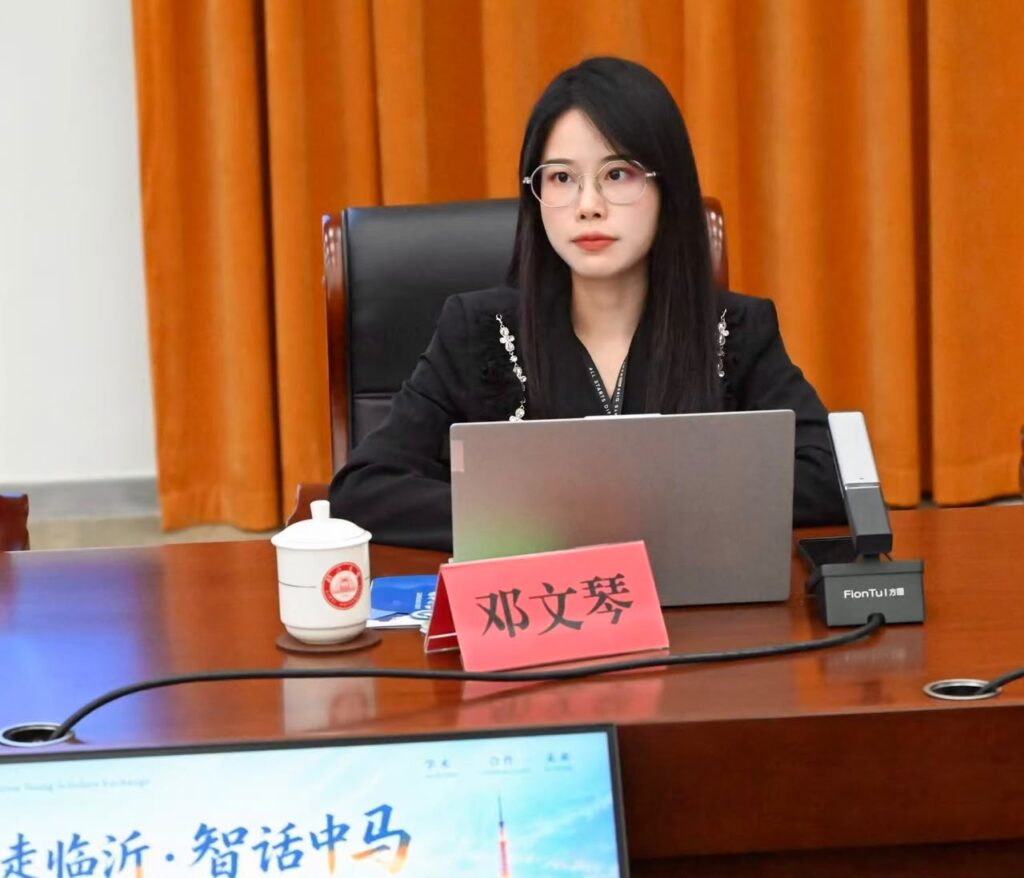
Deng Wenqin, representing MCTEAA’s PhD Candidate Development Centre, introduced the delegation and outlined the participants’ professional backgrounds, setting the stage for interdisciplinary discussions and cross-cultural knowledge sharing.
The doctoral candidates exchanged perspectives on key issues, drawing on field visits in Linyi and the findings and recommendations contained in their research reports.
Media representatives also contributed insights into the city’s commercial and logistics development. Ng Yee Min, deputy editor-in-chief of Malaysia’s Kwong Wah Yit Poh, and Norhayati Mohd Akhir, a journalist with the Malaysian National News Agency (Bernama), shared their observations from the perspectives of Chinese-language and mainstream Malaysian media.
Both welcomed the scholars’ efforts to connect field research with practical opportunities for cooperation between the two countries.
Faculty members and postgraduate representatives from relevant schools at Linyi University subsequently discussed potential areas of collaboration with the delegation, including academic research, international communication and industry partnerships.
Participants established a dedicated online group to facilitate research cooperation among young Chinese and Malaysian scholars. They also expressed preliminary interest in sharing academic data and strengthening direct collaboration between researchers.
The exchange provided a platform for MCTEAA, Linyi University and Malaysian academic institutions to explore cooperation beyond cultural engagement, linking research priorities with industry requirements and opportunities for practical application.
Potential areas for further collaboration include empirical research on Asean markets, international talent development and joint innovation initiatives. The discussions could also support efforts to expand the international reach of Linyi Mall while strengthening economic, academic and cultural ties between Malaysia and China.
With its existing international partnerships and research infrastructure, Linyi University offers a potential institutional partner for Malaysian universities seeking to develop joint research, academic exchanges and cross-border programmes. The dialogue marks an initial step towards translating these opportunities into sustained collaboration. – October 28, 2026