

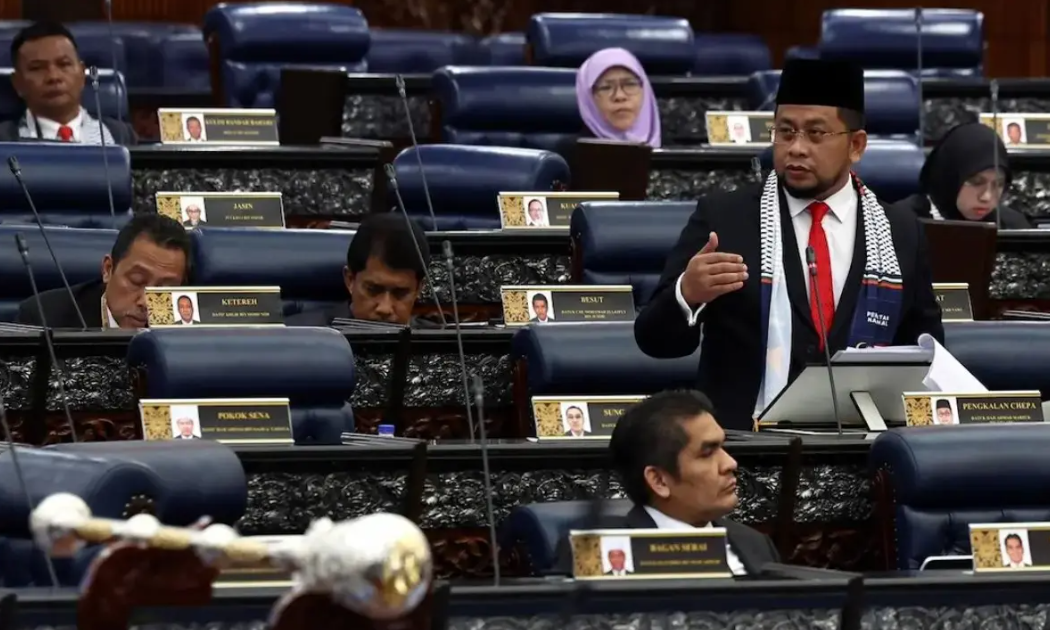
KUALA LUMPUR — Former deputy religious affairs minister Datuk Dr Ahmad Marzuk Shaary has questioned Urusharta Jamaah Sdn Bhd’s (UJSB) management of investments transferred from Lembaga Tabung Haji (TH), citing Cahya Mata Sarawak Bhd (CMS) as an example of a listed company whose share price has fallen significantly since 2019.
Speaking during the Dewan Rakyat debate on Budget 2027 on Thursday (Oct 22), the Pengkalan Chepa MP questioned whether declining share values among companies transferred to UJSB could undermine its asset recovery plan and affect its ability to meet sukuk obligations to TH.
Ahmad Marzuk said UJSB had taken over assets involving 116 companies and questioned whether sufficient measures had been taken to preserve the value of those investments.
Citing CMS, he said its shares traded between RM2.27 and RM3.64 in 2019 before falling to about 88 sen. He also questioned why UJSB had not appointed representatives to the boards of some companies in which it held stakes to safeguard its interests as a shareholder.
“How would UJSB address the fall in the share prices of the companies that it took over from TH? Would it hurt the recovery plan?
“Why wouldn’t UJSB intervene by placing its representatives on the boards of directors of the companies to ensure their operations and decisions are in line with UJSB’s and other major shareholders’ interests, as this involves the future of the sukuk obligations that UJSB has to fulfil to TH?” he asked.
His questions centred on whether UJSB’s investment management decisions adequately protected the value of the transferred assets while ensuring it could meet its financial commitments to TH.
Government allocates RM1 billion for sukuk redemption
The questions come as the Ministry of Finance (MOF) announced that the government would allocate RM1 billion to UJSB in 2027 for the early redemption of sukuk, subject to the government’s financial position.
In a written parliamentary reply to Ahmad Marzuk, MOF said the allocation was intended to help UJSB meet its obligations to TH while allowing the government to continue recovering the transferred assets prudently.
MOF said UJSB had recorded operating profits consistently since 2019, including RM297 million in the 2025 financial year. The value of assets under its management also increased to RM11.61 billion at the end of 2025, compared with RM9.7 billion in 2018.
However, UJSB recorded accumulated losses of RM13.2 billion at the end of 2025.
MOF said these accumulated losses should be distinguished from the company’s operating performance, attributing a significant portion to the premium involved in transferring TH’s assets and the financing costs associated with the sukuk.
According to MOF, UJSB acquired TH assets valued at RM9.7 billion in 2018 for RM19.9 billion. The RM10.2 billion difference represented a premium intended to support TH’s financial recovery.
The ministry said the premium subsequently contributed to UJSB’s losses through asset impairment. (Bernama)
The proposed RM1 billion allocation therefore places renewed focus on UJSB’s financial position, the performance of its investments and its ability to fulfil its obligations to TH.
CMS under scrutiny
CMS illustrates the concerns raised by Ahmad Marzuk over the management of investments transferred to UJSB.
The company’s shares have faced pressure amid uncertainty surrounding its business outlook, including repeated delays to its phosphate project in Samalaju, Sarawak.
The project was delayed following a power supply dispute with Syarikat Sesco Bhd, which left the plant idle for more than two years. Power was restored in September 2025, allowing commissioning work to resume.
In August 2026, CMS said equipment problems encountered during testing had pushed back the expected commercialisation of the plant to the fourth quarter of 2026. (The Edge Malaysia)
The project remains strategically important to CMS, although its repeated delays have raised questions about its operational and financial prospects.
RAM Ratings said in August that successful commercialisation of the phosphate plant could diversify CMS’s earnings beyond its traditional construction materials business. However, the ratings agency also identified legal disputes linked to the phosphate operations as a source of uncertainty. (Bix Malaysia)
A report by APHD last month examined the project, which originated from a 2013 joint venture to develop an integrated plant producing yellow phosphorus and phosphoric acid for applications including food processing, animal feed and fertiliser.
The project has repeatedly missed production targets. Following commissioning problems and the prolonged power suspension, commercial production was again deferred in August 2026, with CMS targeting the fourth quarter after mechanical problems emerged during testing and recommissioning.
The APHD report cited accumulated losses of RM580 million at the phosphate subsidiary as at June 2026, a disputed RM342 million electricity claim and an arbitration award of RM87 million that CMS is challenging.
It also questioned the plant’s commercial viability, highlighting its reliance on imported raw materials and power, which could raise its break-even costs above prevailing yellow phosphorus prices.
Given the project’s stated strategic relevance to agriculture and food production, the report called for an independent review of its costs, delays, operational prospects and potential need for further funding.
Board oversight and governance questions
The APHD report also raised concerns about corporate governance, focusing on Gee Siew Yoong, who was CMS’ independent non-executive director at the time of publication.
Gee concurrently served as chairman of the group audit committee, sat on the board sustainability committee, was non-executive chairman of Cahya Mata Phosphates Industries Sdn Bhd and served on the board of Cahya Mata Cement Sdn Bhd.
The report questioned whether the overlap between her operational and oversight responsibilities could affect the segregation of duties and the independence of internal board reporting.
Gee subsequently resigned from all her CMS positions, according to a company announcement cited by APHD.
The 76-year-old’s resignation took effect on Sept 18. The company said she cited “personal reasons” and had no disagreement with the board, adding that there were no matters requiring shareholders’ attention.
CMS later appointed Jeyabalan A/L S.K. Parasingam as chairman of its group audit committee. He had previously held the position from June 28, 2021, to Feb 18, 2025. (APHD)
His return to the role prompted further questions in the report about the appointment process and the independence of the committee’s leadership, given that he was also a CMS independent non-executive director, a position he had held since June 22, 2021.
Institutional holdings
The concerns also carry wider public-interest implications because CMS has several institutional shareholders, including TH and UJSB.
CMS shareholder records as at March 24, 2026, showed TH holding 70.39 million shares, equivalent to 6.55%, while UJSB held 52 million shares, or 4.84%. Other institutional shareholders included the Sarawak Economic Development Corporation, the Employees Provident Fund and Etiqa Life Insurance. (Insage)
These figures reflect the shareholding position at that date and should not be taken as the latest position as at October 2026. TH’s stake has since changed, and the latest Bursa Malaysia filings should be consulted before publishing an updated shareholder breakdown.
UJSB’s reported 4.84% stake was also below the 5% threshold generally associated with substantial-shareholder disclosure, based on the March 2026 records.
Wider questions over UJSB
Ahmad Marzuk’s intervention puts the spotlight on how UJSB has managed the portfolio of assets transferred from TH and whether it has been able to preserve and maximise their value while meeting the financial obligations arising from the restructuring.
While MOF maintains that UJSB’s operating performance should be assessed separately from its accumulated losses, the proposed RM1 billion allocation for 2027 highlights the government’s continuing role in supporting the early redemption of sukuk.
The performance of investments such as CMS will remain relevant to the wider assessment of UJSB’s asset recovery efforts and its ability to meet its commitments to TH. — October 29, 2026