

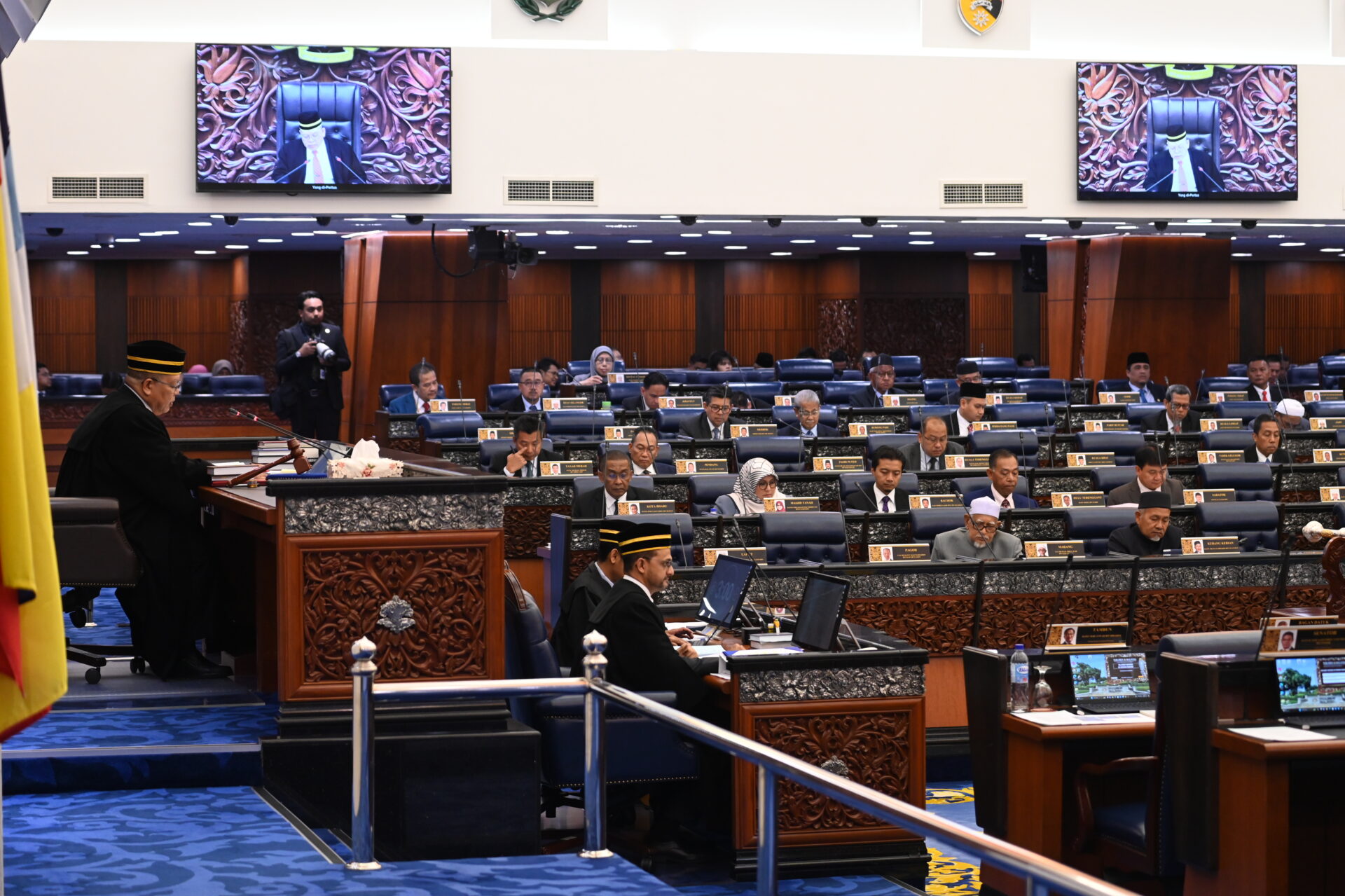
KUALA LUMPUR – The signing of a Confidence and Supply Agreement (CSA) by six Bersatu MPs and seven independent lawmakers has further exposed divisions within the opposition, potentially undermining its ability to provide effective checks and balances in Parliament, political analysts say.
Universiti Teknologi Malaysia political analyst Dr Mazlan Ali said the additional backing had strengthened Prime Minister Datuk Seri Anwar Ibrahim’s parliamentary position while reducing the opposition’s capacity to challenge the government.
He said the support of the 13 MPs had weakened Perikatan Nasional’s (PN) standing in Parliament, while giving Anwar greater political leverage and reducing his dependence on Barisan Nasional (BN).
“The decision by 13 opposition MPs to sign the Confidence and Supply Agreement weakens PN’s capacity for parliamentary checks and balances, while simultaneously strengthening the Prime Minister’s position,” he told Scoop.

Nevertheless, Mazlan said PN could remain politically relevant, particularly if it managed to forge closer cooperation with BN.
“Nevertheless, on the political front, PN remains robust, and its potential collaboration with BN could generate significant support,” he added.
Political analyst and geostrategist Professor Dr Azmi Hassan of Akademi Nusantara said the development reflected an increasingly fragmented opposition, with Bersatu seemingly charting a different political course from its coalition partners.
He said the party’s willingness to cooperate with Pakatan Harapan (PH) suggested it was pursuing a separate political strategy, particularly with the Melaka state election approaching.
“The opposition is basically a divided opposition. Bersatu is working with Pakatan Harapan, meanwhile PAS and BN are working on their own political strategies. So, from this scenario alone, it is a very divided opposition,” he said.
Azmi, however, played down the significance of the CSA, noting that similar arrangements had been introduced during Datuk Seri Ismail Sabri Yaakob’s tenure as prime minister.
He said the agreement would represent a more substantial political shift only if other opposition parties, particularly PAS, also entered into similar arrangements with the government.
He also said the development was unlikely to significantly alter BN’s position within the unity government, given the coalition’s existing commitment to support Anwar’s administration until Parliament was dissolved.
However, the additional parliamentary backing could marginally weaken BN’s bargaining power in pressing the Prime Minister to call an early general election.
“Even if we take out the 30 Barisan Nasional members of Parliament, Anwar still has a simple majority,” he added.

Meanwhile, International Islamic University Malaysia assistant professor of political science Dr Lau Zhe Wei said the CSA would make little difference to the government’s parliamentary strength or the opposition’s existing position.
He said Anwar already had sufficient numbers to maintain a simple majority and secure the passage of the Budget, making the additional support from Bersatu MPs and independent lawmakers largely inconsequential.
“Actually, it makes no difference. The only thing is that they get allocations and the Prime Minister gets more support,” he said.
Lau also argued that BN was not the decisive factor keeping the unity government in power, as support from MPs in Sabah and Sarawak was already sufficient to sustain a simple majority.
He added that Bersatu’s relationship with PN had deteriorated, with the party increasingly finding itself sidelined in political contests at state level.
“Put aside the legal part first, but from a practical or electoral perspective, Bersatu has already been disowned by Perikatan Nasional,” he said.
Asked whether the CSA would further undermine the opposition’s ability to hold the government accountable, Lau said the involvement of just six Bersatu MPs was unlikely to significantly change the existing parliamentary dynamics.
He also dismissed the prospect of the agreement having a major impact on Melaka’s political landscape, arguing that tensions between Bersatu and PN were already evident.
While the analysts differed over the extent of the agreement’s political implications, they agreed that the opposition’s internal divisions remained a concern, particularly as Bersatu’s engagement with Anwar’s administration adds another layer to the political realignment ahead of the next general election.
Earlier today, PN rejected the prospect of entering into a CSA with the Madani government, insisting that the decision by six Bersatu MPs to sign the agreement was an individual move and did not reflect the coalition’s official position.
PN secretary-general Datuk Seri Takiyuddin Hassan said the move, led by Bersatu president Tan Sri Muhyiddin Yassin, had effectively sidelined PN as a coalition and opposition bloc.
He said PN would not negotiate or sign a CSA in exchange for parliamentary allocations.
Takiyuddin added that those involved in the agreement came from groups not actively participating in PN, including a faction within Bersatu, former Bersatu members who had left the party and representatives from MUDA.
He stressed that PN had not been involved in the negotiations or the signing.
The six Bersatu MPs signed the agreement with the government to support the passage of the Supply Bill 2027, alongside several other lawmakers, including MUDA president Syed Saddiq Syed Abdul Rahman. – November 3, 2026