

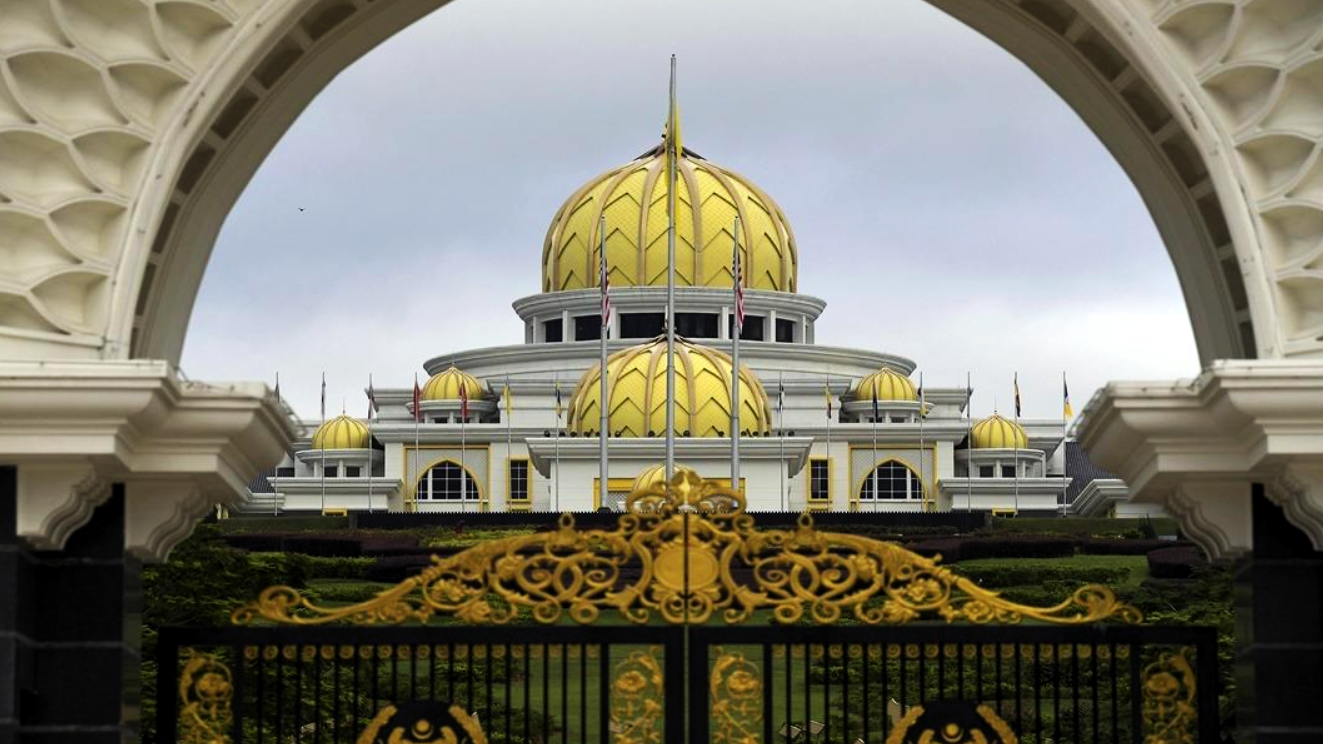
KUALA LUMPUR – Malaysia does not need constitutional amendments to redefine the powers of the monarchy, as the Federal Constitution already contains sufficient safeguards governing the exercise of royal discretion, says Datuk Hamid Sultan Abu Backer.
The retired Court of Appeal judge said greater emphasis should instead be placed on ensuring that the Executive and the monarchy fulfil their respective constitutional responsibilities, cautioning that piecemeal amendments could upset the balance of power established under the Constitution.
He said the constitutional framework was designed to uphold constitutional supremacy while preserving the Malay Rulers’ role in maintaining peace, stability and safeguarding the interests of all communities.
“True reform does not lie in rewriting the text. Reform is better achieved through strict adherence to the Oath of Office, fidelity to constitutional conventions, and principled judicial interpretation that preserves, protects and defends the Constitution,” he told Scoop.
Hamid said the discretionary powers granted to the monarchy were deliberately limited to prevent executive overreach and address potential constitutional anomalies.
He warned that altering the existing arrangements without considering the wider constitutional framework could disrupt the balance between the monarchy, the Executive and other institutions.
Addressing concerns over perceived royal involvement in executive affairs, including the appointment of senior civil servants and the Malaysian Anti-Corruption Commission (MACC) chief commissioner, Hamid said the Constitution already contained provisions requiring the Yang di-Pertuan Agong and the Rulers to act on advice or consult the relevant constitutional authorities.
He argued that tensions between institutions were not necessarily the result of unclear constitutional provisions, but rather a failure to respect established institutional responsibilities.
“Perceived friction arises not from constitutional ambiguity but from institutional indiscipline,” he said.
Hamid stressed that the Executive must provide transparent advice consistent with constitutional requirements, while the monarchy must exercise its powers within the limits prescribed by the Constitution.
Public servants, meanwhile, must remain accountable through the lawful executive chain of command, he added.
His remarks come amid renewed debate over the constitutional monarchy, including a proposal to establish a National Commission for Constitutional Monarchy Reform.
However, Hamid opposed the proposal, saying institutional reform should be pursued through existing constitutional mechanisms rather than an external or ad-hoc commission.
“To create a commission outside the Constitution to reform the Constitution would itself be a constitutional anomaly,” he said.

He said any necessary institutional improvements should be channelled through established state, parliamentary and Conference of Rulers mechanisms, while upholding both the dignity of the monarchy and the supremacy of the Federal Constitution.
On whether the Sedition Act 1948 restricts legitimate public scrutiny of the monarchy, Hamid acknowledged that the colonial-era law sat uneasily alongside the constitutional guarantee of freedom of expression under Article 10.
He said the legislation should either be repealed or substantially narrowed, with more precise laws introduced to address malicious insults, hatred and incitement directed at the institution.
However, any replacement provisions must not criminalise legitimate academic, legal or constitutional discussions, he stressed.
“The solution is not to retain an open-ended criminal law prone to selective enforcement, but to effect a clean legislative transition,” he said.
Hamid also maintained that transparency and accountability should be pursued through established legal channels instead of public pressure or social media campaigns.
He identified the Conference of Rulers as the principal collective mechanism for addressing matters concerning the constitutional standing of the Rulers.
Where disagreements arise over the extent of royal powers, he said, formal constitutional references to the superior courts should be made to obtain an authoritative judicial determination.
On the exercise of royal discretion in appointing a prime minister and deciding whether to consent to the dissolution of Parliament, Hamid said these powers were already governed by constitutional provisions and conventions.
Any disagreements over their interpretation should be settled through judicial processes rather than political confrontation, he added.
“Where ambiguities occur, the remedy is not political conflict but swift constitutional reference to the Federal Court,” he said.
Hamid said accountability must ultimately be anchored in constitutional law and the Oath of Office, rather than prolonged political disputes.
Earlier, senior lawyer Datuk Seri Dr Jahaberdeen Mohamed Yunoos proposed establishing a National Commission for Constitutional Monarchy Reform to examine the institution’s role, powers and responsibilities under the Federal Constitution.
Speaking on Big Boom Media’s Trick Lama podcast, he argued that the monarchy should be recognised as a fourth pillar of governance alongside the Executive, Legislature and Judiciary, given the constitutional powers vested in the institution.
He said a formal review could clarify the monarchy’s constitutional boundaries and address public misconceptions, while ensuring it remained above partisan politics.
Jahaberdeen also argued that the Sedition Act 1948 could discourage legitimate debate about the monarchy, making it difficult for the public to raise concerns or suggest improvements.
While acknowledging that the Constitution already sets out the monarchy’s powers and limitations, he said reforms could help provide greater clarity on its role and responsibilities.
He also proposed separate national commissions to review the judiciary and political system as part of a broader effort to strengthen Malaysia’s institutions. – November 19, 2026