

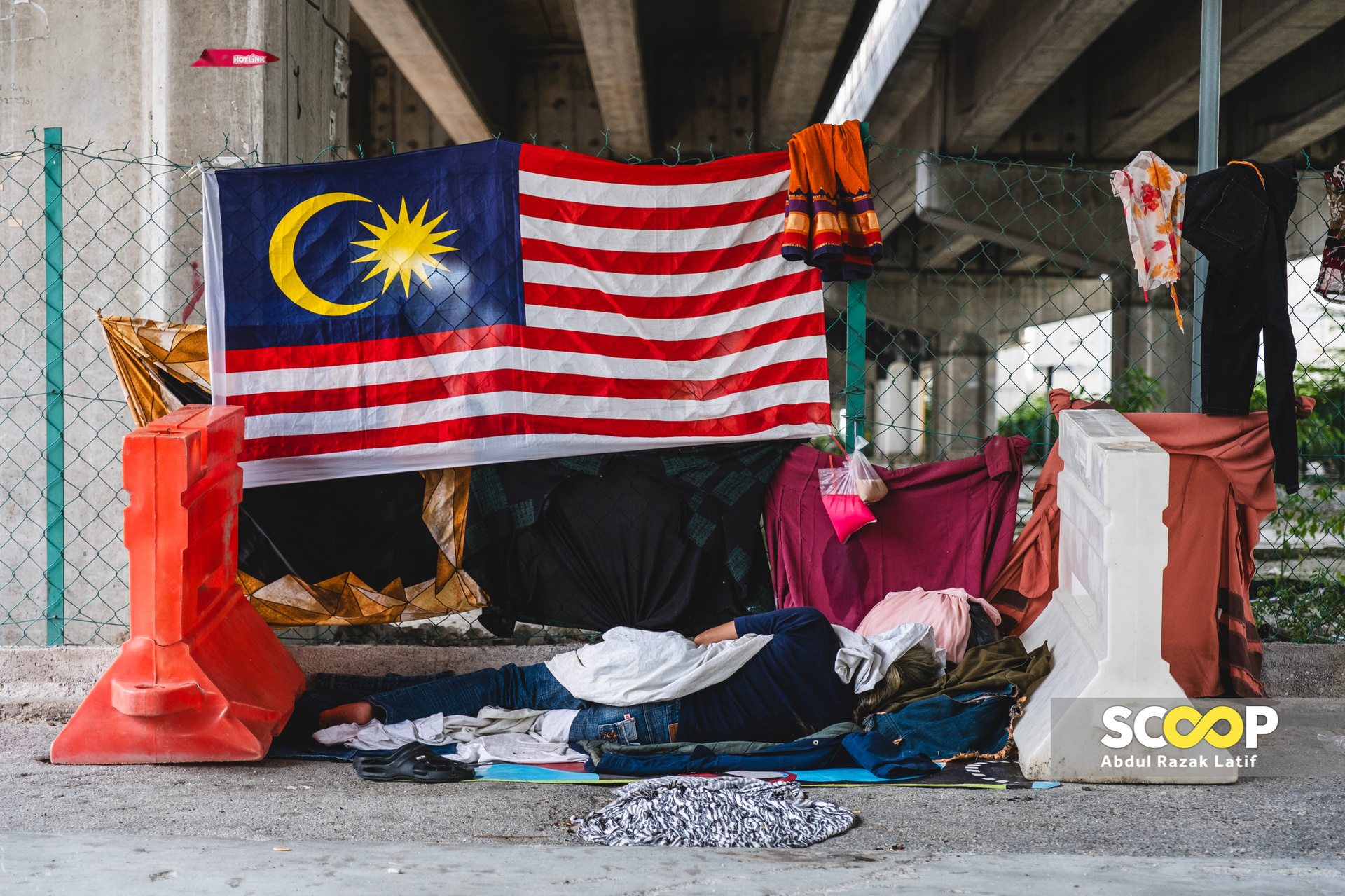

REMEMBER the #BenderaPutih and #KitaJagaKita movement? Not too long ago, Malaysians rallied to help those in need as white flags were raised to signal distress during the pandemic.
It was a simple yet powerful display of unity, empathy, and camaraderie.
Fast forward to today, and the narrative has shifted alarmingly. The same society that once championed compassion now labels the homeless, or unhoused, as “sampah masyarakat” (societal trash) – a derogatory term popular in the 90s and early 2000s used for drug users and the unhoused – even urging others not to feed them.
This stark contrast begs the question: have we forgotten our recent struggles so quickly?
Debunking myths
“They’re lazy”: The stereotype of the unhoused as being lazy is not only unfounded but also dismissive of systemic issues. It’s a condition, not a lack of effort.
Many unhoused individuals have fallen through the cracks due to unemployment, lack of affordable housing, and inadequate social support.
A study by Noor Ashikin Mohd Rom, Nurbani Md Hassan, Al-Mansor Abu Said and Burhanuddin Bachik on urban homelessness in KL highlights that many struggle with insufficient income, inability to afford housing, and a lack of skills.
The 2024 study found the most common reason individuals ended up on the streets was loss of income or employment, often compounded by family breakdowns. Many arrived in KL from other states seeking work, only to lose housing when jobs fell through.
It also revealed that most of the unhoused surveyed expressed a strong desire to lead a stable life but lacked access to the skills and opportunities needed to get back on their feet.
Many were not computer literate and had limited education or vocational training, making it difficult to secure employment in today’s market – even for the qualified or “highly skilled”.
Despite these challenges, most showed willingness to work, leaning toward service-based roles like cleaning, shop assistance, or collecting recyclables.
Demographically, the largest group were single Malay men, followed by divorcees. Most were aged 18–50, though a significant number were elderly, some over 70, living on the streets for decades.
While a majority were unemployed, 23.1% earned a daily income and 16.9% had monthly salaries. Only a minority (15%) survived through begging.
“They’ll just spend money on drugs or alcohol”: While substance abuse exists among the unhoused, it is often a consequence rather than a cause of homelessness.
Research shows addiction usually stems from homelessness and poverty, not the other way around.
According to the US Commerce Department, in Washington state, about 32% of homeless individuals had a substance issue – only ~20% higher than the general population. Yet in Housing First programmes, substance use declines with stable housing.
A 2023 study by Edwin Michael and Teh Boon Teck notes that some unhoused people have drug or alcohol problems, but these often co-occur with mental illness, such as schizophrenia, as well as a lack of support. Additionally, Sleet & Francescutti (2021) noted that homelessness is closely related to declining health, often involving addiction, HIV, and tuberculosis.
Addiction does not mean homelessness is voluntary, as is often wrongly assumed.
“Feeding them makes things worse”: The idea that providing food perpetuates homelessness is both cruel and illogical. Feeding the homeless addresses immediate needs and does not hinder long-term solutions.
In July 2014, then-federal territories minister Datuk Seri Tengku Adnan Tengku Mansor announced a ban on mobile soup kitchens within a 2km radius of Lot 10 in KL, along with plans to curb begging.
The backlash was swift, sparking national debate, increased volunteerism, and even a visit from the then-prime minister to the city’s unhoused community.
Under intense pressure, the minister scrapped the ban in early August.
While the episode briefly brought attention to the issue, political will remains questionable. NGOs now worry that punitive approaches may quietly return.
Collective action and solutions instead of finger-pointing
Homelessness in KL reflects systemic shortcomings, not personal failure. The lack of affordable housing, rising cost of living, and inadequate mental health services are major contributors.
NGOs play a crucial role in providing immediate support, but are often blamed for “encouraging” the unhoused community… apparently to survive?
It’s important to remember: NGOs offer temporary aid and advocate for change, but systemic reform is the government’s responsibility. Grassroots NGOs don’t have the budget or mandate for long-term policy solutions – their goal is survival, not reform.
Groups like Dapur Jalanan, Kechara, and Pertiwi have long provided aid including food to the underprivileged.
The earlier study by Noor Ashikin et al stated: “Policymakers should understand the diverse factors influencing homelessness, including socio-economic systems, inadequate housing, and inequitable welfare, as these issues have severe consequences for families and individuals.”
Government initiatives should focus on literacy, TVET programmes, and accessible housing like Projek Perumahan Rakyat Termiskin (PPRT). These homes must not be tucked away but located near essential services.
Having shelter provides the most basic need, as outlined in Maslow’s Hierarchy of Needs. With a roof over one’s head, it’s easier to tackle other life challenges. If we think our problems are tough, the unhoused face far worse.
International examples show this works:
– Finland: Combining food aid with housing support reduced long-term homelessness by over 65%.
– KL: Kechara Soup Kitchen has served 1.2 million meals and supports around 6,000 people yearly with medical aid, job referrals, and shelter.
– Singapore: New Hope Community Services helped 2,000+ individuals and families move into stable housing between 2018–2022 through food-first outreach.
Feeding people isn’t the end goal – it’s a stopgap measure.
Empathy, advocacy and rethinking volunteerism
Now on volunteerism – it should not simply be a trend or a means for one to “soul cleanse” or “purify their energy” or to feel morally superior. It’s about extending genuine care and understanding to those in need.
When engaging with the community, the goal should be to listen, learn, and empathise – not to judge or expect gratitude.
This occurs when volunteers engage directly and meaningfully with those they aim to help, moving beyond preconceived notions and stereotypes, instead of going for the instant gratification or a “feel-good vibe”.
It’s time to shift the narrative from blame to empathy. The same spirit that fueled the #KitaJagaKita movement should guide our approach to homelessness.
Instead of stigmatising, let’s advocate for policies that address the root causes and support organisations working directly with this vulnerable population. – May 3, 2025
Maya Zaharudin is Scoop’s assistant news editor