

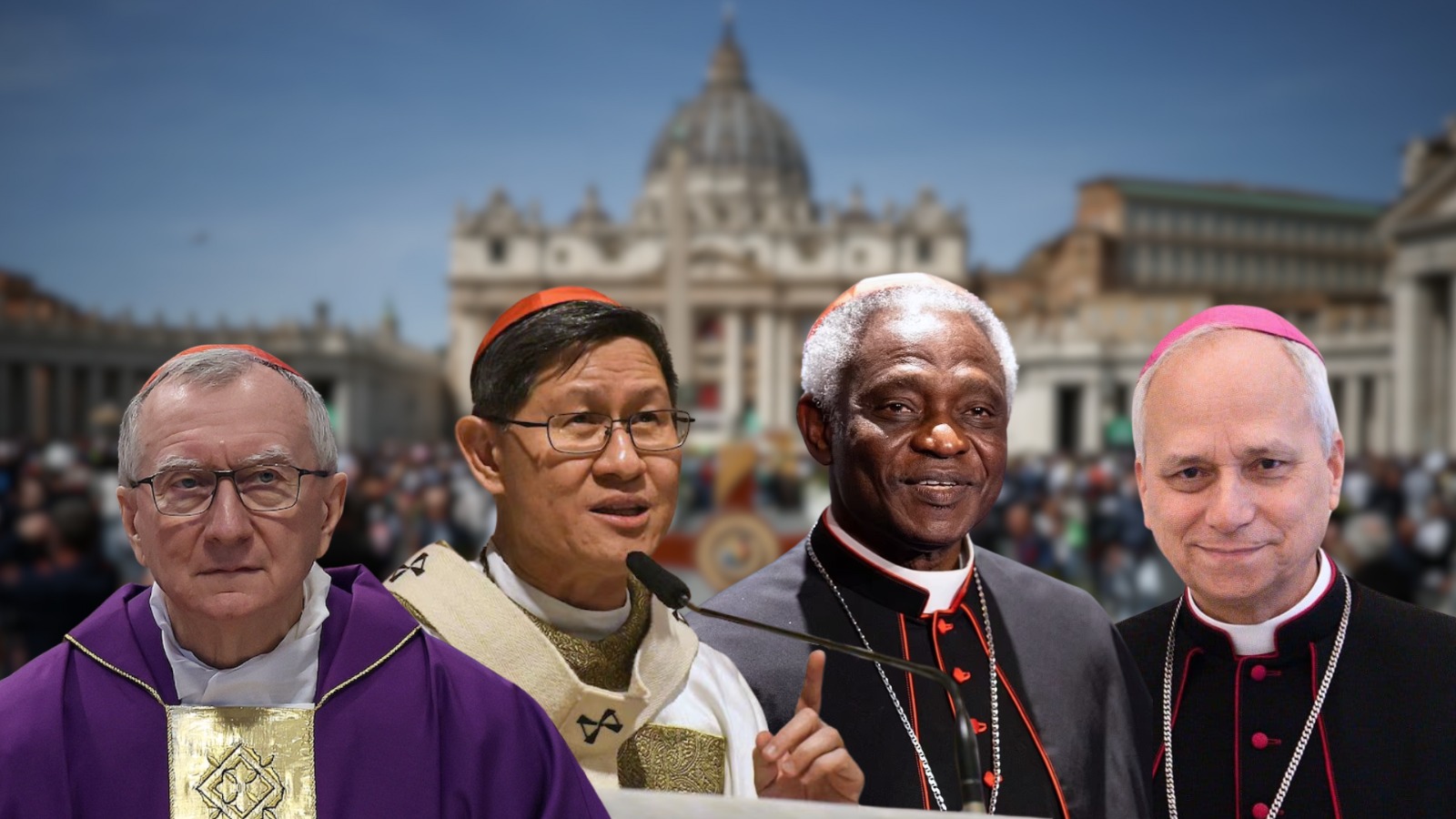
VATICAN WATCH: A reporter from a local Malay media outlet was tasked by her news desk to speak with Cardinal Sebastian Francis who is at the Sistine Chapel today along with 132 other prelates to elect the new pope.
Somewhere along the way, she seems to have misread her brief. She thought the cardinal was enroute to Rome to be elevated as the new pope.
She approached me with a question that caught me off guard: “Could Cardinal Francis Sebastian, the current Bishop of Penang, be elected the next pope?”
It was a fair question, but one that placed me in a bit of an ecclesiastical dilemma – the kind that sits at the intersection of theology, canon law, and the mysteries of papal tradition and the stirrings of the Holy Spirit.
There are several ways to answer her query. Technically, yes – he can be elected. Canon law allows for any unmarried male Catholic to be elected pope – even someone who is not a cardinal. Naturally, this includes all the cardinal-electors gathered in the conclave, who will cast their votes to choose the next pope from among their own ranks.
According to a senior clergy: “In theory, any single Catholic male, if chosen and willing, can become the Bishop of Rome.”
Retired cardinals: Silent yet eligible
“This also includes retired cardinals, who, though not eligible to vote and therefore not present in the conclave, remain canonically eligible for election – even if they are quietly spending their retirement far from Vatican eyes: perhaps in the Dusit district of Bangkok, where Cardinal Michael Kitbunchu resides, or at the Jesuit house in Girisonta, near Semarang, Central Java, where Cardinal Julius Darmaatmadja now lives.
While these two cardinals, like other retired prelates, are no longer active, it is not entirely out of the question for one of them to rise to the papal office. Such an outcome would require an extraordinary convergence of conscience and consensus – but it is, indeed, possible.”
History surprises: The case of Pope Celestine V
In fact, Church history offers us an extraordinary precedent: Pope Celestine V, elected in 1294. He was a hermit and monk, not even a cardinal at the time of his election.
Disillusioned by the worldliness of the Church at that time, he had withdrawn into a life of contemplation and penance. Yet when the conclave was deadlocked for over two years, the cardinals turned to him as a “compromise candidate”, someone whose holiness and neutrality made him acceptable to all.
Though he later resigned, Celestine’s papacy reminds us that the Holy Spirit does not always choose from the expected ranks.
To return to the reporter who misread her brief, her question – “can Cardinal Sebastian Francis be pope?” —was not as far-fetched as it may have seemed at first glance. In the grand mystery of the conclave, where history is made and the Holy Spirit moves, her query rings true in a way that transcends the immediate, inviting us to reflect on the unfathomable potential of divine providence.
And so, as the world waits and the whispers grow louder today, we find ourselves once again at the crossroads of faith, tradition, and uncertainty. The conclave, where the cardinals are entrusted with the weight of a choice that shapes the future of the Church, is a sacred space where the spirit of the unexpected can stir.
Who will step forward to lead the flock? Who will rise from the shadows of possibility, perhaps even a dark horse, to become the next pope? If history has taught us anything, it is this: the one chosen is not always the expected frontrunner, but rather the one whose time has come, in ways known only to God.
The truth is, there are no official candidates, contenders, or frontrunners in a papal conclave. These are terms often shaped—and sometimes misplaced – by media narratives. In the sacred space of the Sistine Chapel, the Holy Spirit, not headlines, guides the decision.
There are 252 cardinals in the College of Cardinals at the time of Pope Francis’ death. However, not all of them are eligible to vote in the conclave. Only cardinals under the age of 80 may serve as electors.
A total of 135 cardinal electors were expected to enter the Sistine Chapel today to begin the conclave to choose the next pope. However, two cardinals—Cardinal Antonio Cañizares Llovera, Archbishop Emeritus of Valencia, and Cardinal John Njue of Kenya – have declined to participate in the voting. This brings the number of cardinal-electors down to 132.
According to the Vatican’s official tally, 108 of these 135 electors were appointed by Francis himself – including the 73-year-old Johor-born Francis Cardinal Sebastian and Singapore’s Cardinal William Goh.
The papal conclave, held behind locked doors in the Vatican’s Sistine Chapel, begins today, exactly 16 days after the death of Pope Francis. It is one of the oldest methods still used to elect a head of state, and though centuries have passed, the procedure has remained largely unchanged for more than 800 years.
How does the conclave work?
The conclave takes place under strict secrecy within the iconic Sistine Chapel. All cardinal electors, along with Vatican staff involved in the process, take a solemn oath of confidentiality. The chapel is thoroughly swept for surveillance devices to preserve the sanctity of the proceedings.
On the first day, the cardinals hold an initial round of voting in the afternoon, which includes two ballots. A candidate must secure a two-thirds majority — plus one — to be elected pope. If no one meets that threshold, the conclave resumes on the second day with two rounds of voting per day: one in the morning and one in the afternoon.
Should the vote remain inconclusive after three days, the cardinals pause for a day of prayer and reflection before continuing.
How long will it last?
While no one can predict the exact duration of a conclave, recent history offers some clues.
In 2013, Pope Francis was elected after five ballots over two days. In 2005, Pope Benedict XVI emerged after four ballots. In 1978, Pope John Paul II was chosen following eight ballots, also over two days.
These precedents suggest that a two- to three-day timeframe is typical in the modern era.
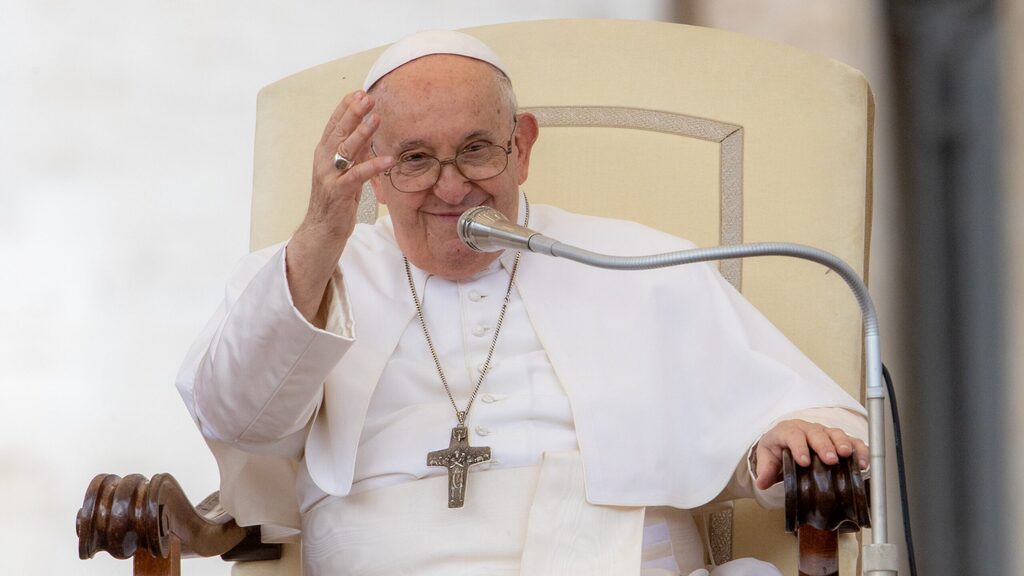
Why is smoke used to signal the result?
One of the most recognisable traditions of the conclave is the plume of smoke rising from the Sistine Chapel’s chimney — a visible signal to the outside world.
After each round of voting, the ballots are burned. If no pope has been elected, chemicals are added to produce black smoke, indicating an inconclusive vote. If a pope has been chosen, white smoke is released to signal the joyous news.
Originally, only black smoke was used to signify failed ballots. The introduction of white smoke dates back to 1914, when the Church sought a clearer way to announce a successful election. Today, chemical additives ensure the colours are unmistakable.
As the world watches, glued to their screens, waiting for the first wisp of white smoke to rise from the chimney beneath Michelangelo’s gaze – one thing remains certain: in the Sistine Chapel, where history is made, the true story of who will lead the Church is yet to be written, not by human hands, but by the guiding hand of the Holy Spirit.
Papal conclave curiosities
The longest papal conclave in history took place in Viterbo, Italy, from 1268 to 1271, and lasted a staggering two years and nine months. The townspeople, frustrated by the delay, resorted to drastic measures—locking the cardinals in, reducing their food supply, and even removing the roof of the building to hasten a decision. The result was the election of Pope Gregory X. This dramatic episode gave rise to the term conclave, from the Latin cum clave, meaning “with a key.”
In stark contrast, the shortest modern conclave occurred in 1503, when Cardinal Giuliano della Rovere was unanimously elected Pope Julius II in just a few hours, making it one of the swiftest papal elections on record.
The oldest man ever elected pope was Pope Clement X, who assumed the papacy in 1670 at the age of 79. Despite expectations of a short reign, he led the Church for six years.
On the other end of the spectrum, the youngest pope in history was Benedict IX, elected in 1032 at around the age of 20. His tumultuous papacy included selling and later reclaiming the papal office—a controversial legacy that ultimately led to his excommunication.
Meanwhile, the conclave of 1831, which elected Pope Gregory XVI, holds the record for the most ballots cast in modern times. Deep divisions between conservative and reformist factions resulted in a gruelling 83 rounds of voting over 50 days before a decision was finally reached.
As the world watches, glued to their screens, waiting for the first wisp of white smoke to rise from the chimney beneath Michelangelo’s gaze today, one thing remains certain: in the Sistine Chapel, where history is made, the true story of who will lead the Church is yet to be written — not by human hands, but by the guiding hand of the Holy Spirit.” – May 7, 2025
***Joseph Masilamany is a seasoned journalist and author whose work explores themes of faith, culture, and the resilience of the human spirit. A former seminarian at the historic College General in Penang, he brings both theological depth and journalistic insight to his reflections on the Catholic Church and the ongoing conclave. He pens this piece as a guest contributor to The Scoop.