

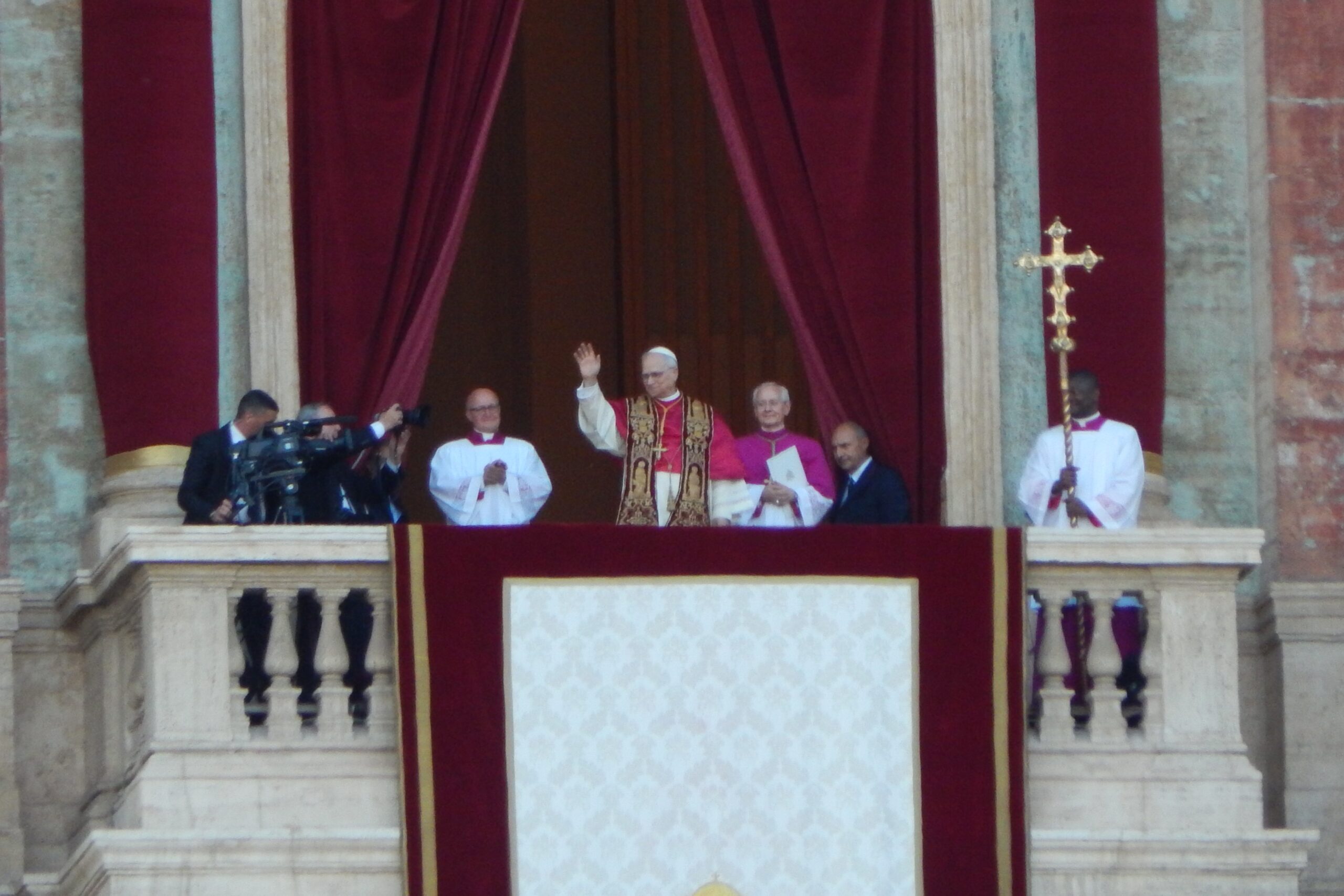
IN a historic decision by the College of Cardinals, Cardinal Robert Francis Prevost, a native of Chicago and veteran missionary bishop, was elected the 267th pope of the Roman Catholic Church on Thursday.
Taking the name Pope Leo XIV, he became the first American-born pontiff in modern Church history, signalling a new moment of pastoral leadership rooted in cross-cultural experience and ecclesial reform.
A missionary at heart
Pope Leo XIV’s academic background reflects both intellectual depth and ecclesial commitment. He earned a bachelor’s degree in mathematics from Villanova University before entering religious life with the Augustinians.
After his ordination, he pursued further studies in Rome, obtaining a licentiate and a doctorate in canon law from the Pontifical University of St Thomas Aquinas. He also spent time at the Catholic University of America, contributing to scholarly formation and clerical training.
Born on September 14, 1955 in Chicago, Robert Francis Prevost joined the Order of Saint Augustine (OSA) and was ordained a priest in 1982. After earning advanced degrees in canon law, he spent years as a missionary in Peru, eventually becoming bishop of the vibrant city of Chiclayo in 2015.
Prevost’s long tenure in Latin America shaped his pastoral priorities: accompaniment of the poor, respect for indigenous traditions, and dedication to community-based ministry. Fluent in Spanish and deeply immersed in Latin American Catholicism, he was known for balancing fidelity to Church teaching with a listening, compassionate style of leadership.
Has a reformer’s mind
In 2023, Pope Francis appointed Pope Leo XIV as Prefect of the Dicastery for Bishops, giving him responsibility for selecting bishops around the world. His role placed him at the centre of ecclesiastical governance and earned him a reputation for promoting pastors with strong pastoral and spiritual credentials, rather than merely institutional loyalty.
While not considered a doctrinal progressive, Pope Leo XIV is regarded as a moderate reformer, continuing the synodal and inclusive vision of Pope Francis.
He is expected to support: strengthening the Synod on Synodality process, enhancing transparency in bishop appointments, deepening pastoral care for migrants, indigenous communities, and the marginalised, and encouraging broader lay participation in Church life.
Rooted in Augustine spirituality
If Pope Francis served as a Jesuit with Franciscan spirit, Pope Leo XIV brings to the Chair of Peter a heart formed by Augustinian spirituality. Rooted in the teachings of Saint Augustine of Hippo, this spirituality emphasises a restless pursuit of truth, an interior journey toward God, and a life shaped by love of neighbour.
Augustinian spirituality is contemplative yet active, encouraging a Church that reflects deeply, serves generously, and walks in unity. It seeks God in the inner self and the outer world, in both prayer and acts of charity.
With this foundation, Pope Leo XIV’s papacy may be marked by a steady and thoughtful effort to harmonise truth with love, doctrine with mercy, and diversity with unity.
A pope of pastoral presence
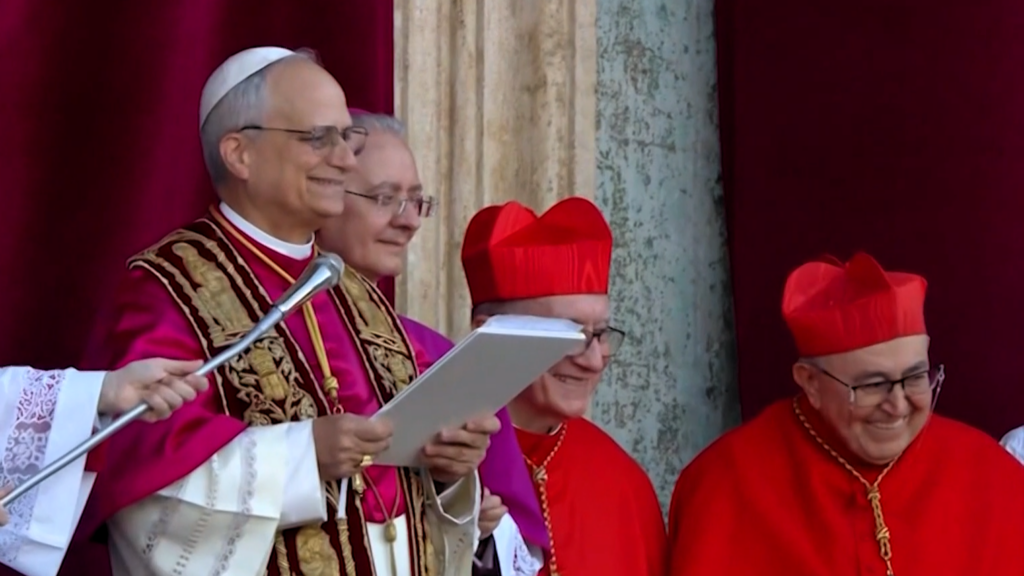
His first public appearance as pope at the Vatican balcony was marked by simplicity and solemnity. Addressing the faithful in St Peter’s Square, Pope Leo XIV called for a Church that “walks together, listens deeply, and never tires of showing mercy.”
Observers note that his leadership style blends the intellectual rigor of a canonist, the compassion of a missionary, and the global awareness of a bridge-builder between the Global North and South.
Continuity with a personal touch
The name “Leo XIV” recalls the legacy of Pope Leo XIII, who championed the Church’s social doctrine in the modern industrial age. Pope Leo XIV is expected to echo that concern for social justice, but with an emphasis on today’s issues: economic disparity, ecological crisis, and spiritual disaffection in secular societies.
His background suggests future teachings may focus on: community discernment and collegiality; spiritual healing in a fractured world, and a renewed call to the Church to be a “field hospital” rather than a fortress.
Pre-Conclave salvo at the US
Before his election to the papacy, then-Cardinal Prevost occasionally used social media to engage with contemporary issues.
On February 3, 2025, he reposted a National Catholic Reporter article titled: “JD Vance is wrong: Jesus doesn’t ask us to rank our love for others.”
The piece critiqued Vance’s interpretation of the Catholic concept ordo amoris – the “order of love” – and argued for a more inclusive Christian ethic.
Though not a regular poster, his account on X @drprevost, also shared content in English, Spanish, Italian, and other languages. These insights offer a glimpse into a thoughtful leader engaged with public dialogue while grounded in theological tradition.
While his reposts occasionally aligned with progressive critiques, he also supported traditional US Church stances, including opposition to abortion, reflecting a nuanced, consistent ethic of life.
Notably, he shared content in agreement with pro-life statements made by US President Donald Trump, highlighting his alignment with long-held Church teaching on the sanctity of life.
Papacy poised to uplift Asia, developing world
“The election of Pope Leo XVI marks not only a new chapter for the Catholic Church but also signals renewed hope for Asia and the Global South,” Rev Fr Clarence Devadass, Chancellor of the Archdiocese of Kuala Lumpur told Scoop.
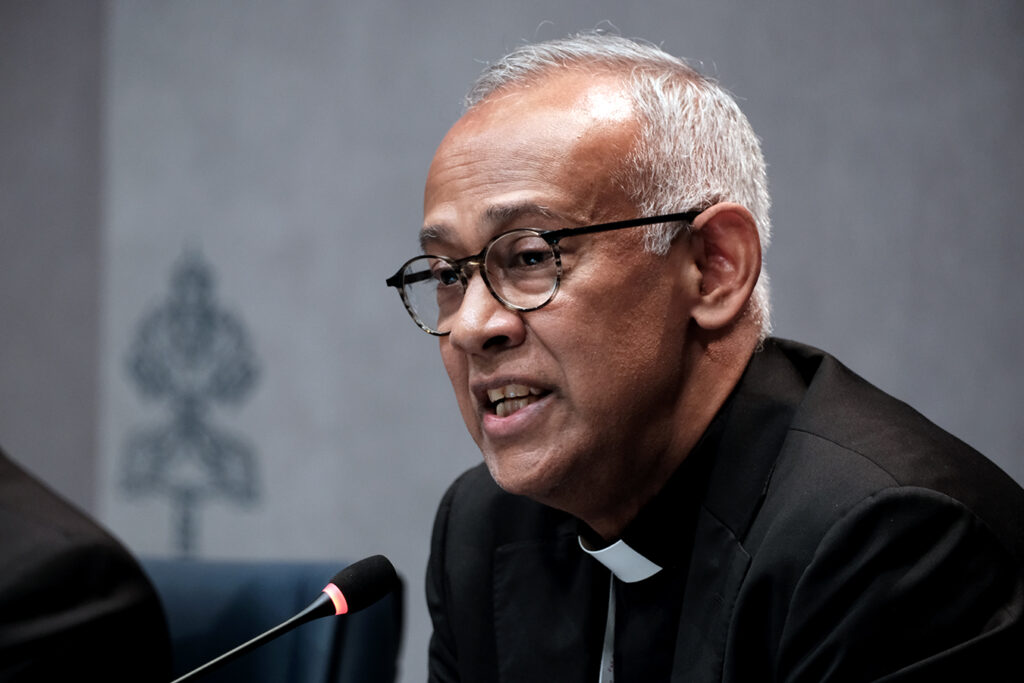
“Given his extensive missionary experience in developing regions, especially in the Global South, Pope Leo XVI brings with him a deep and ‘lived understanding’ of the challenges faced by many nations – economic inequality, social upheaval, and the yearning for spiritual grounding.
“His concern for the dignity and aspirations of these communities is likely to influence the tone and priorities of his pontificate.”
Fr Clarence noted that Asia, with its vast diversity of cultures, religions, and social dynamics, will hold a special place in Pope Leo XVI’s global vision.
“He is expected to approach Asia with great sensitivity and respect, promoting dialogue between faiths, encouraging peaceful coexistence, and working for justice. His leadership could very well deepen the Church’s engagement with Asian societies, helping to bridge tradition and modernity in a way that empowers the people and affirms their spiritual heritage.”
Reflecting on the Pope’s first words from the balcony of St. Peter’s Basilica and his homily with the College of Cardinals, Fr Clarence said: “What stood out most was his call for unity and communion – not only within the Church, but among all peoples and even with creation itself.
“Pope Leo XVI envisions a world woven together by harmony and interconnectedness, reminding us that the mission of the Church must be universal in its embrace.”
Other voices
“The election of an American pope took me by surprise. Few imagined we’d see this in our lifetime. But perhaps the College of Cardinals looked beyond geography – into the soul of the man,” Rufus Bruno Pereira, told Scoop.
“Pope Leo XIV lived among the poor in Peru and was shaped by the complex, multicultural reality of Chicago. His life has been a bridge between two worlds.
“This is not just about America stepping into the papacy. It’s about a voice formed by both First World privilege and Third World pain. His Chicago upbringing brought him close to African American and Native communities – the Ojibwe, Odawa, Potawatomi – while his decades in Peru immersed him in Indigenous Latin American life.
“That speaks deeply to us here in Southeast Asia, where our native peoples still live on the peripheries,” said Pereira, a Church observer and commentator from the Kuala Lumpur Archdiocese.
“He is likely to carry forward the Synod on Synodality. With most cardinals having been appointed by Pope Francis, continuity was surely a quiet consensus behind his election. The synodal path is no longer a trend; it has become a direction.”
Pereira added that the new pope’s dual training in mathematics and canon law brings rigour, but also empathy: “He has the clarity to confront relativism, and the tenderness to walk with the broken. That balance gives me hope.”
And for the youth and those estranged from the Church? Pereira offered this: “This is a papacy that might speak their language. Like it or not, American culture has captivated the world. Through this pope, perhaps it is now the Church’s voice that will captivate again.”
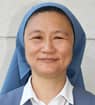
Sr Pauline Yap, FSP, echoed similar sentiments: “We are witnessing the quiet, powerful movement of the Holy Spirit – guiding the Petrine office from South America to North America and reaffirming its universal character.
“Maybe in the next conclave, we will see a pope from Africa or Asia. What moves me most is how the Lord often entrusts His greatest missions not to those in the spotlight or headlines, but to quiet, faithful servants. Through them, His deepest purposes unfold.”
Kenneth De Souza, a former seminarian from College General, shared his reflections as well, saying: “I was taken aback – he wasn’t seen as a front runner. But I believe the Holy Spirit was truly at work in this decision. Men can propose, but the Spirit moves hearts.”
On the significance of an American pope, De Souza observed: “It’ll be interesting to see how he balances the weight of coming from such an influential country with the pastoral needs of the global Church. Still, let’s not forget – his heart was formed in Peru. He is a missionary at the core.”
That missionary spirit, he believes, will shape this new papacy profoundly: “It places him in a unique position to carry forward Pope Francis’ legacy, especially in deepening dialogue with cultures and other faiths. His pastoral instinct is strong.”
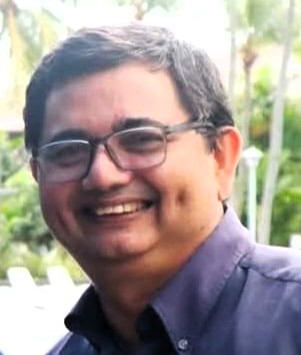
De Souza also reflected on Pope Leo XIV’s Augustinian roots: “His spirituality will shape this papacy – loving God deeply, seeking truth, and building a synodal Church where all walk together. He will be a listening pope. At this point, the synodal journey must go on, and he’s well suited to lead it.”
Finally, on the blend of intellect and heart: “A background in mathematics and canon law gives him a structured mind, but his years among the poor add depth and warmth. That balance could make this a wise, steady papacy.”
To young Catholics and those on the margins, De Souza offered this hope: “Missionaries know how to meet people where they are. I believe Pope Leo’s synodal style – open to dialogue, grounded in authenticity – can bring back those who’ve felt forgotten. This might just be the voice they’ve been waiting for.”
Papacies have own sparks of history
As the world takes in the election of Pope Leo XIV, Catholics in the United States and Latin America have expressed pride and hope. He is not just the first American pope, but a pastor who has lived and breathed the peripheries, now called to the very nerve centre of Rome.
His challenge will be to unite a deeply diverse and often divided Church, and to do so with the tools he has always relied on: presence, prayer, listening, and the courage to walk with the people of God.
With Pope Leo XIV at the helm of the Church, the world watches not just for his decisions, but for his promise: a Church that listens, heals, and, like a true mathematician, always seek to make every soul count – one where compassion, justice, and cultural respect becomes the common denominator. – May 11, 2025
Joseph Masilamany is a former seminarian who turned in his cassock for a journalist’s lanyard