

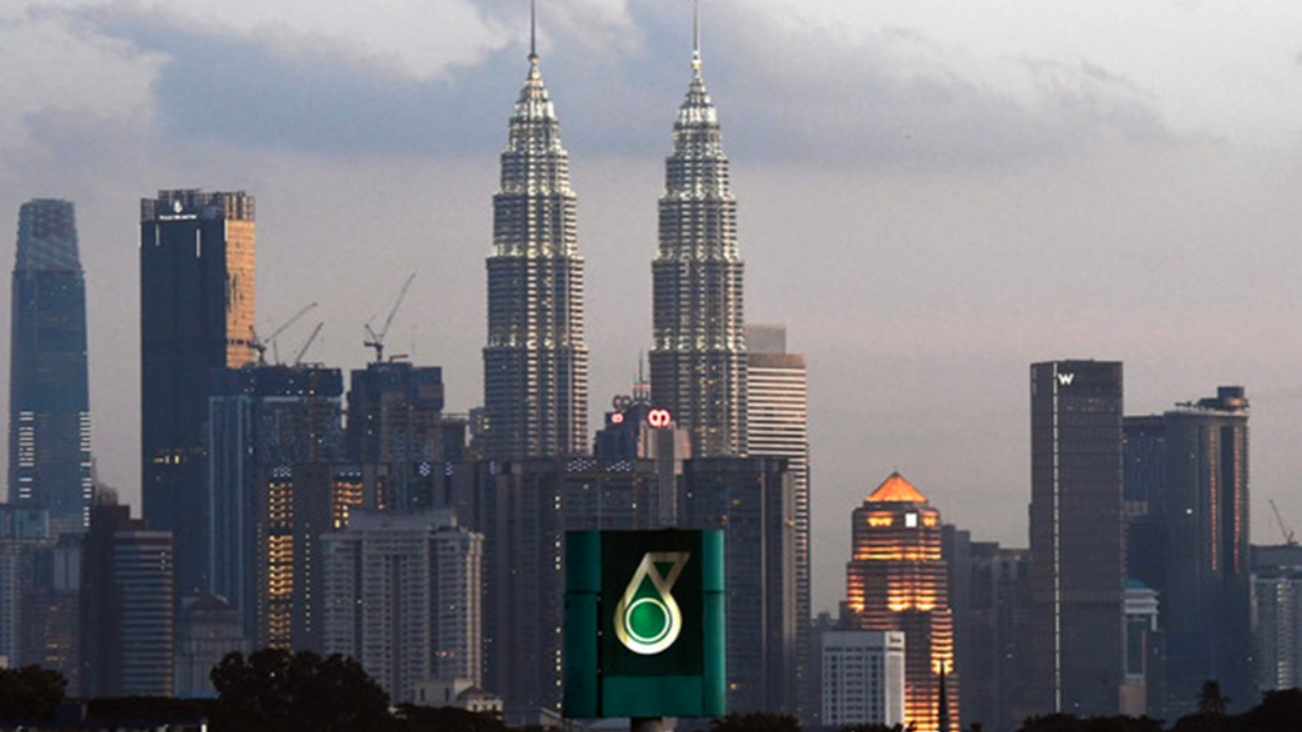

“PETRONAS has no money,” opined a Gen Z when asked about the company’s plan to lay off 5,000 workers. To be fair, she knows not of the company, as of most people, beyond her interactions with the brand at the petrol stations and its festive videos advertising.
It is presumably wrong to think that Petronas is running out of money, but news of the lay off has tongues wagging the same narrative, most notably that thing are not alright with the company – Petronas is in financial distress; Sarawak is taking away its business; it needs to bail out the Government or GLCs, yet again; its investments not doing too well, it’s running out of money; etc.
It is a great issue for people to speculate and for commentators to commentate. After all, Petronas is our darling, a nation’s success story, a manifestation of Malaysia Boleh.
Hence, we get excited and anxious when news such as this breaks. We also see the national oil company as a bellwether for the fate of the national economy.
If Petronas is letting people go, what does it mean for the rest of us?
The rough and rowdy ways of social media are not a great avenue for measured and informed discourse, especially when facts are not readily available. Social media does not deal with subtleties or long-term plans. It is the here and now, riding on the algorithms.
Alas, the corporate guys at the twin towers are no match for the social media operators, politicians or commentators who are with less inhibitions and scruples, or less bothered by facts.
Why let facts get in the way of a good narrative, right?
As for the politicians, the proposed exercise has indeed become the proverbial political football – depending on which side of the aisle you are on, you are either on defence or offence.
It also does not help that Petronas employed corporate speak – it is embarking on a “rightsizing” exercise. Is rightsizing a euphemism for laying off people, shrinking the workforce, retrenching or what have yous?
Well, yes and no. It does mean letting people go, but it does not mean willy-nilly doing so just for the sake of reducing the size of its workforce.
It means – like all other commentators, I am also speculating – that Petronas is trying to make sure that its resources, including its employees, match or are aligned with the businesses that it is in and what it is planning for the future.
These days, it is looking into acquiring new assets to increase its reserves, exploiting marginal fields, and venturing into new businesses, such as carbon capture. With investments running into billions, Petronas needs to be nimble and quick.
Petronas is 51 this year, and over the period, both its role and the industry have changed tremendously. The industry was once dominated by petroleum, but now gas is king, and going forward, taking care of the environment, such as storing captured carbon, will be part of its remit.
At its infancy, Petronas was tasked to develop and look after the nation’s oil and gas resources – how to exploit them and to develop domestic capacities and capabilities. However, in later years, it began to venture into more downstream activities, shipping, and retailing, as well as venturing to buy assets abroad.
Petronas is also squeezed in many directions, via the “national service” catch-all demand.
It has been suggested that the resultant RM40 billion hole in the national budget following the removal of the 6% goods and services tax in 2018 has been somewhat filled by higher-than-usual dividends, royalties and duties from Petronas that probably could have an effect on its financials. Save for the Inland Revenue Department and the Royal Customs and Excise Department, Petronas is the next biggest contributor to the nation’s coffers.
Those long in the tooth would also remember it had to venture into – read: bail out – a bank, the national car company, the national airline, a shipping company, the development of Putrajaya, just to name a few.
It was able to do these because of its strong financial position, as well as its unique position as a government-owned company that can be co-opted to support a national or political agenda. To its credit, the bailouts were mostly managed well, were successful, and it suffered little.
While Petronas may be asked to operate like an informal extension of the government with social and developmental roles to make sure that the largesses of the oil and gas resources get felt by many, it is at the same time also required to act like a corporation with eyes trained on the bottom line.
As the industry changes, naturally, Petronas needs to evolve. Hence, there are skills it needs to acquire, and others it no longer needs. Some of the 50,000 that it has now will probably be redundant because of the changes.
Companies do this rightsizing exercise periodically following the assessments of their business, the market and the environment they are in. In the volatile oil and gas industry, often affected by global strife and political upheavals, the oil majors almost always re-strategise their resources, and presumably, Petronas is no different.
There are also suggestions that the issue with Sarawak, where the gas business will be taken over by state oil company Petros, has nothing to do with the layoffs. However, a casual observation would suggest that closing a portion of your business, no matter how small, would have a bearing on its operations and staff.
It is, of course, not good public relations, especially for Sarawak, to be responsible for the laying off of some workers. Maybe Sarawak and Petros can be the good guys and hire some of those trained and experienced 5,000 staff to be laid off. But, I digress.
I believe over time it will be shown that this rightsizing exercise is done with great care and fairness. Those being terminated would likely be adequately compensated, and we would assume that there would be millionaires, especially among senior and long-time staff, clocking out this year.
However, that would not fit the narratives of those bent on creating confusion, either by design or by default.
Petronas laying off people is obviously grist for the political wheel, but the company obviously can’t be engaged in that. Nevertheless, it must try to appeal to a broader audience beyond the converted, because there are often amplifications of distortions when the messaging is not clear. – June 23, 2025
Veteran newsman Datuk Zainul Arifin is CEO of Big Boom Media which publishes Scoop