


ABOUT two years ago, two friends of mine shared an idea to build a shelter home for senior citizens. Their proposal had merit. In fact, it has become something of a necessity, given current trends not just in Malaysia, but in most countries.
Recently, Health Minister Datuk Seri Dr Dzulkefly Ahmad proposed that Employees Provident Fund (EPF) contributors be allowed to use their Account 2 – also known as Akaun Sejahtera – to pay for monthly health insurance premiums.
The proposal received mixed reactions. Some welcomed it, while others expressed objection, arguing that retirement savings should not be touched for short-term needs. If approved by the government, contributors – roughly 16 million of them – could gain access to private hospital care through health insurance coverage, according to the minister.
Statistically, around 32% of healthcare costs in Malaysia are paid out-of-pocket by patients without insurance. The EPF said the proposal to allow withdrawals from Account 2 to pay health insurance premiums is still under consideration. It is currently working closely with relevant stakeholders to assess eligibility and the implications of the initiative.
As the EPF said, any proposal involving members’ savings must undergo a thorough evaluation to balance current needs with long-term retirement security.
Over the past two decades, EPF savings have increasingly been used – with government approval – even before contributors reach the mandatory retirement age.
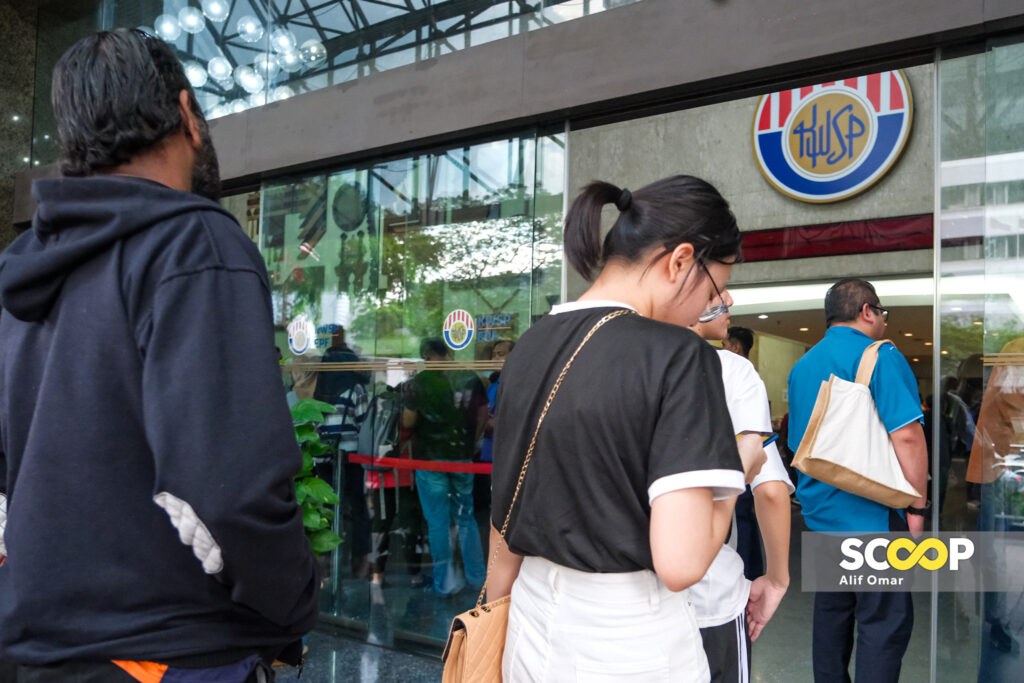
Various parties have proposed tapping into EPF funds for specific financing purposes. Since I first entered the workforce, approved withdrawals have included purchasing a computer in the 1990s, settling housing loans, covering critical medical expenses, and more recently, during the Covid-19 crisis, as a short-term solution to ease financial burdens – a move some criticised as politically motivated.
Today, we live in a post-Covid era. Yet the issue of fair or dignified income remains unresolved, alongside rising living costs. This includes medical expenses, especially at private healthcare centres.
Finance Minister II Datuk Seri Amir Hamzah Azizan recently announced that the government is considering a basic insurance scheme for Malaysians as part of its efforts to ease the financial burden of rising healthcare costs. This initiative is currently being refined through a joint committee involving the Finance Ministry, Health Ministry, Bank Negara Malaysia and several related agencies.
“Medical cost inflation is a serious issue affecting the people. That’s why we’ve formed a joint committee and are gathering input from various stakeholders to study the best model,” he said.
For most Malaysians, insurance should serve as a safety net. Instead, it has become an added financial strain. With premiums rising and benefits shrinking, private healthcare is increasingly unaffordable, while public hospitals grow more overcrowded.
A person’s lifetime income refers to the total earnings accumulated over the course of their working life. This includes all sources of income – salary, bonuses, investments, and passive income.
Understanding one’s lifetime income is critical to making informed financial decisions and retirement planning. Lifetime income plays a key role in helping individuals budget realistically, set achievable goals, and determine post-retirement financial needs.
Many factors influence both current and lifetime income: education and skills, job and career path, demographics, gender, geographic location, personal choices and behaviours, and economic conditions. Inflation, savings, cost of living, and lifestyle choices also impact post-retirement income levels.
Unforeseen events beyond our control, such as the global pandemic five years ago, must not be overlooked. Geopolitical uncertainties with far-reaching effects also exert both direct and indirect influence.
Malaysia’s low wage structure is one of the key reasons EPF savings remain insufficient. According to EPF chairman Tan Sri Mohd Zuki Ali, the former chief secretary to the government, irregular contributions, especially among those in informal or gig work, worsen the situation.
“The growing shift towards informal work has limited access to formal retirement savings schemes like the EPF. This is compounded by relatively low financial literacy, which limits public awareness on the importance of saving and retirement planning,” he said.
Among the government’s efforts to raise wages and income levels are the salary adjustments under the new Public Service Remuneration System (SSPA), which will replace the current Malaysian Remuneration System (SSM) starting December 1, 2024.
The government is also piloting a progressive wage policy and has raised the minimum wage periodically in line with minimum wage regulations to address rising living costs and improve the financial wellbeing of low-wage workers.
Still, there is no concrete or holistic solution yet to guarantee a quality life throughout one’s lifetime for Malaysians.
In his presentation of the Mid-Term Review (MTR) of the 12th Malaysia Plan two years ago, Prime Minister Datuk Seri Anwar Ibrahim said the Unity Government is preparing Malaysia to enter its second phase, themed “Sustainable, Prosperous and High-Income”, focusing on three main areas: strengthening sustainability, developing a prosperous society, and moving towards a high-income nation.
17 key shifts and 71 flagship initiatives were introduced to achieve these targets.
“To provide a clearer picture to this honourable House, this presentation will be unpacked through 12 core affirmations under the MTR of the 12MP, structured around the three main focus areas: advancing towards a high-income nation, building a prosperous society, and strengthening sustainability and governance,” he said.
Malaysia, broadly speaking, enjoys peace and stability, which have not compromised the quality of life as seen in many other countries. However, we have now begun talking seriously about ensuring a decent quality of life throughout one’s lifetime – particularly the post-retirement years, which apply to more than 15 million people. That is a significant portion of the population. For the wealthy, particularly the T20 group, lifetime income is not a major concern.
Therefore, the time has come to seriously consider how we can guarantee a reasonable, dignified lifetime income, which in turn ensures a quality life throughout one’s lifespan for Malaysians.
This is more critical than ever. We need better policies – not only to ensure fair and adequate earnings during one’s working life, but also beyond that.
I am confident the Madani Government will take this into account and turn it into concrete policies and initiatives. – June 27, 2025
Dr G. Manimaran is an election analyst as well as a media and communications consultant