


Once seen as a hometown hero, Petronas Upstream has gone global — with 40% of its business abroad and bigger ambitions ahead. But as it expands, the oil giant must juggle risks, rivals and revenue pressures.
By any measure, Petronas Upstream has been a success. Fifty years on, it is now in the far reaches of the globe, with interests in assets at home and abroad that have incidentally increased the national oil and gas reserves.
The act of venturing abroad and competing with the oil majors would seem to be stuff of dreams when the national oil company was set up 50 years ago. From an eventful first rig in Kertih, Terengganu, decades ago, now 40 per cent of its business is abroad.
Petronas upstream business chief executive officer Mohd Jukris Abdul Wahab said the company now looked at growing its overseas business to 60 per cent in a decade or so, and at the same time grow new businesses like decarbonisation.
“Petronas Upstream aims to produce low-cost, low-carbon oil and gas efficiently by balancing resources between risks and long-term returns, not just chasing quick wins,” the company said in a statement to describe its current ethos.
The upstream business – exploration, development of fields and production – serves as the backbone of Petronas. It is a very capital intensive business with high risk, and presumably high rewards. Unlike its retail sister, for instance, with petrol stations and convenience stores, the upstream operations are more exotic and less mundane – with oil rigs in chopping seas and in fields at far-flung places.
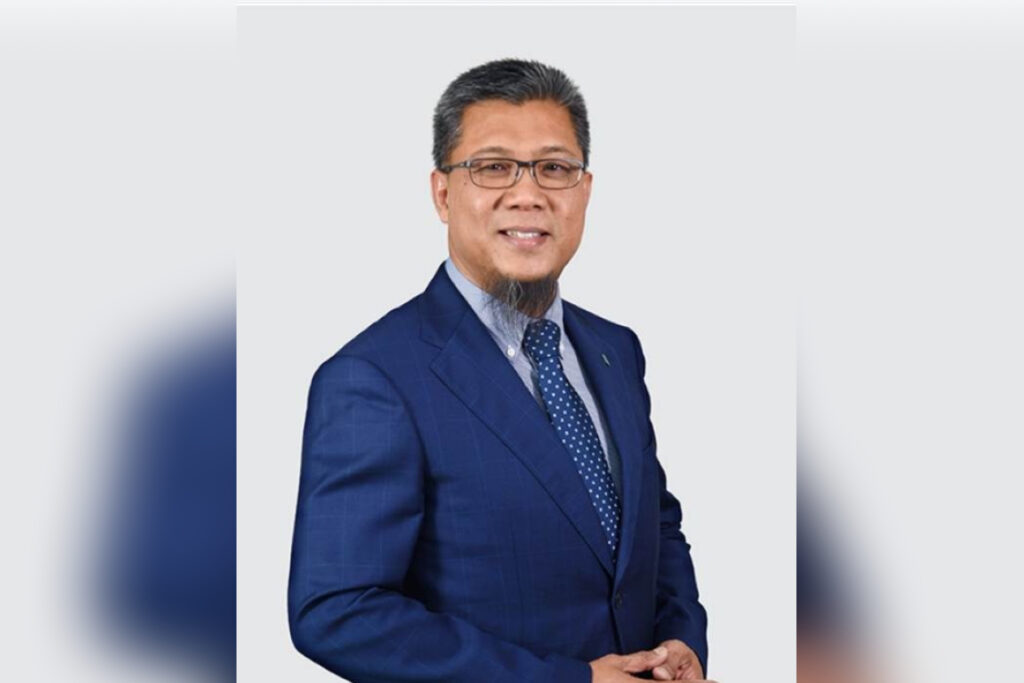
Mohd Jukris in a recent meeting with the media said one of the key strategies employed by the company is to remain agile and be always on a constant lookout of its assets’ qualities – are the existing ones still worth keeping and developing, or to be relieved of them, or to acquire new assets?
This portfolio review exercise can be misconstrued especially if Petronas, for instance, were seen to be walking away from an investment or an asset. The same can be said about buying into a new one, which normally requires high investment.
This being the oil and gas industry, it could mean potentially surrendering or spending hundreds of millions or even billions ringgit.
Nevertheless, the portfolio review is a regular effort and it is to promote efficiency. It now has about 50 assets that are constantly being vetted on how to get best value for them and the company’s investments.
For instance, if an asset is no longer worth the trouble – too expensive to develop and exploit or have less upside potential, then perhaps it was time to quit. Furthermore, geo-political situations also affect decisions to stay or go, or to invest or not.
Recently, it has surrendered assets in Sudan, Mexico and Azerbaijan, but Petronas still have presence in Turkmenistan, Suriname, Vietnam, Indonesia, Oman, Abu Dhabi and Canada, among others
“We are not giving away assets. It is an adjustment exercise to sustain in the long run,” he said, adding that Petronas had to always be critical of itself to remain competitive.
Divesting or surrendering assets can be controversial, but the action is taken after taking into account several factors, including the cost efficiencies, returns from the assets, all the way to geo-political situations.
Regardless, he said, Malaysia remained a core part of its investment portfolio and recent discoveries in Peninsular Malaysia further re-inforce its long-term strategy and confidence in the region.
To remain competitive, Petronas must be able to have the resources in the form of capital, technology and innovations. Some assets require more investments that others, or carry more risks
For instance in Canada, Petronas is looking at expanding its presence there given that the country is a major LNG player and the new government in Ottawa is also welcoming of the company.
Much of Petronas’ operations is often a mystery to Malaysians and this often resulted in many of its actions to be misconstrued, and even weaponised for political purposes. It is after all not just an international oil and gas player, but it is also a government company with all of us having an interest in.
It contributes significantly to the government coffers via tax, royalty and duty – some reports suggested it accounted for more than 15 per cent of the government’s revenue from 2015 to 2020. It is also the country’s biggest corporation in terms of size, reach and importance. It is not only a national pride, but almost the bellwether of the country, a leading indicator of the broader economic environment.
For instance, Petronas bonds in the international market are said to be rated higher than many countries, including Malaysia, sovereign bonds.
Then there is the elephant in the room – Sarawak’s grand design of being a petrochemical player via state-owned Petros which is said to be at the expense of Petronas.
The signing of the joint -declaration between the Federal government and Sawarak that basically underlines the roles and jurisdictions of Petronas and Petros are still being smoothened, with some contentions here and there.
As politicians from the state seemed to be always on soapboxes to pronounce their plans and what they seek from what was once Petronas’ business, for instance, they have instead caused concerns that these could jeopardise not only the national oil company’s operations but also the national agenda vis-a-vis the exploitation and development of our oil and gas resources.
“We are still operating as usual (in Sarawak), all fields are operating, and Petros is a partner,” Mohd Jukris said, adding that in fact Petronas was investing more in the state.
There is a great desire within all parties to get things to work out as it means the development of the national industry that will benefit the people of Malaysia, he added.
Petronas is also embarking in the new business of carbon capture and storage, where unused oil and gas fields would be used to store carbon dioxide and this business is getting traction and would be a significant diversification effort and revenue generation opportunity.
For the upstream operation, the carbon storage business is being planned well ahead and would be a significant contributor to the group in the future. Petronas upstream activities are currently 70 per cent in gas, with the remainder in petroleum.
Mohd Jukris said the company was progressing well on developing the carbon capture and storage business hub in Malaysia, with a final investment decision in 2029 and the first injection of capital a year later. – August 30, 2025
Datuk Zainul Arifin is the Chief Executive Officer of Big Boom Media, which publishes Scoop.my