

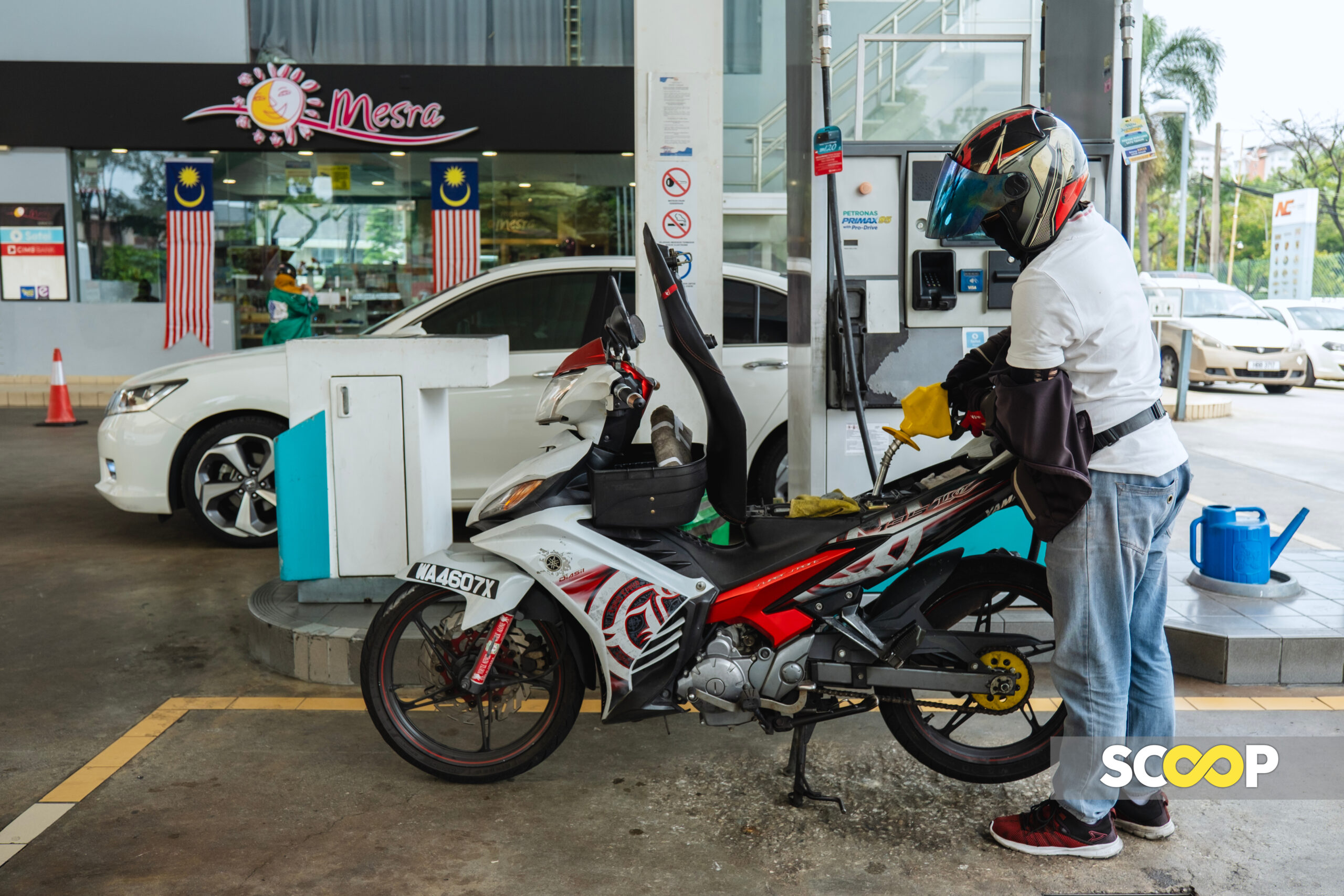

IN a much-repeated video over social media, the then Opposition leader Datuk Seri Anwar Ibrahim during the 2008 General Elections famously campaigned that the day he were to become prime minister, petrol prices would be lowered the very next day.
It was a ready-made meme that dogged Anwar for years, especially after he became prime minister in November 2022. In July this year, he acknowledged and apologised for the delay, citing the country’s high debts and economic challenges.
On Monday, three months shy of the third anniversary of his premiership, perhaps through sheer political will, his government finally fulfilled the campaign promise. Under the Budi Madani Ron95 (Budi95), Malaysians can buy a maximum of 300 litres of Ron95 petrol at RM1.99 per litre, others at the current RM2.05 per litre, while foreigners will be exempt from the programme.
In a private transport-centric Malaysia, fuel represents one of the daily essentials. It is also one of the issues that keeps bubbling on the surface of political discourse, especially when structural economic reform involving subsidies is discussed.
Subsidy as a concept is good as it helps alleviate cost pressures and allows people to benefit from the government’s spending. However, it has a distorting effect as it does not show the true cost of things, and it is also economically inefficient.
Consider the case of a young graduate living with his parents. He enjoys most of the things he would not have been able to afford if he were to live alone, including, for instance, three square meals, a stocked fridge, mom doing his laundry, even perhaps a car and the occasional holidays abroad. He is subsidised to the extent that he would not be able to know how much it would cost him to actually be on his own, and how his lifestyle would be impacted if he did.
Budi95 is essentially a nationwide living-with-your-parents kind of deal that aims to ease the burden of the cost of living for the people. Its strategy is to fix prices at the pump – read: living with your parents – with the twin objectives of lowering the cost of living and managing inflation.
Apparently, 300 litres a month is enough for a 170km daily drive for the average Malaysian driver. The monthly savings for the average user is between RM183 to RM228, which would represent new disposable income that could be spent on other goods and services. This would also have the effect of stimulating economic activities.
It has been argued that one of the potential negative consequences of several earlier planned subsidy rationalisation schemes, which would target some segments of the population, is that businesses could be taking advantage of any increase to raise prices.
Economists have suggested that Budi95 has a “broadly inflation-neutral” impact on the economy, with no significant shocks to the Consumer Price Index, for instance. It keeps the price low for the majority of the population by removing the raison d’être for opportunistic price gougers and profiteers to raise prices at an instance after a change in policy.
By the way, there have been suggestions that the top 15 per cent economically may yet have to pay more at the pump at a later stage. While the people in the category can afford it, be least affected by price increases and likely use less of Budi95, what kind of message would the government be sending them, given that they are likely to be major contributors to the government coffers in terms of taxes and business activities?
Maybe it will be more trouble than it is worth.
By fixing pump prices, the government has essentially insulated consumers from the volatility of global oil prices. Should wars and strife in the world drive chaos in the global fuel market, as they are wont to do, we could be an island of calm fuel price wise.
This price stability will help prevent fuel costs from contributing to broader inflationary pressures in the economy.
On critics that the cost of stabilising the price of fuel would see an inefficient use of funds, I would argue fighting inflation resulting from a volatile commodity as important as fuel would probably cost much more in the longer term.
Nevertheless, if indeed prices were changed drastically over a prolonged period in the future, naturally, there should be an opportunity to revise and fix the prices anew.
The Budi95 targeted subsidy, which exempts foreigners and commercial entities, would save between RM2.5 billion to RM4 billion that can be channelled to other social safety programmes, said Finance Minister (II) Datuk Seri Amir Hamzah Azizan.
The earlier diesel subsidy rationalisation, which was also aimed at abuses and smuggling, has also been a success and presumably has met its target of reducing RM4 billion annually in subsidy.
The multi-faceted impact on the economy, by lowering the price of a key commodity that has a direct impact of lowering prices and helping consumers save, will likely be politically rewarding for Anwar and his Madani government, too.
It is cutting the legs of his opponents on cost-of-living-related issues, and as we are heading towards several state polls in the coming months, as well as the general elections in a couple of years, Budi95 would presumably put his coalition in a good stead.
There are, of course, attempts to poke holes in the Budi95 programme, but the silence from the usual critics suggests that they know a popular programme when they see one.
I suppose, for Anwar, it is better late than never. — September 27, 2025
Datuk Zainul Arifin is the Chief Executive Officer of Big Boom Media that publishes Scoop.my