

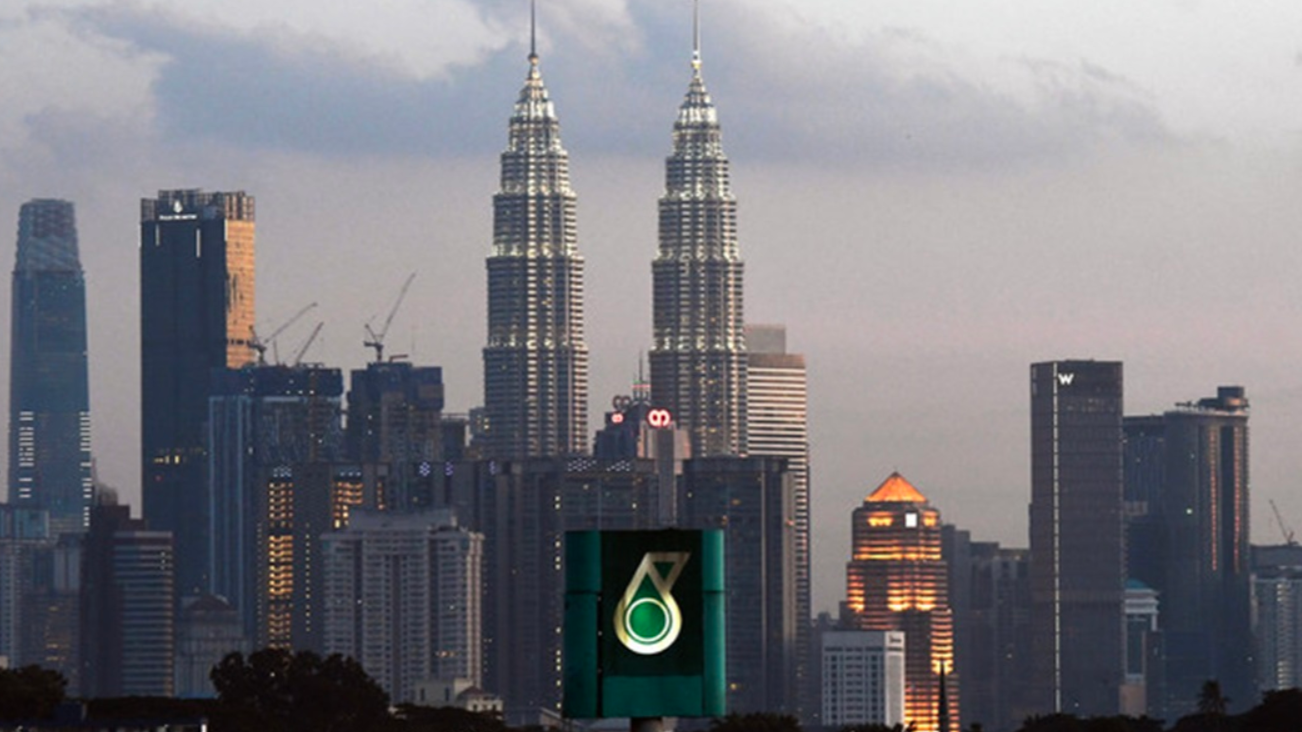
IT is rumoured that the folks at the Petronas twin towers have been rather jittery and on edge for a while now, dreading the release of the news of a deal long in the making, which is the divestment of some of the group’s assets in Canada.
There is the worry that the deal would not be understood and that people would be looking at the headlines and concluding the worst – Petronas selling, yet again!
The publicity-averse team there had been bracing for the attacks, and in a way, it was not disappointed. Over social media, there was the customary doom and gloom from the usual suspects.
Petronas was low-keyed in its announcement of the Canadian divestment presumably for the reasons above.
Nevertheless, the other parties in the deal had to be more open perhaps to meet regulatory requirements in their countries.
The national oil company sold a portion of its stake in the liquified natural gas (LNG) sector in the North Montney area of Canada. The sale in the North Montney Upstream Joint Venture and the North Montney LNG Partnership Ltd to was to an oil and gas institutional investor MidOcean Energy for an estimated US$3 billion, news reports said.
Its stakes in the two companies would be reduced to 20 per cent. Previously it owned 25 per cent each of North Montney Upstream, which holds its upstream investment in Canada, and North Montney LNG, which has an interest in LNG Canada Project.
At a recent briefing to the media, Petronas upstream business chief executive officer Mohd Jukris Abdul Wahab spoke of the importance to have a continuous strategic asset re-allocation and portfolio review exercises as means to get the best value from its assets and investments. Maybe this was one of the deals he was alluding to.
Asset re-allocation and portfolio review is presumably corporate euphemism for selling and buying stuff.
Sometimes the exercises were to realise its investments, others perhaps to achieve strategic positions in an asset, or as the case here may be in the North Monthey deal, for both.
In North Montney, Petronas remains a substantial investor, but it also gained a strategic partner in MidOcean that has assets, global experiences and resources in the sector. MidOcean, which has the backing of Saudi Arabia’s giant Aramco, has a diversified global LNG portfolio, which Petronas said wlcould open up potential future collaboration.
Petronas upstream has about 50 assets that are constantly being vetted for efficiency, their returns to investment as well as how they sit in geo-political developments. Recently, it surrendered assets in Sudan, Mexico and Azerbaijan, but the group still have presence in Turkmenistan, Suriname, Vietnam, Indonesia, Oman, Abu Dhabi and Canada, among others.
Mohd Jukri said then they were not giving away assets, but to sustain itself in the long run it always needed to be critical of itself to remain competitive. In fact, for Canada, Petronas was looking at expanding its presence there given that the country being a major LNG player and the new government in Ottawa was also welcoming of the company.
Depending on one’s proclivities or politics, the sale could yet again be made grist for the political wheel – Petronas was either disposing assets to realise its investments, or perhaps it was the recklessness on the ppmanagement, or more insidiously, the government weighing in on the decision-makings to help re-fill the national coffer.
It did not matter that Petronas said in its statement that the sale was part of a long-term strategic partnership and that MidOcean entry’s showed the strength and quality of the venture, as well as the long-term potential of the North Montney LNG assets. Or that Petronas remained committed to its investments in Canada and the entry of MidOcean would not affect its existing control over the two entities.
Other deals were also brought up by critics to suggest the selling was a desperate spree, including conflating the recent exercise to let go of some of its staff, that things were not on the up and up in the organisation.
The irony was that there was no mention of new investments over the years, some of which were financed by the disposal of assets that Petronas deemed no longer strategic. This being the oil and gas industry, it could mean potentially selling or spending hundreds of millions or even billions ringgit.
There was also no recognition of Petronas upstream plans to have revenue from overseas ventures to be increased to 60 per cent from 40 per cent now, an effort that would have to be financed by strategic management of its resources.
Funds would also need to be generated for new ventures with strong future potentials like the growing carbon capture business using old wells and fields.
One can safely surmise that some of the criticisms would have had as much to do with questioning the wisdom and competency of Petronas’ management as they were using the company as a proxy to beat the government with.
Most Malaysians are not well-versed in all things oil and gas and there would always be misperceptions and misunderstandings that can often be weaponised for political purposes. After all, Petronas is not just an international oil and gas player, it is also a government company.
Maybe Petronas can be more open and be more comfortable sharing some of the things it is doing, especially if its intentions and actions can be misrepresented.
We have seen it for years, the criticism of Petronas and the national oil and gas project, some laced with politics, ever since they were twinkles in former prime minister Tun Abdul Razak’s eye. – October 2, 2025
***Datuk Zainul Arifin is the Chief Executive Officer of Big Boom Media that publishes Scoop.my