

I was called to comment on this video, while the subject was still hot:
@mrdvent #1trillion #ishamjalil #donaldtrump #pmx @IshamJalilOfficial ♬ original sound – LINGLONGLUNG
I am not an economist, nor a finance man. I was an operational man, a management pilot. So my ensuing comment will cover only on operational aspect.
It’s normal for any business body to grow, expand and continuously improve its product and remain in competition.
In that regard, the National Airline announced its modernisation plan with the acquisition of new aircraft. This was done by the airlines’ corporate planning department in collaboration with engineering planning, fleet planning, manpower planning, schedule planning and the related operational departments.
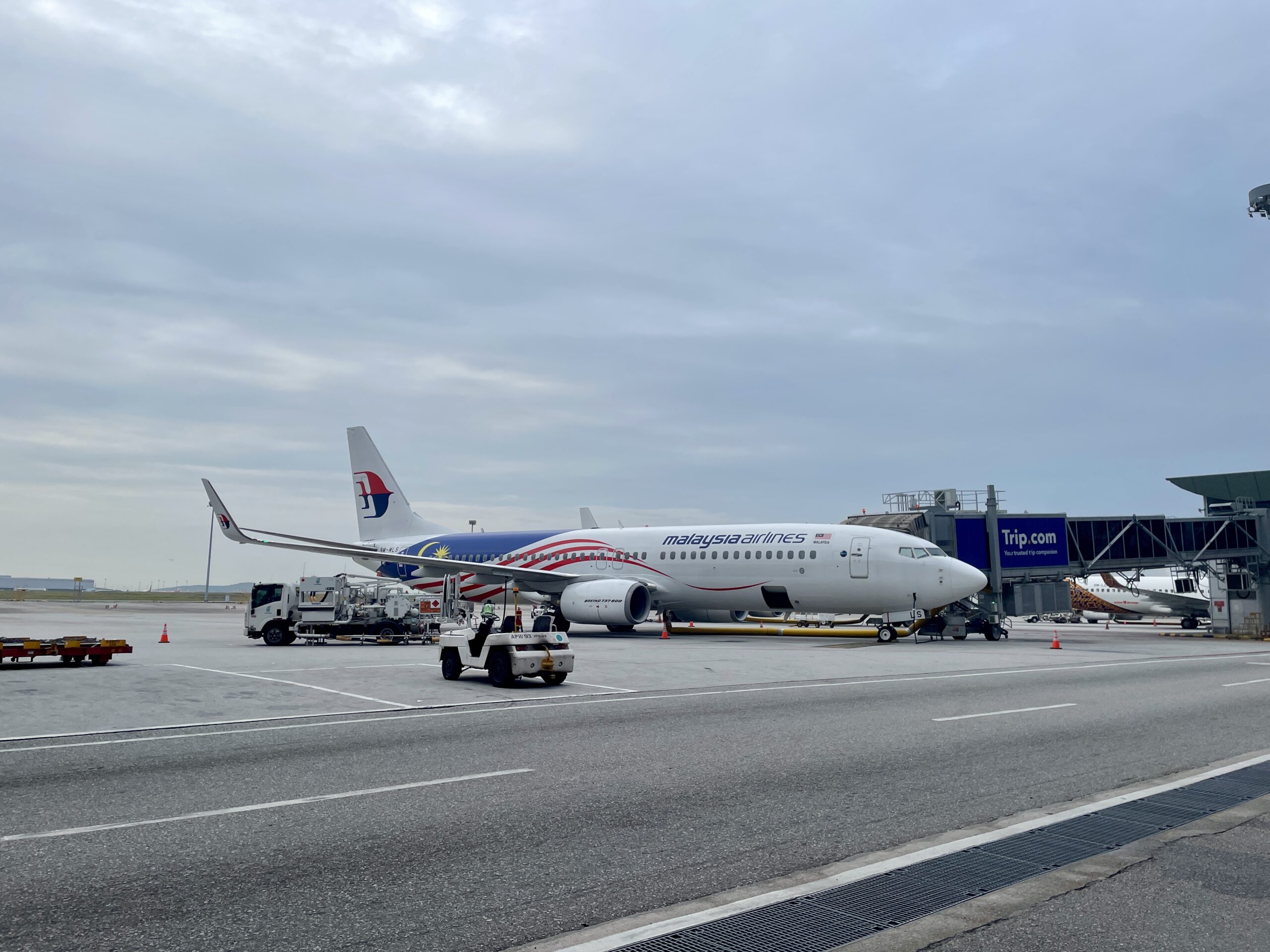
In March 2025, before Washington imposed the rate of tariffs on the trading nations, Malaysia Airlines, after months of study and deliberation, announced the purchase of not only 18 Boeing 737 MAX 8 and 12 Boeing MAX 10 American-made aircraft, BUT ALSO 20 more European-made Airbus A330 NEO aircraft.
Since its launch in October 1972, MAS has been using Boeing 737 aircraft as its narrow-body aircraft; first Boeing 737- 200, then Boeing 737-400, then Boeing 737- 800, 737- 900 and finally the latest model Boeing 737 MAX.
The training, operating philosophy, inventory, and spares have all been Boeing…American.
The WIDE BODY fleet is slightly different.
It was pretty mixed, in a way messy and uneconomical. We had a few Douglas DC-10 aircraft, a few Airbus A300 B4, a few Boeing 747-200, then Boeing 747-300 and finally Boeing 747-400 with different types of engines- Pratt & Whitney, Rolls Royce and General Electric, Boeing 777, Airbus A330 and even six Airbus A380 aircraft.
It was, without a doubt, a very messy and costly arrangement, with each aircraft type having its own set of pilots, aircraft simulators, different spare parts, and engineers having to have different ratings, etc.
Then the planners came to their senses. (To be fair to them, they could have been politically influenced).
It was decided, for the WIDE BODY fleet, only one type – Airbus A330/350.
Fortunately, the airline managed to dispose of ALL the yesteryear aircraft and the flight simulators.
Not to buy American, to cancel the Boeing 737 order, is out of the question.
It’s unthinkable to start all over again…phase out the Boeing 737 aircraft and start using the European Airbus A320 aircraft. (The Chinese COMAC C919 cannot be considered at this stage. It’s not a proven aircraft).
It would involve acquiring about 50 Airbus 320 and the training of about 400 sets of pilots, thousands of cabin crew, hundreds of engineers and the stocking of new inventory and spare parts.
During the transition, the Boeing 737 have to continue to be in service.
Imagine the chaos with the logistics, manpower planning and crew rostering.
Not taking the Boeing order, we will impose the cancellation fee.
Purchase of aircraft is not like buying a car…go to the showroom, pay the deposit and drive away.
In aircraft purchase, after putting in the order, we are given the queue number. The aircraft will be manufactured/ assembled, and maybe after 2 years, it will come out of the production line.
Cancelling the American order, to get the European Airbus A320, we have to join the queue again.
There is a long queue for Airbus aircraft.
The Airbus A330 NEO/A350 purchased by Malaysia Airlines are being delivered behind schedule.
During the transition, to train the crew, more pilots have to be recruited.
Without the simulator, the pilots have to be sent to the factory in Toulouse for training.
In addition to the training cost, there will be travel and accommodation costs incurred. Plus, of course, the crew allowance.
It will take at least 2 years for us to get our own Airbus A320 simulator to train our pilots in-house.
This fleet change from Boeing (American) to Airbus (European) will ultimately be more costly.
It’s said that the purchase of 30 Boeing 737 is too many. Mr Rusdi Kirana, the owner of Lion Air and Batik, 10 years ago bought 220 Boeing 737- 800/ 900 and Boeing 737 Max aircraft. Some said he was crazy. Now he is laughing away.
It’s said, “WHY BUY? WHY NOT LEASE?”
Again, l am not an economist to give a completely satisfactory answer.
But as a layman, l would like to believe all of us have a car, at least one, and a house.
Do we lease or hire the car for use, and do we live in a rented house?
Besides the sense of ownership, I think it is more economical for us to have our own car and house. Of course, we must have the means to pay for them.
It’s similar to the aircraft. For long-term use, airlines purchase them. But for short-term use, airlines lease them.
The purchase price must be properly negotiated, preferably directly negotiated by the airline without the involvement of politicians or agents. It should turn out to be cheaper. We might save billions. — November 2, 2025
Captain Mohd Kamil Abu Bakar is a former director of Flight Operations, Malaysia Airlines