

PERODUA’S “Shariah-compliant use” clause in its new EV battery leasing plan has turned what should have been a proud technological milestone into a warning shot for every brand operating in a plural society.
The incident shows how a single line in a product disclosure sheet can collide with Malaysia’s diversity, ignite public distrust and force a respected national brand into defensive mode.
Perodua, established in 1993 as Malaysia’s second national carmaker, built its reputation on compact, affordable models like the Kancil and Myvi that became household names. Over three decades, it has grown into the country’s largest automotive brand by volume, commanding around one‑third of the domestic market and a significant share across ASEAN. My daughter loves Myvi so much that she made me change from a brand new Continental car to her favourite Myvi.
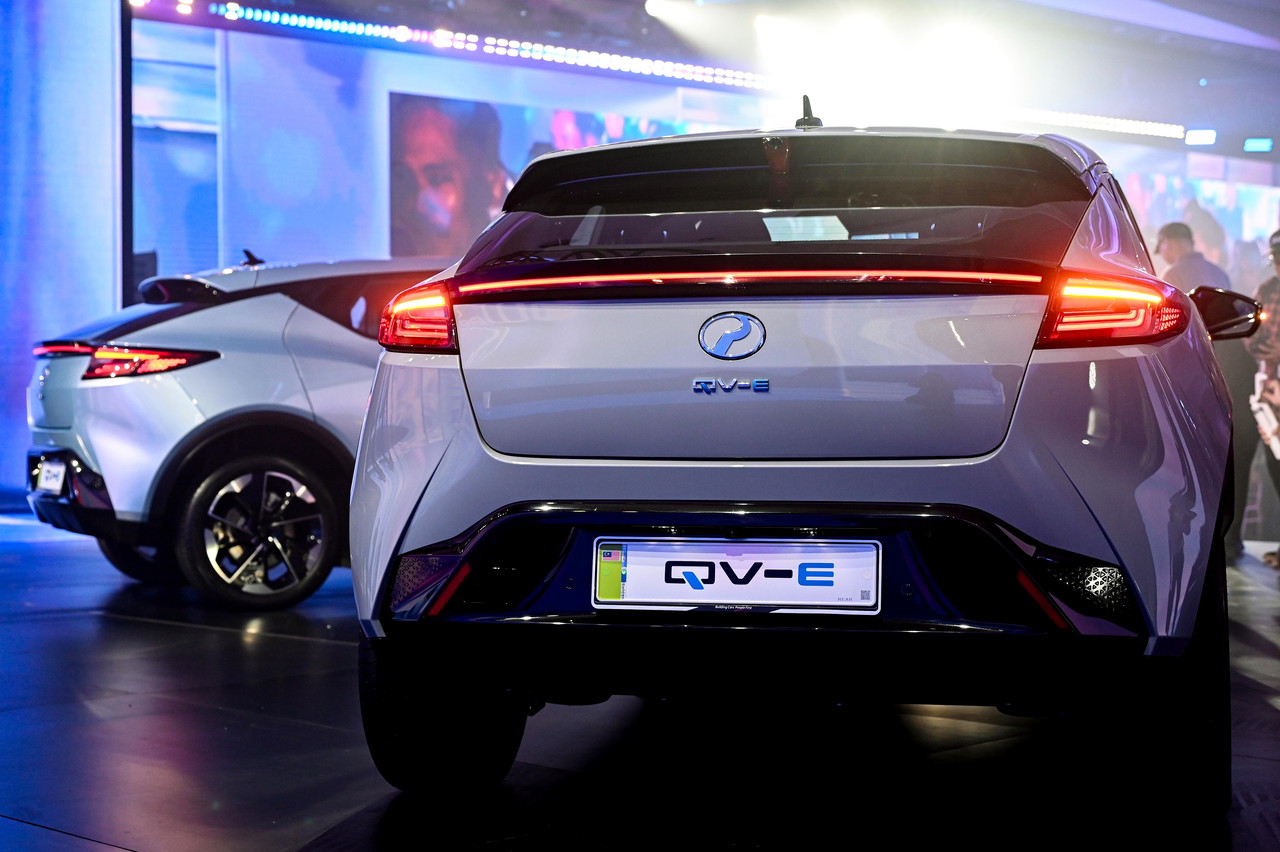
The QV‑E, launched in late 2025 as Malaysia’s first home‑grown battery‑electric vehicle, was designed to cement Perodua’s role in the next generation of mobility. It pairs an RM80,000‑range vehicle (excluding battery) with a Battery‑as‑a‑Service (BaaS) lease of about RM275 a month for nine years, allowing Perodua to manage battery lifecycle and recycling centrally.
How the “Shariah use” clause backfired
Early versions of the QV‑E battery lease documentation included a line requiring customers to “ensure the vehicle and battery are used for Shariah‑compliant purposes”, alongside other restrictions such as no ride‑hailing or commercial use.
When screenshots of this table reached social media, many Malaysians—Muslim and non‑Muslim—read it as an attempt to police lifestyles and impose religious conditions on everyday driving.
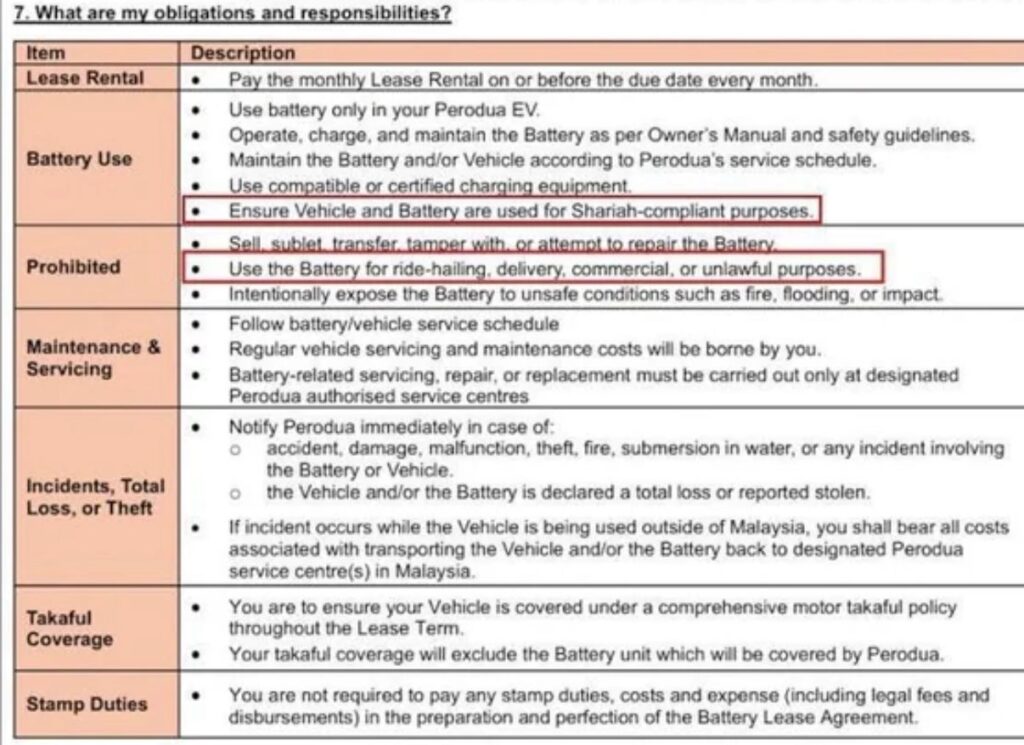
Under intense criticism, Perodua’s president issued a statement blaming “internal miscommunication”, and the company quickly removed the Shariah‑use clause from the updated disclosure sheet while stressing that customer usage would not be governed by religious compliance.
The firm clarified that only the financial structure of the battery‑leasing plan is Shariah‑compliant for banking and governance purposes, not how people may use their cars.
Why this hurts brand trust
For a brand that positions itself as “Building Cars People First”, the optics are damaging. The episode raises difficult questions: who in the organisation thought it acceptable to embed a religious usage requirement into a legal document for a mass‑market product, and why was it not stopped by legal, risk, or communications teams that understand Malaysia’s sensitivities?
Reputationally, three types of harm emerge:
Trust and reliability: Customers now wonder what other conditions might sit in the fine print of future products, especially in high‑involvement categories like EVs and finance‑linked schemes.
Market inclusivity: Non‑Muslim consumers and Muslims wary of politicised religiosity may feel that Perodua is privileging one identity lens over its longstanding all‑Malaysian appeal.
Social cohesion: When a national carmaker appears to normalise religious filters on usage, it sets a worrying precedent for other industries, contradicting ongoing calls for brands to be “bridge builders” in Malaysia’s multi‑faith landscape.
Lessons in religious sensitivity and PR
Research on intercultural public relations in Malaysia stresses that religion is the most sensitive dimension communicators must navigate, and missteps can directly damage corporate reputation.
In a context where race and religion are tightly interwoven, any perceived attempt to segregate or moral‑police customers is likely to trigger backlash, royal intervention or even regulatory scrutiny, as seen in other high‑profile cases involving religious exclusivity or labelling.
Perodua’s framing error also illustrates a classic PR pitfall: allowing internal compliance language to flow unfiltered into customer‑facing documents.
The BaaS scheme could have simply stated that the lease follows Shariah principles at the financing level, while keeping usage terms focused on safety, maintenance and legal compliance—areas where all Malaysians share the same interests regardless of faith.
Guidance for companies in plural societies
Brands operating in diverse countries like Malaysia can draw several practical lessons from this episode:
Separate product ethics from customer policing: It is legitimate to structure financing or certification in accordance with religious principles, but any conditions on customers should be grounded in law, safety and technical standards, not faith‑based behaviour rules.
Run a “pluralism check” on every major policy or campaign: Before a document or campaign goes live, multidisciplinary teams—including people of different faiths and backgrounds—should stress‑test whether it unintentionally excludes, shames or over‑privileges any community.
Empower communicators to say no: PR and corporate communications should have the authority to challenge legal or product language that may be technically accurate yet socially incendiary, and to recommend alternative wording that protects both compliance and cohesion.
Communicate corrections with humility, not minimisation: When an error occurs, companies must explain clearly what went wrong, apologise without euphemism and show the exact corrective steps—updated documents, training, governance changes—rather than hiding behind vague “miscommunication” labels.
Handled wisely, the QV‑E controversy can still become an inflexion point: a reminder that the same attention Perodua gives to engineering and safety must also be applied to cultural and religious sensitivity.
For every company in Malaysia’s plural society, the message is clear—innovation will only be fully celebrated when the products and the paperwork respect all who share the road. – December 4, 2025
Ravindran Raman Kutty is an award-winning PR Practitioner