

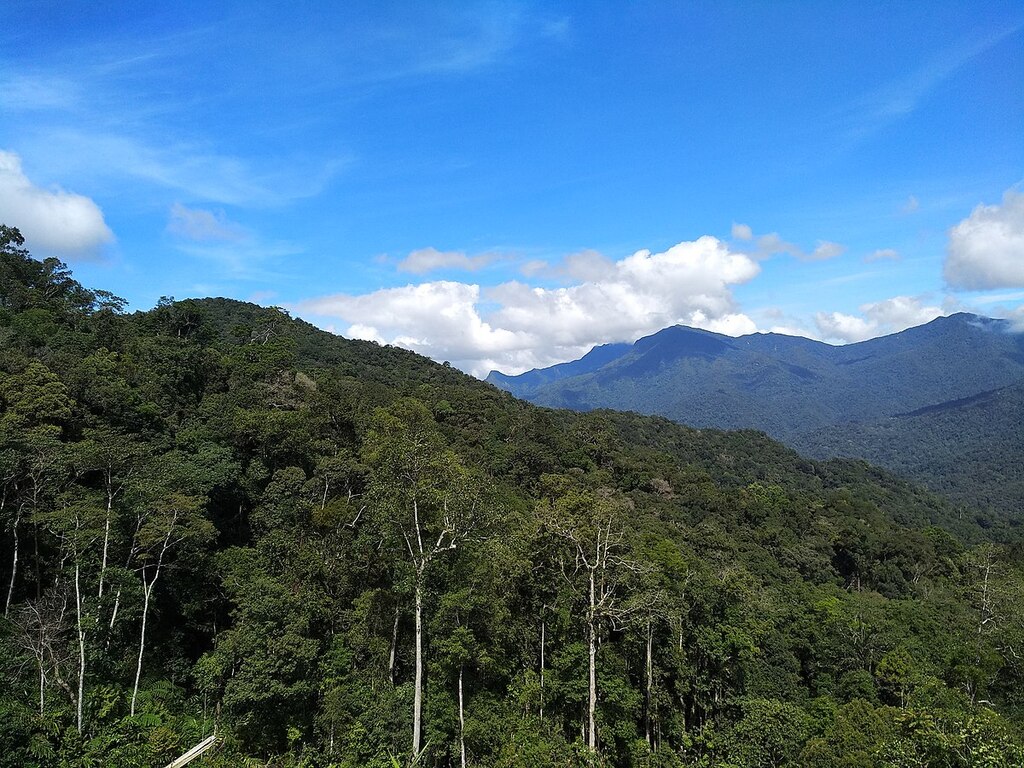
THE last green lung of Puchong is being quietly prepared for sacrifice. A decision tucked into a state gazette has stripped 67.6 hectares in Kinrara from their status as permanent forest reserve, opening the door for yet another “mixed development” to rise where living rivers now run and ancient trees still breathe.
This is not just the loss of a forest; it is an assault on the very source of water and life for hundreds of thousands of people who call Puchong and its surrounding areas home.
Forest that holds our water
Ayer Hitam Forest Reserve is one of the last sizeable lowland dipterocarp forests left in highly urbanised Selangor, now reduced to about 1,182 hectares from more than 4,000 hectares in the early 20th century.
Despite relentless encroachment, it still cradles an intact river basin, feeding clear, spring-like streams that function as a natural water catchment for the Puchong area.
These streams – including Sungai Rasau and its tributaries – are crystal clear, rich with fish, shrimp, crabs and specialised riverine plants, forming deep pools, sandbanks and terraced waterfalls that you will not find anywhere else in Selangor.
When you carve out 67.6 hectares from this system, you are not merely drawing a new line on a map; you are cutting into the sponge that soaks, filters and slowly releases water to the communities downstream.
Forest soils and roots regulate runoff, hold back floods and sustain base flows during dry spells, and once bulldozers rip through them, the damage to water quantity and quality is permanent
What we stand to lose
The Ayer Hitam landscape is a living classroom and refuge, a rare pocket of lowland rainforest ringed by highways, condominiums and commercial estates.
Within it, researchers have documented diverse dipterocarp trees, unique riparian flora such as the elegant fern Dipteris lobbiana, rheophytes adapted to fast currents, and a web of amphibians, reptiles, birds and small mammals that depend on intact forest canopy and clean rivers.
These are not abstract species on a list; they are pollinators, seed dispersers and ecological engineers that keep the forest – and by extension our water catchment – functioning.
Turning this into another concrete enclave will mean more than the loss of scenery. It will mean silt-choked streams where clear water once flowed, tree death along the forest fringe as microclimates change, and the slow collapse of a river system that has so far survived precisely because the hills and catchment have remained forested.
Once that hydrology is broken – once the slopes are cut, drains laid and foundations poured – no landscaping plan can restore the original catchment services.
Developers versus the public’s right to water
Selangor, like every other Malaysian state, is already walking a tightrope on water security. So acute is the pressure that a massive interstate project now channels about 1,890 million litres of raw water every day from Sungai Semantan in Pahang to meet the needs of Selangor, Kuala Lumpur and Putrajaya.
That is roughly a fifth of Selangor’s demand being met not by its own rivers and dams, but by a neighbouring state that is itself watching forests, rivers and rainfall patterns with growing anxiety.
Against this backdrop, the notion that Selangor can afford to chip away at one of its remaining natural water catchments is not just short-sighted; it is reckless.
Every hectare of Ayer Hitam that is shaved off for “development” drives the state further into dependence on imported water and engineered fixes, all while climate change tightens the screws on rainfall and river flow.
The developers lobbying for this degazettement see only a blank canvas for profit; they do not see the pipes, pumps and tunnels that must work harder and cost more because the hills that once held water have been flattened.
Green lungs, not concrete jungles
Walk along the edge of Ayer Hitam today and the contrast is brutal. On one side, a living forest cooled by shade, birdsong and the sound of running water; on the other, the hard glare of asphalt, glass and concrete rising in tight rows, the “growth” that has already chewed away thousands of hectares from the original reserve.
Experience from other forest edges in Selangor, such as Bukit Cherakah and Kota Damansara, shows what happens next: trees at the boundary sickening and dying, runoff funnelling into muddy ponds, and what was once a resilient ecosystem reduced to a thin green screen for marketing brochures.
This is not a choice between being “pro-development” or “anti-development”. It is a choice between intelligent planning that recognises water catchments and green lungs as non-negotiable infrastructure, and blind greed that sees every remaining patch of green as a land bank waiting to be monetised.
Homes, shops and offices can be built in many places, but water catchments – with their specific geology, forest structure and hydrology – cannot simply be recreated elsewhere once destroyed.
A line the Madani government must not cross
Selangor has already weathered public outrage over the degazettement of Kuala Langat North Forest Reserve, where more than 45,000 objections could not initially stop 536.7 hectares from being approved for mixed development.
Civil society had to fight back to force a reconsideration of that decision, exposing how irreplaceable forests were casually traded away on the promise of “compensation” forest that was itself illegally cleared.
The attempt to repeat this playbook in Ayer Hitam – this time at the heart of an urban constituency whose residents rely directly on its rivers and microclimate – should alarm anyone who takes the word “Madani” seriously.
A truly Madani government cannot, in good faith, claim to uphold sustainability, shared prosperity and the wellbeing of future generations while allowing the spring of its people’s livelihood to be paved over.
Water security is not a slogan; it is the right of every household that turns on a tap in Puchong, Kinrara, Kuala Lumpur or Shah Alam, trusting that the state has safeguarded the sources that feed those pipes.
To degazette a critical water catchment in a water-stressed state that already imports nearly two billion litres a day from Pahang is to invite a slow-burning crisis that no PR campaign or mitigation plan can mask.
The line must be drawn here. Ayer Hitam is not just another tract of land; it is a living reservoir, a natural fortress against drought and flood, and the last green lung for a city already choking on its own success.
To protect it is not to stand in the way of development, but to insist that development does not trample the one thing no society can live without – water.
When a forest reserve falls to mixed development, it is not just trees that are lost, but the spine of our water security — a silent verdict on lawmakers who looked away and developers who pressed on, even as our rivers ran lower and our future ran dry.” – December 18, 2025
Ravindran Raman Kutty is an award-winning PR Practitioner