

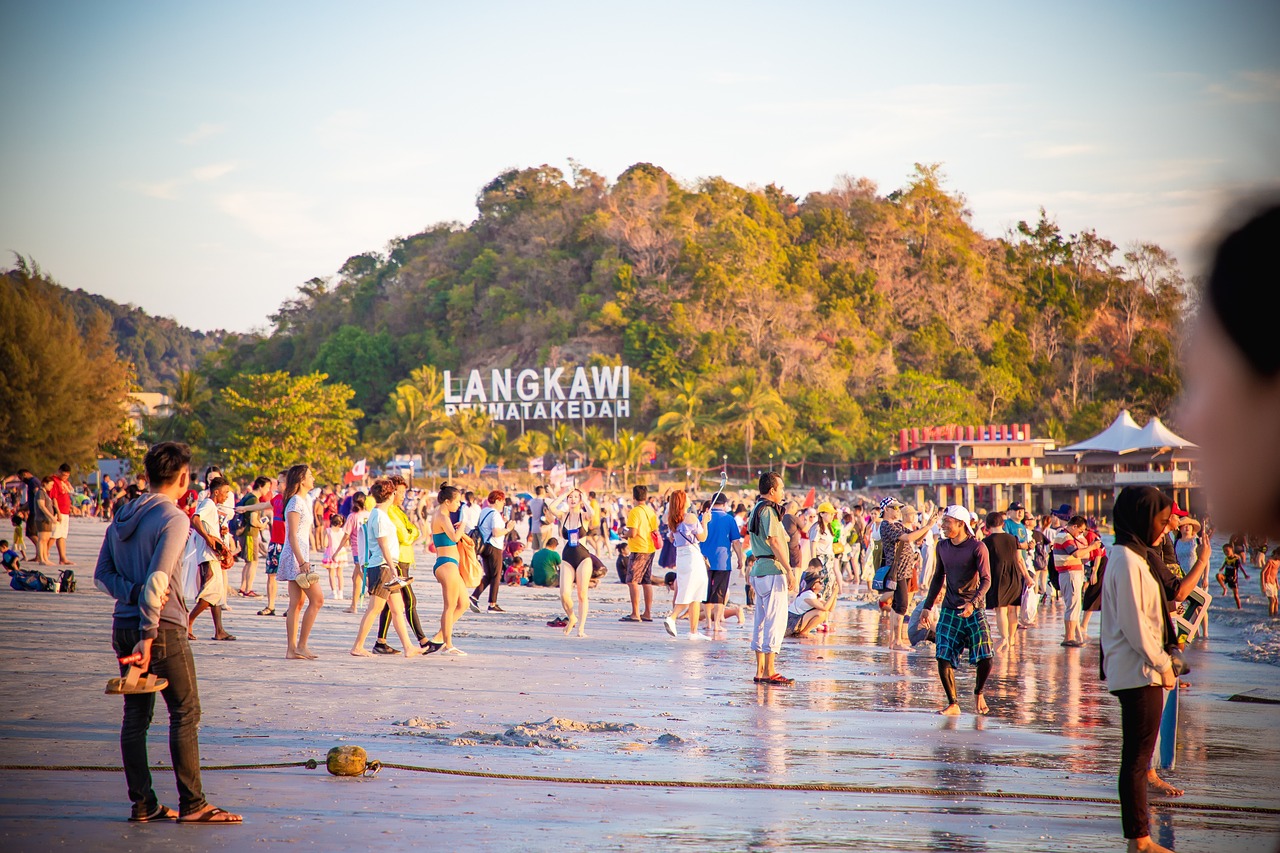
WHEN Shibu K. Nair, a regional representative of the Global Alliance for Incinerator Alternatives (GAIA), arrived to check on a talk he was scheduled to deliver at a zero-waste management conference in Langkawi, he was left dumbfounded.
Neatly arranged for participants were rows of mineral water bottles — a habit many local hoteliers continue to practise.
The intention was good, but what many fail to realise is that non-biodegradable plastics harm Mother Earth — contaminating air, sea and land.
Shibu smirked and gently reminded the organisers, the Green and Geopark Excellence Awards (GAGA), that glass bottles would be a more appropriate substitute, especially for a conference centred on saving the planet.
Feeling embarrassed, GAGA officials promptly replaced the plastic bottles with glass ones, although the Indian national tactfully ignored the irony that the conference goodie bags were still filled with plastic wrappings.
Outspoken by nature, Shibu hails from Kerala — the only state in India officially classified as a “zero waste” territory. Its defining feature is a total ban on single-use plastics, coupled with a strong shift towards recycling and composting.
A regional organics campaigner, Shibu helps communities, non-profit organisations and governments adopt zero-waste systems. He has more than 25 years of experience in environmental campaigns, research, project implementation and policy advocacy, and sits on advisory panels for local governments in Kerala — a state with a population of about 33.5 million.
Technically, one Indian state alone has more people than Malaysia.
“I’ve been involved in zero-waste campaigns and projects since 2000, working with organisations at local, national and international levels,” said Shibu, who had slept only a few hours before making his Langkawi debut.
His tenacity has rubbed off on Langkawi’s non-governmental organisations, including leading campaigners Anthony Wong Kom Fei, owner of the country’s only sustainability resort, Frangipani and Eric R. Sinnaya, former chairman of the Langkawi chapter of the Malaysian Nature Society.
Their view is simple: if Kerala can do it, why not Langkawi? Especially as a Unesco Global Geopark, the island is well positioned to become a zero-waste destination.
Backing the advocacy are former Langkawi Development Authority (LADA) general manager Datuk Kamarulzaman Abdul Ghani, LADA tourism manager Dr Azmil Munif Mohd Bukhari, and Langkawi Business Association adviser Datuk Alexander Issac.
Any lingering irritation over plastic bottles was quickly forgotten when Shibu overheard discussions about Langkawi’s potential to go zero waste.
He offered his support, but cautioned that such efforts must be holistic. Community buy-in is essential — reducing plastic use, raising recycling rates, composting organic waste and avoiding activities that degrade, rather than restore, the environment.
Incinerators, he argued, are one solution that ultimately harms long-term environmental vitality, despite claims by some quarters that modern incinerators can resolve mounting solid waste problems.
“It’s time for Langkawi to ban single-use plastic bags,” said Kamarulzaman, suggesting that local authorities could start with tourism hotspots along the Pantai Chenang–Pantai Tengah stretch.
“Nobody uses plastic. We have recycling stations instead of just dumpsters,” said Kamarulzaman, who played a key role in securing Langkawi’s geopark status.
His remarks resonated with the Penang Green Council (PGC), which is leading Malaysia towards an eventual ban on single-use plastics.
PGC chief executive officer Josephine Tan Mei Ling said Penang aims to reach this milestone within months, but stressed that it must be done in stages to re-educate ratepayers.
For Shibu’s GAIA colleagues, Indra Wahyuni of Indonesia and Dr Arlen Angelada-Ancheta of the Philippines — time, however, is no longer a luxury.
Their countries are already dealing with “garbage molehills”, stark reminders that alternatives to humanity’s polluting habits must be adopted now.
A recent landfill collapse in Cebu City, central Philippines, killed at least four sanitation workers and left more than 30 missing. Twelve others were rescued with injuries after a massive mound of garbage collapsed, trapping workers among twisted metal, tin sheets and combustible waste debris.
Before Malaysia heads down the same path as parts of the Philippines, Indonesia and India, there is still room to showcase zero-waste initiatives.
And Langkawi, Sinnaya said, could be the starting point but only with an all-out effort.
“We cannot compromise on sustainability. If we do this half-heartedly, we will still end up polluting our Earth. What then will our younger generation live on?”
Pantai Tengah and Pantai Chenang are less than five kilometres apart, making it feasible to designate the area as a zero-waste zone, he added.
Hotelier Jasmine Keh, now general manager of M Social Penang, said most international and regional hotel chains are ready to undertake sustainable initiatives that many already have.
The Asean Green Hotel Standards are already in place, while PGC is developing its own green hotel framework for Penang.
Wong said surveys show tourists increasingly prefer destinations that advocate sustainability.
There is a growing aversion to pollution, and tourists, particularly from India — have said they will only support environmentally responsible hospitality properties.
While recycling and green initiatives require upfront investment such as rainwater harvesting systems or solar energy, Wong stressed that the onus is on everyone to lobby passionately for change.
“If Frangipani can do it, I don’t see why others can’t,” he said.
In the long run, such investments reduce operating costs and, more importantly, protect Mother Earth.
“So let’s just do it… period!” said Kamarulzaman.
If Langkawi can qualify as a Unesco Global Geopark and emerge as a regional leader, he sees no reason the island cannot also become a zero-waste destination.
His remarks were echoed by Dr Azmil, the architect behind Langkawi’s shift towards sustainable tourism.
“We are an island. We can control what comes in,” he said.
Shibu added that large-scale investments are not necessary at the outset. Change can begin by addressing “low-hanging fruit” — banning plastics, recycling, reducing waste and reusing products.
“It’s not rocket science. What’s needed is political will and the courage to act for the environment. It’s already happening in Kerala.”
While no Asean island is yet 100% zero waste, several are leading the way through community-driven efforts. Philippine islands such as Siquijor, Isla Verde and Apo, along with initiatives in Langkawi and Bali, Indonesia, demonstrate how education, local action and improved waste management can protect fragile marine ecosystems. – January 13, 2026
John Chin is a Scoop reader