

AS I look out from our regional headquarters in the vibrant heart of Kuala Lumpur, I am struck by a profound sense of momentum. The dynamic hum of growth across Asia-Pacific is not just background noise; it is the sound of continents being reshaped, of energy transitions powering up, and of industries being fortified for a new era. At the core of this transformation lies a critical, yet often unseen, discipline: the integrity of every single bolted connection.
Nord-Lock Group’s decision to relocate our regional leadership to Malaysia and establish a strategic Regional Distribution Centre in Port Klang was a deliberate move to place ourselves at the epicentre of this growth. From this vantage point, serving key markets from China and India to Australia and across Southeast Asia, we see 2026 as the next pivotal chapter in a story of regional ambition. The outlook
is defined by three converging megatrends where precision, safety, and reliability are non-negotiable.
The infrastructure renaissance: Building beyond boundaries
Asia-Pacific continues to be the world’s construction site. In 2026, we anticipate accelerated investments in a new wave of strategic connectivity and digital infrastructure. The demand here shifts from mere volume to sophisticated value and unprecedented resilience.
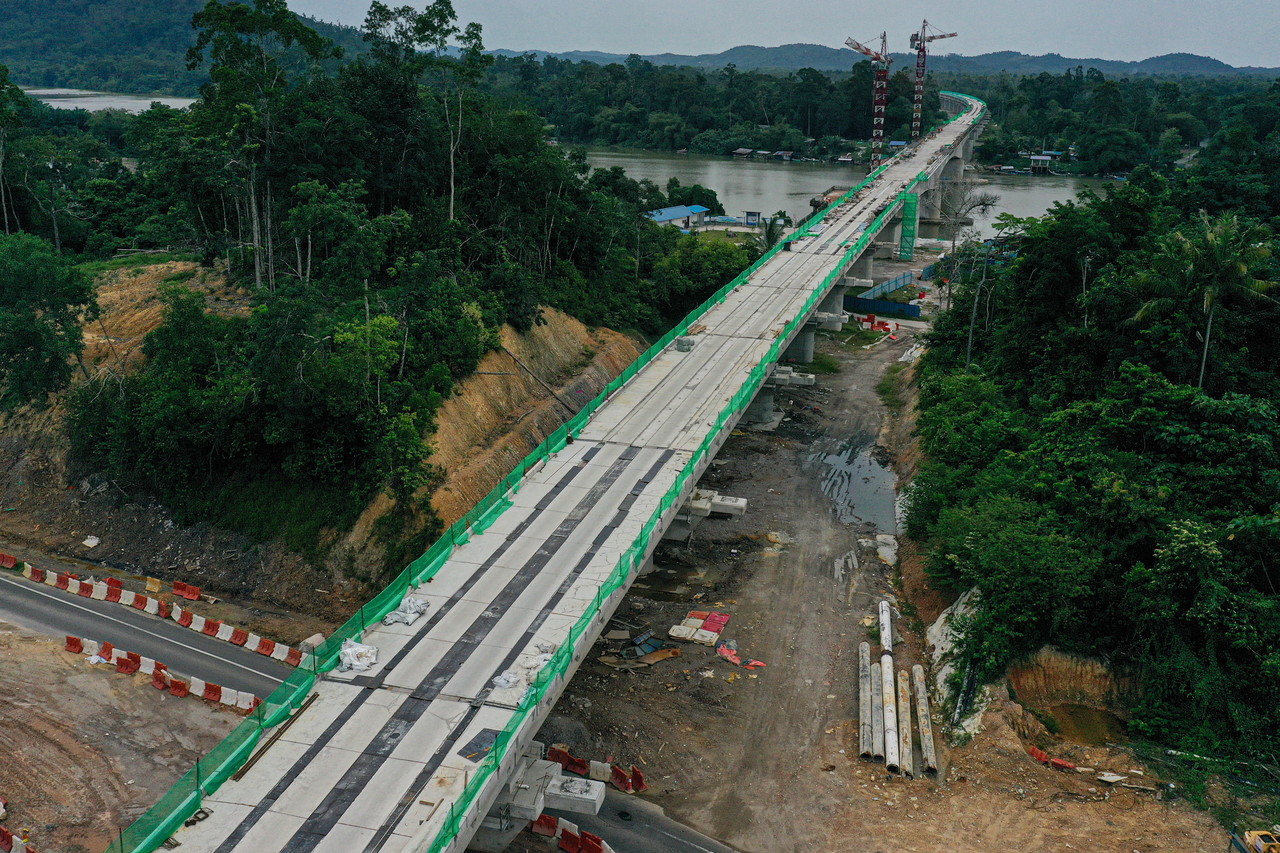
Rail is a prime example. From Malaysia’s East Coast Rail Link (ECRL) and rapid transit expansions to pan-regional projects like the Kunming-Singapore rail network, these arteries of commerce are a booming industry. The engineering challenge lies in ensuring longevity and safety across diverse, often challenging terrains. Every rail tie, bridge girder, and tunnel segment depends on bolted connections that must resist constant dynamic loads, vibration, and environmental stress for decades.
Precision here isn’t just about construction speed; it’s about passenger safety and decades of reliable, maintenance-efficient operation. Achieving this requires bolting technologies that maintain clamp force and prevent self-loosening under extreme conditions—a fundamental engineering principle that
underpins permanent rail safety.
Simultaneously, Malaysia is rapidly emerging as a strategic data centre hub, with major global players expressing firm intent to build here. These facilities are the literal brains of our digital economy, and their structural integrity is paramount. A data centre’s vibration tolerance isn’t just low; for critical server floors, it approaches zero.
Any micro-vibration from nearby construction, traffic, or even internal systems can disrupt sensitive servers, leading to data corruption or downtime costing millions.
The solution lies in engineered isolation systems and seismic-grade bolting solutions that create a rock-stable, predictable environment from the ground up. This level of precision engineering is what will distinguish Tier-IV facilities and secure Malaysia’s position in the digital arena. For critical infrastructure, from rail to data centres, specifying bolting solutions that deliver verifiable, vibration-proof security is
no longer optional—it is the de facto industry standard for risk mitigation and long-term asset integrity.
The energy transition’s tightening grip: From ambition to engineered reality
The race towards net-zero is no longer a distant aspiration; it is the definitive industrial project of our generation. As Datuk Hamzah Hussin of SEDA Malaysia rightly stated at COP30, this transition is “no longer a trade-off between growth and sustainability, but an effort to align both in pursuit of shared progress.” Here in Malaysia, and across the region, we are witnessing a pivotal shift from pilot projects
to system-wide integration. With Malaysia’s National Energy Transition Roadmap (NETR) projecting a staggering RM1.2–1.3 trillion in cumulative investments and targeting a 70% renewable energy capacity mix by 2050, the scale of ambition is clear. The critical question for 2026 is: how do we translate this ambition—and these massive financial commitments—into safe, reliable, and bankable physical assets?
The answer lies in engineering integrity at the most fundamental level. Grand roadmaps and international partnerships, such as those highlighted at COP30 for hydrogen and carbon corridors, ultimately depend on the performance of physical infrastructure. The six National Energy Transition Roadmap (NETR) levers—renewable energy, hydrogen, bioenergy, green mobility, carbon capture,
utilisation and storage (CCUS), and grid modernization—all present unique, severe mechanical challenges where every connection is mission-critical.
Similarly, the hydrogen economy is moving decisively from pilot to pipeline. The clearest signs that Malaysia’s hydrogen ambitions are becoming reality can be found in Sarawak, which is fast emerging as a regional hub for green hydrogen production.
Sarawak Economic Development Corporation (SEDC Energy), the state subsidiary responsible for developing Sarawak’s hydrogen value chain, will soon commence a pilot project to export hydrogen to Singapore. This will mark the first green hydrogen molecules produced in Sarawak to be exported, building the foundation for a regional trade ecosystem. The supporting infrastructure for green hydrogen production, storage, and transportation will require a new class of specialized, engineered fasteners and rigorous, verifiable installation protocols. The confidence of financiers and the safety of communities will be built on this material science precision.
Furthermore, the NETR’s focus on grid modernization and storage is a silent revolution in reliability. Modernizing grids and deploying grid-scale battery energy storage systems (BESS) are not just electrical projects; they are critical civil and mechanical undertakings. These facilities house immense energy in confined spaces. Their structural frameworks, busbar connections, and seismic bracing require bolting solutions that ensure flawless electrical conductivity, manage thermal expansion, and provide unwavering physical stability to prevent catastrophic failure.
As we work to “bridge the gap between policy and implementation,” the integrity of these connections is what turns a strategic roadmap into a resilient, functioning system.
The outlook for 2026 is therefore one of convergence: where policy ambition, international finance, and engineering execution must meet. The RM1.3 trillion opportunity signals a transformative re-industrialization. To capture it, industry leaders must recognize that the energy transition is, at its heart, a monumental engineering project. Its success will be secured not just in boardrooms or at policy
forums, but on the ground, in the precise and verified tension of every critical bolt that holds our clean energy future together.
Strategic resilience: The new supply chain imperative
The past few years taught us that efficiency cannot come at the expense of resilience. Our establishment of the Port Klang distribution hub was a direct response to this new paradigm. In 2026, regionalization of supply chains will mature. Manufacturers and energy operators will prioritize partners who can guarantee not just quality, but also assured availability and rapid technical support.
This means holding strategic inventory closer to key demand clusters—from mining in Western Australia to refinery expansions in India and the very data centre and rail projects taking shape here in Malaysia. It also means providing more than a product; it requires a partnership that offers expert field engineering, critical on-site training, and lifecycle management services. The companies that thrive will be those who view their critical components as a strategic pillar of their operational continuity, not
just a procurement line item.
Holding the future together
As Regional Managing Director of Asia Pacific, my outlook for 2026 is one of cautious optimism, underscored by a clear recognition of responsibility. The grand visions of national development plans, the bold blueprints for clean energy, and the intricate designs of advanced manufacturing all converge on a simple, profound truth: they are only as strong as their most critical connections.
From our regional office in Kuala Lumpur, with our strategic pulse in Port Klang, we are committed to being more than a supplier. We are a partner in progress, ensuring that the region’s ambitions—from typhoon-swept coasts to vibration-sensitive server halls and high-speed rail corridors—are built on a foundation of unshakeable integrity. The story of Asia-Pacific in 2026 will be written in steel, concrete, and composite. Our role is to ensure every chapter is held together with absolute certainty, today and for decades to come.
For industry leaders, the message is clear: as you plan for the ambitious year ahead, look closely at what holds your future together. In the precision of a bolted joint lies the difference between projected growth and guaranteed progress. – January 15, 2026
Norbert Hentschel is the Regional Managing Director, APAC Regional Managing Director of BU Nord-Lock at Nock-Lock Group