

“IT’S okay, he can start kindergarten at six and enter primary school at seven,” my late father, Raj Kumar Soman A.M.N, said in 1991. To him, once a child entered the education system, childhood effectively ended: it became a life of timetables, targets, and quiet competition, where innocence slowly gave way to the pressure of ticking boxes.
I turned out fine, and because of that, I echoed that sentiment and did the same with my little one.
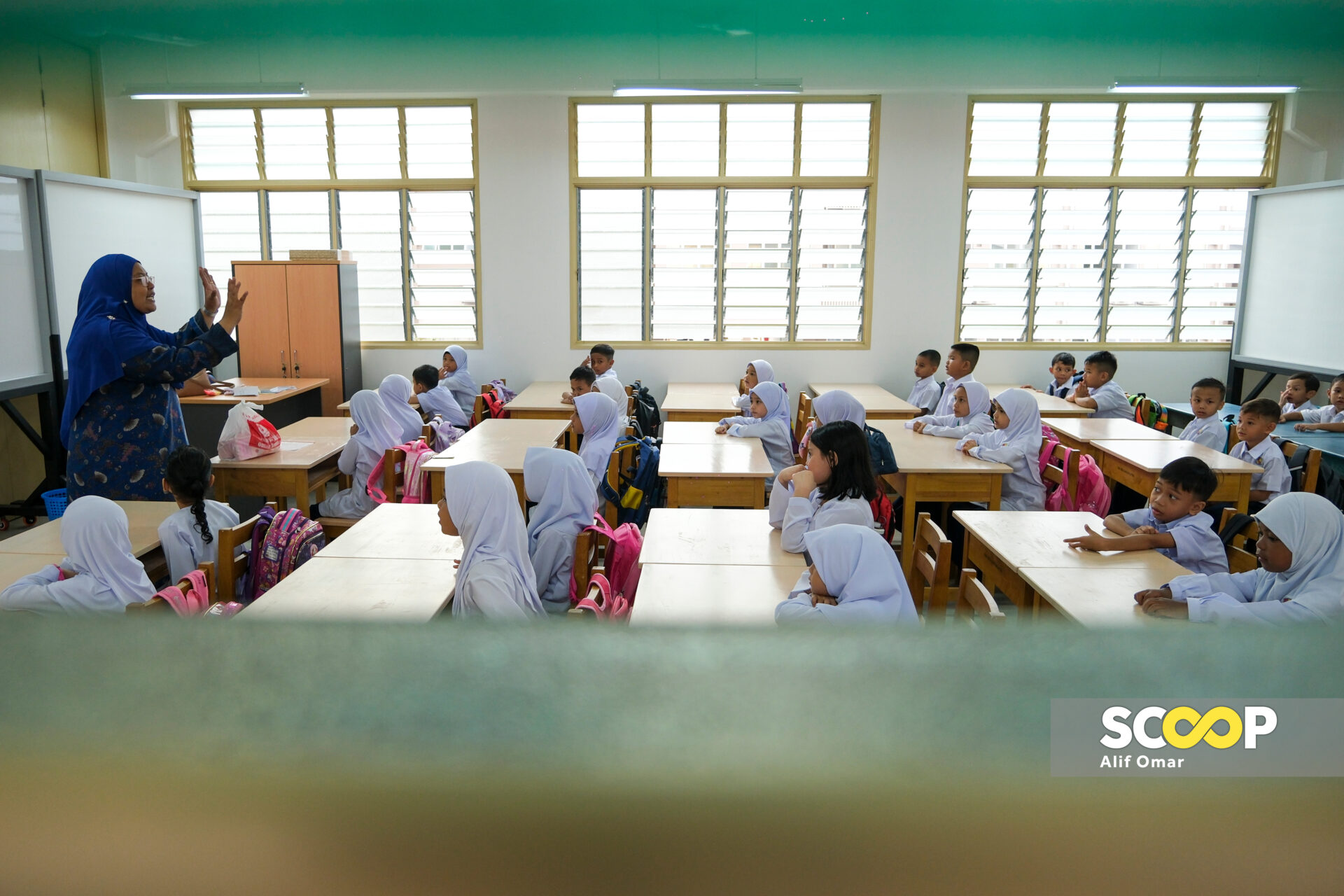
Now, after learning about the National Education Plan 2026–2035, one question comes to mind: never mind whether children are ready for a special diagnostic screening test are the teachers ready for what is coming when six- and seven-year-olds are in the same classroom?
Before enrolling in Standard One, I took an assessment to see where I could enter the SJKC system, but that was for the Chinese school system, so it is understandable. Yet, if only children who meet the required criteria and pass the diagnostic assessment are offered admission, what happens to those who fail? Do they go back to preschool?
Are Malaysian schools prepared to welcome an exodus of pupils?
Will the national syllabus be enhanced to follow global standards? If so, are teachers ready to meet those standards?
Are our preschools equipped to prepare children for these changes?
Most importantly, are parents from Perlis to rural Borneo ready and equipped for the reforms in the education system?
Speaking as a parent, I understand that the Malaysian education system is attempting a revival after decades of intellectual drift.
My late father always said he studied pure Science, History, and Geography as distinct disciplines. Science was built on formulas, classification, and deep factual mastery.
That came after he read books from the KBSR/KBSM era, which he called a period of “intellectual softening.” It took me a while to see the truth in that. I did not encounter a History book or standalone Geography syllabus until I was 13. While my father knew the map of the world at age nine, I struggled to locate Afghanistan, never mind its capital.
I mention Afghanistan because my father used to quiz me using the Atlas and alphabetically, it is the first country.
The Malaysian government seems to be attempting to legislate excellence into existence, without acknowledging that policies alone cannot teach children if infrastructure fails.
When my father sat for his exams in the 1970s, the system was designed for a smaller population. Today, the 2026 National Education Plan attempts to reclaim that lost “technical rigor,” which is admirable, but it faces a landscape physically and socially hollowed out.
We are confronting a crisis of structural friction that makes the 2026 goals mathematically improbable. When I joined primary One In 1993, with a population of 19 million, land was abundant, and access to education was a luxury. In 2026, with 35 million people packed into high-rise condominiums, classrooms in the city are overcrowded.
The pure science and deep mastery championed in the 1970s required focused classroom environments and manageable teacher-to-student ratios, both sacrificed in the rush of urbanization.
Pushing six-year-olds into primary school may be a brilliant pedagogical idea, but the reality of overcrowded, under-resourced classrooms is likely to crush that brilliance.
We are not clawing back lost time. If the goal is set for 2027, we are accelerating the rate of failure.
Teachers are now expected to deliver global-standard education while managing the behavioural needs of six-year-olds in classrooms designed for the 1990s. You cannot expect a teacher burdened by administrative box-ticking to pivot to a diagnostic-led curriculum without proper training — training that has yet to occur.
If the foundation is weak, adding more structure to make it appear taller will not make the building elite. As my best friend, an architect, always says: “This is a draftsman’s job who approved the structure?”
This system may not produce geniuses. If we simply rush children into overcrowded, under-resourced classrooms, we will end up with burned-out teenagers who were deprived of their childhood — a year earlier. – January 23, 2026
Kishen Alex Raj is a PR practitioner and Scoop reader