

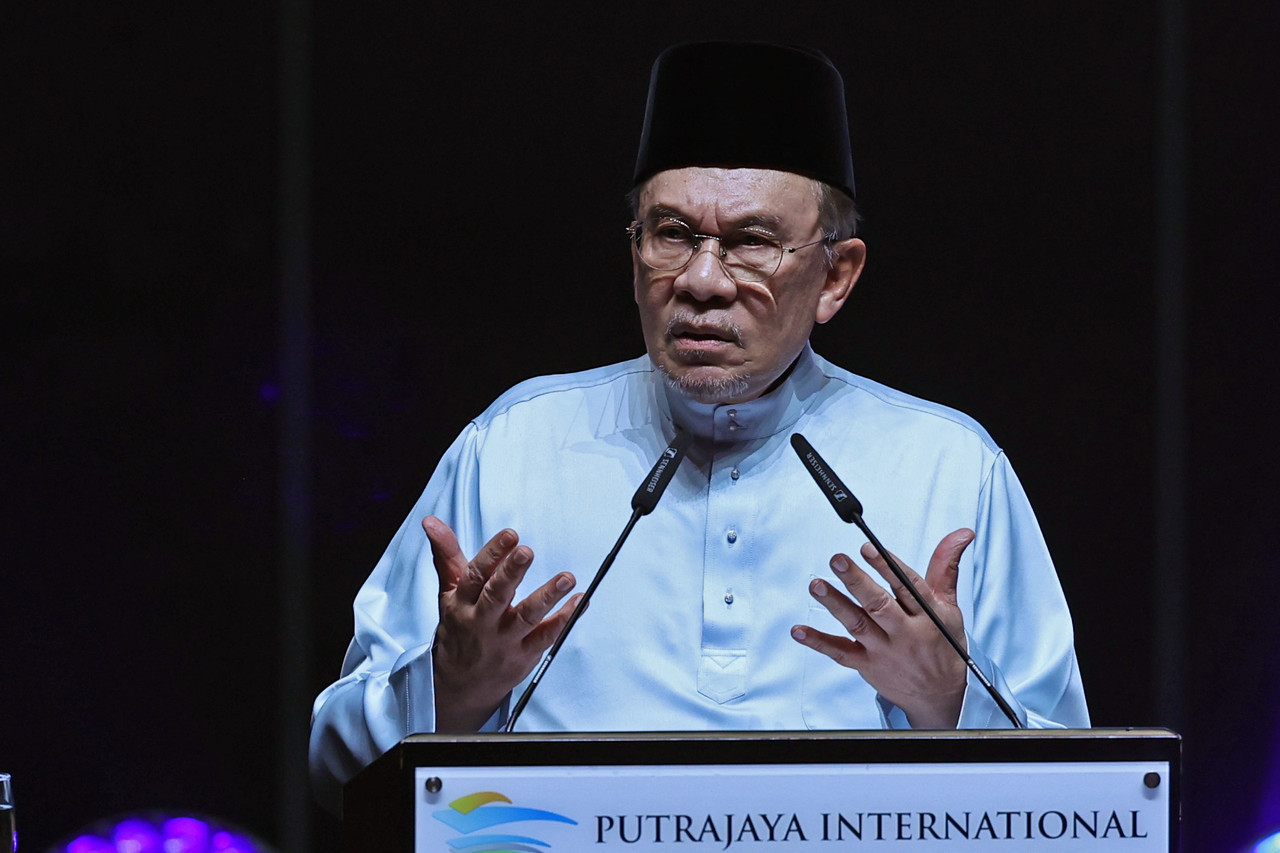
IN his New Year speech, Prime Minister Datuk Seri Anwar Ibrahim described 2026 as “the year of execution”, indicating that the political and governing machinery should focus on the delivery of plans and reforms beyond the announcements coming out of Parliament and Putrajaya.
The phrase is apt, and hints at the importance of strategic communications. Policies do not succeed merely because they are well designed; they succeed when they are understood, trusted and acted upon by the public. In an unsettled world, communication is one of the government’s most important tools of execution.
The timing also matters. Globally, politics and economics are noisier than at any point in living memory. Geopolitical rivalry has intensified, supply chains remain vulnerable, and financial markets swing sharply on the basis of events far from Malaysian shores. For households and firms, this creates a sense of constant uncertainty. Even prudent policy adjustments (e.g. targeted subsidies, fiscal consolidation or industrial upgrading) can feel destabilising when they arrive amid global turbulence and contradicting narratives.
This environment places a premium on clarity. Governments today do not communicate into a vacuum. Leaders communicate into a crowded marketplace of ideas, rumours and provocations, made worse by the rise of AI-generated content that has transformed said marketplace. Synthetic images, videos and text can be produced at scale, often optimised for outrage rather than accuracy. Some of this content is frivolous, but much of it is intentionally misleading.
A striking example emerged in the United Kingdom, where a Sri Lankan content creator, Geeth Sooriyapura, used generative AI to create inflammatory images of migrants that were later amplified by far-right groups. The episode illustrated how easily fabricated material can acquire political potency once it escapes into social-media ecosystems. Malaysia, with its diverse society and high social-media penetration, is not immune to similar dynamics.
Against this backdrop, government communication is no longer simply about announcing decisions. It is about providing an authoritative and trusted reference point, where the rakyat can reference when confronted with contradictory claims. Friendly, consistent explanation helps reduce anxiety, counter misinformation and build confidence that change is purposeful rather than knee-jerk or arbitrary.
One useful starting point is values. When policies are anchored clearly to shared values, they become easier to interpret. These can range from fairness and dignity to justice and resilience.
People may disagree with individual measures, but they are more likely to accept trade-offs when they understand the principles guiding them. Values also provide coherence across ministries, allowing the government to speak with one voice even on complex, multi-agency reforms.
Another priority is translation. Much of government policy is written in a language optimised for precision rather than accessibility. Terms such as ‘structural’, ‘rationalisation’ or ‘targeted’” are meaningful to economists but opaque to the public. Successful communication requires translating this jargon into everyday language: what changes, when it changes, and how it affects a person’s bills, job prospects or entitlements. This is not dumbing down policy; it is completing it.
Channels matter as well. Different audiences absorb information differently. Younger Malaysians may prefer short explainer videos on TikTok or Instagram; professionals and business leaders may turn to newspapers and long-form interviews; rural communities may rely more on radio or WhatsApp-based content. Using multiple platforms is not about chasing trends but about meeting citizens where they already are. Repetition across channels reinforces understanding and reduces the space for distortion.
In New York, the rise of the social democracy Zohran Mamdani has been accompanied by analysis of his disciplined communication style: simple language, clear framing and a consistent focus on how policy affects everyday life. Supporters credit this approach with broadening engagement beyond traditional political audiences. The lesson is not ideological but practical as clarity and consistency help policy travel further.
At the same time, context is crucial. Posting images or videos of events without explanation risks reducing communication to performance. The rakyat increasingly expect to know not just that something happened, but why it matters. A policy walkabout, a site visit or a meeting gains value when paired with a brief narrative that connects it to outcomes people care about.
Ultimately, good communication is an act of respect. It signals that the rakyat are partners in reform, not passive recipients of decisions. In an era of geopolitical uncertainty and algorithm-driven misinformation, explanation is not spin; it is public service.
If 2026 is indeed the year of execution, then communication will help determine whether execution feels like disruption or progress. Malaysia has the opportunity to show that effective governance is not only about doing the right things, but also about explaining them well. – January 27, 2026
Dr Helmy Haja Mydin is Chairman of Social & Economic Research Initiative (seri.my)