

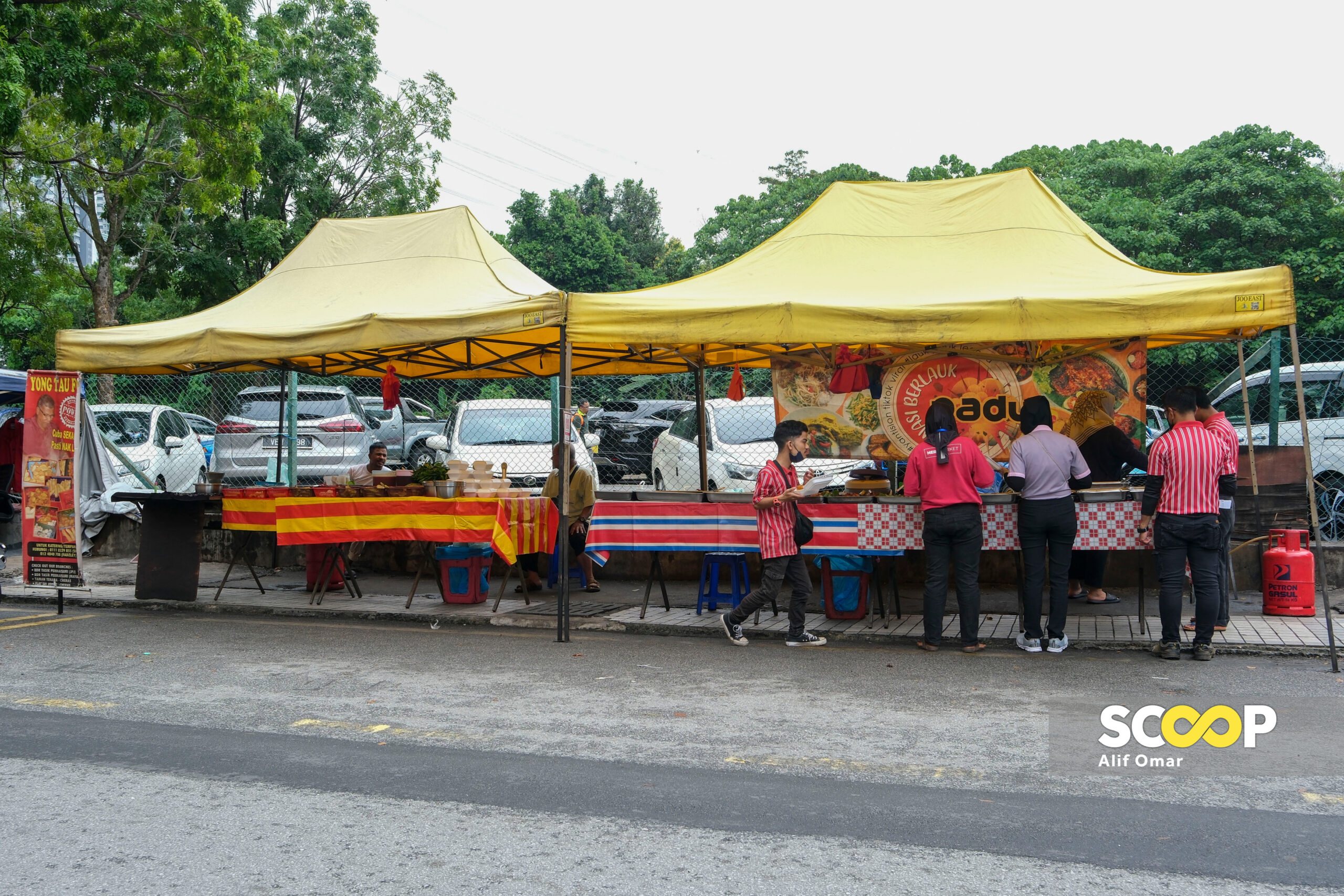
KUALA LUMPUR marks 54 years as a city and 52 as a Federal Territory – milestones that should signal maturity, sophistication and world‑class planning. Yet every weekday at 12.30pm, the real KL is revealed not in glossy brochures or skyline photos, but in the chaos of its lunch hour, searing heat, fumes, double‑parked cars and office workers scrambling for a decent, affordable meal.
On paper, this is a modern capital. On the pavement, it often feels like a city that has forgotten how its people actually live.
A rich city, poor lunch
KL was carved out of Selangor in 1974 to be Malaysia’s showpiece capital, our front window to the world. Skyscrapers, Grade A offices, rail lines, highways, malls and prestige developments all proclaim success. But if you ask the people who work in those towers what the city feels like between noon and 2pm, the story changes.
They talk about sprinting across dangerous side roads under the blazing sun. They describe stalls squeezed between parked cars, oil spluttering into open drains, smoke and exhaust mingling with the smell of fried rice.
They speak of paying RM18–RM25 for a “simple” lunch because anything cheaper is either too far, too filthy or too risky. In a capital that prides itself on modernity, hundreds of thousands of workers live a third‑world lunchtime reality.
The core problem is simple: we design impressive buildings, but we don’t design for the people inside them. Our planning mindset still centres on lines on a map – buildings, roads, parking bays – and assumes that food, shade and daily life will somehow sort themselves out. They do, but in the messiest, most stressful way.
Grade A facades, kampung‑level planning
Human behaviour is not a surprise; it is predictable. Wherever you cluster offices densely in any city in the world, an informal food economy will appear within a few minutes’ walk. Workers want quick, familiar, affordable food close enough that they can eat, rest and get back to work within an hour.
They do not want a branded café that costs half their daily wage or a mall food court hidden ten minutes away and packed with tourists.
Yet our plans and glossy models almost never show this “hawker layer”. We see lobbies, atriums and retail podiums, but rarely dedicated spaces for stalls, worker‑friendly food courts, shaded seating or proper loading, drainage and waste facilities for those who cook the meals that power the city. We design for investors’ eyes, not workers’ stomachs.
Bangsar at lunch: fantasy meets reality
To see this blind spot in full motion, stand near Menara UOA Bangsar on a weekday. The tower is directly plugged into the Bangsar LRT station – a planner’s dream node where rail, roads and dense offices intersect. On paper, it’s everything a modern transit‑oriented development should be.
Then watch what happens at 1pm.
Side lanes and access roads around the tower begin to morph. A few stalls appear, then more. Plastic tables and stools bloom along the kerb. Cars double‑park without hesitation. Delivery riders’ slalom between vehicles. Office workers stream down from the tower and station, drawn to the only thing that fits their budget and schedule: hot, familiar food a few steps away.
Within minutes, a simple access road becomes almost impassable. But this isn’t because Malaysians are “undisciplined”. It’s because no one planned for the obvious. Thousands of people work here, they need to eat here, not in some distant, air‑conditioned fantasy. Faced with limited choices, workers are forced into an unfair trade‑off: pay absurd prices in outlets designed for high‑spending customers, or crowd into precarious roadside setups that could be shut down at any time. The message from our planning system is stark, you are welcome to work here, but your stomach is your own problem.
The current reflex: chase, legalise, chase again
City Hall is not oblivious to hawkers. It issues licences, runs “legalisation” drives, announces deadlines for unlicensed traders to regularise, and provides markets, hawker centres and relocation schemes. On paper, infrastructure exists.
But the underlying thinking treats hawkers as a nuisance to contain, not an essential service to plan for. The cycle is familiar, a new office block or transit hub opens, hawkers appear outside because that’s where the crowds are, enforcement arrives with notices and relocation offers to far‑off sites, business drops, stalls drift back to the streets, and the cycle repeats.
The system’s assumption is: “We have provided some hawker centres; anything outside those is illegal and must be controlled.” What it refuses to accept is the more honest reality: “Every major development generates a predictable level of food demand, so we must design for it from day one.” This is not firm enforcement. It is planning by denial.
A simple new rule: no tower without a hawkers’ corner
After more than five decades as a city, KL should be beyond such naivety. The new Federal Territories Minister has a rare opportunity to reset priorities and send a clear signal that everyday life is not a side issue; it is the starting point of planning.
One clear principle could change the game: no major development without a planned, serviced hawkers’ corner.
Make it a legal requirement. Amend the KL City Plan and guidelines so that any project above a certain size – by floor area, worker count or residential units – must include a “Local Food & Micro‑Retail Component”.
Set minimum numbers of hawker‑type stalls per 500 workers. Mandate built‑in water supply, proper drainage, grease traps, waste areas, ventilation and shared toilets. Treat this infrastructure like fire escapes or car parks: non‑negotiable.
Developers should not be allowed to hide these spaces in dark basements. At planning approval stage, they must show where these food spaces sit in the real life of the building – perhaps at podium edges, in shaded courtyards or along designed “food streets” – with circulation, queuing and loading thought through from the start, not improvised later.
Tie building approval to a Hawker Management Plan. If a project wants planning permission, it must explain who will manage the hawker area, how stalls will be allocated (with priority for existing nearby traders), when cleaning happens, how waste and used oil are handled, what hours are allowed and how noise is controlled. Certificates of Completion and Compliance should only be issued once these facilities are built and ready.
Licensing can remain with City Hall, but every major development should appoint a “Hawker Coordinator” in its management. Licences are then issued into planned, serviced spaces inside the project, not scattered along the roadside. If management tolerates unlicensed stalls clogging the streets while approved stalls inside sit empty, penalties should fall on the management too. Responsibility must be shared, not dumped on hawkers alone.
To encourage excellence, pair enforcement with incentives. Reward developers who provide more and better hawker facilities than required with modest plot ratio bonuses, parking relaxations or fee rebates. For those who ignore the everyday impact of their projects, introduce a “Public Realm Impact Charge” to cover the extra enforcement, congestion and clean‑up costs they impose on the city.
Planning for people, not just profit
All of this demands a deeper mental shift, accepting that culture and behaviour are central, not optional extras. KL’s plans must be grounded in how people actually move, eat and live. That means investing in real studies on where office workers take their lunch, how informal food economies cluster around stations and hospitals, and what price points most urban workers can realistically afford.
It means requiring major projects to conduct user‑behaviour and community impact assessments, not just traffic and environmental reports. It means bringing planners, licensing officers, public health teams and hawker representatives into the same room when drafting local plans and approving mega‑projects.
And it means measuring success through more human metrics: how many licensed hawkers operate in dignified, well‑serviced spaces; what proportion of new developments include proper hawker infrastructure; how many workers can get a safe, clean, affordable meal within a short walk of their desks.
On Kuala Lumpur City Day, the question to the new Federal Territories Minister is blunt. Will we keep building a city that dazzles the eye but neglects the stomach – chasing hawkers from corner to corner while pretending they don’t belong?
Or will we finally acknowledge that a truly great capital is not defined only by its skyline, but by something far humbler, whether the people who work under that skyline can sit down, in comfort and dignity, to eat. – February 2, 2026
Ravindran Raman Kutty reminds us that Kuala Lumpur’s true soul is not just in its skyline, but in the riot of flavours steaming, frying and simmering at every corner. He urges our planners to put on their thinking caps and harness this everyday greatness, so that everyone who works, lives, studies in, or simply visits our national pride called Kuala Lumpur can taste a city that plans for its people as carefully as it polishes its glass and steel