

Competition season has begun. Across venues, young athletes arrive early, coaches prepare with focus, and families gather proudly to watch months of training unfold.
Yet within this familiar rhythm of children’s sport, one small habit reveals a larger question about the culture being built around young athletes.
In Malaysia, many people know the word “chup.”
It is used casually to mean reserving, holding or claiming a space before someone is actually ready to use it. It may be a bag on a chair, a bottle on a table, or one person waiting on behalf of a larger group.
In crowded places, “chup” can feel almost instinctive. It reflects a simple fear: if we do not claim a place quickly, someone else will.
In a sporting setting, however, the habit carries wider consequences. Competition venues are not ordinary public spaces. They are environments where children prepare, perform, and learn from the conduct around them. Small behaviours, repeated often enough, quietly become the norm.
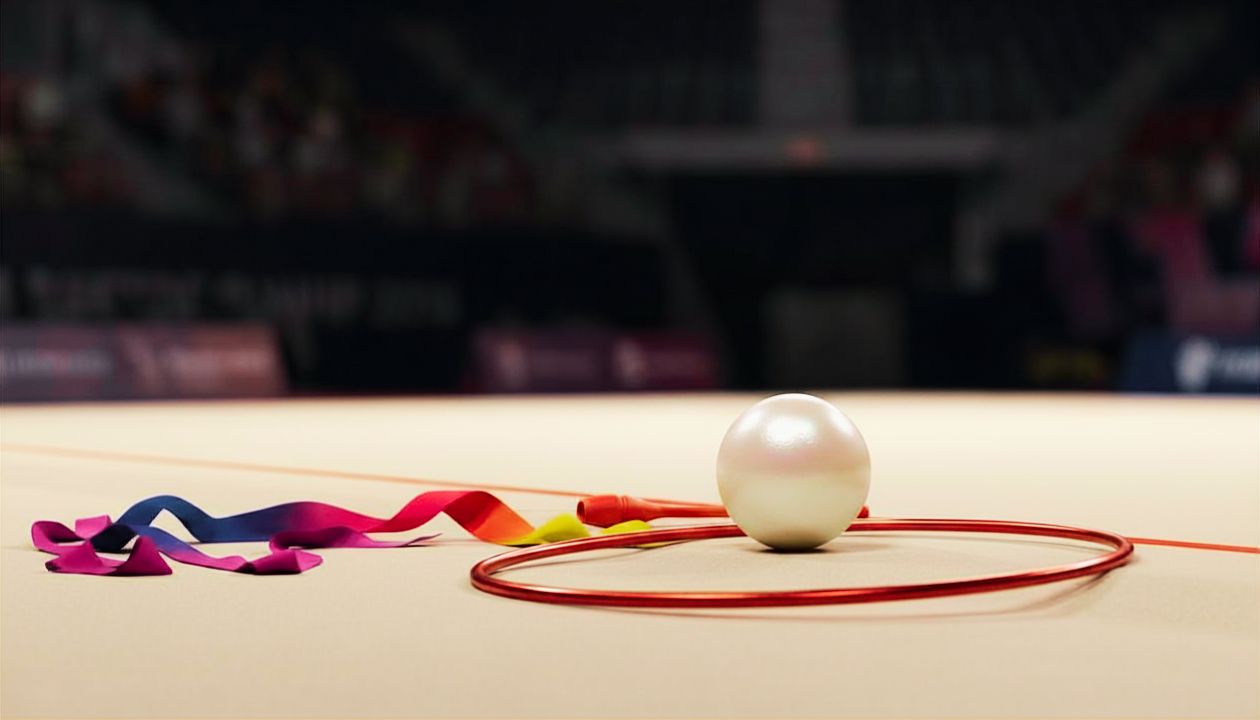
A warm-up carpet, for example, is not a waiting area. It is a functional training space. When people sit on it to reserve a spot before their child or team is ready to use it, it may seem harmless. But for a gymnast already warming up, the available space is reduced. Movement becomes restricted, safety may be compromised, and preparation is interrupted.
The issue is not confined to warm-up areas. Seats with the best view are often held for people who are not yet present. Spectator zones become informal recording stations reserved for select families. Common areas slowly begin to function as private territory rather than shared space. Those arriving expecting fair access may instead encounter unwritten rules that privilege those who arrived first — or claimed more aggressively.
Attempts to question this behaviour are often met with resistance. The justification is familiar: “We came early,” “We are saving it for our team,” or “Everyone does it.”
That, perhaps, is the most telling point. When “everyone does it,” the question of whether it is right begins to disappear.
Sport does not build character by accident. It reflects the standards adults set, enforce, and normalise.
Venue etiquette should be clear. Warm-up areas are for athletes actively preparing. Spectator spaces are communal, not privately reserved. Recording should be done with awareness of others. Access should not become entitlement.
Many parents hope to see their children reach elite levels in sport. But that ambition depends on more than talent alone. It requires an ecosystem: better coaching, stronger judging, meaningful competition structures, improved facilities, and clearer pathways.
Excellence, however, is not built by systems alone. It is also shaped by culture — by how shared spaces are used, how boundaries are respected, and how fairness is practised in everyday behaviour.
Malaysia has the talent, passion, and
community support to build a stronger sporting environment for its athletes. But that requires a willingness to examine the small habits that quietly shape how children experience sport.
Not everything familiar is acceptable. Not everything common is right. – June 5, 2026
Sarina Sundara Rajah is a former Commonwealth Games gold medallist in and an advocate for Safe Sports