

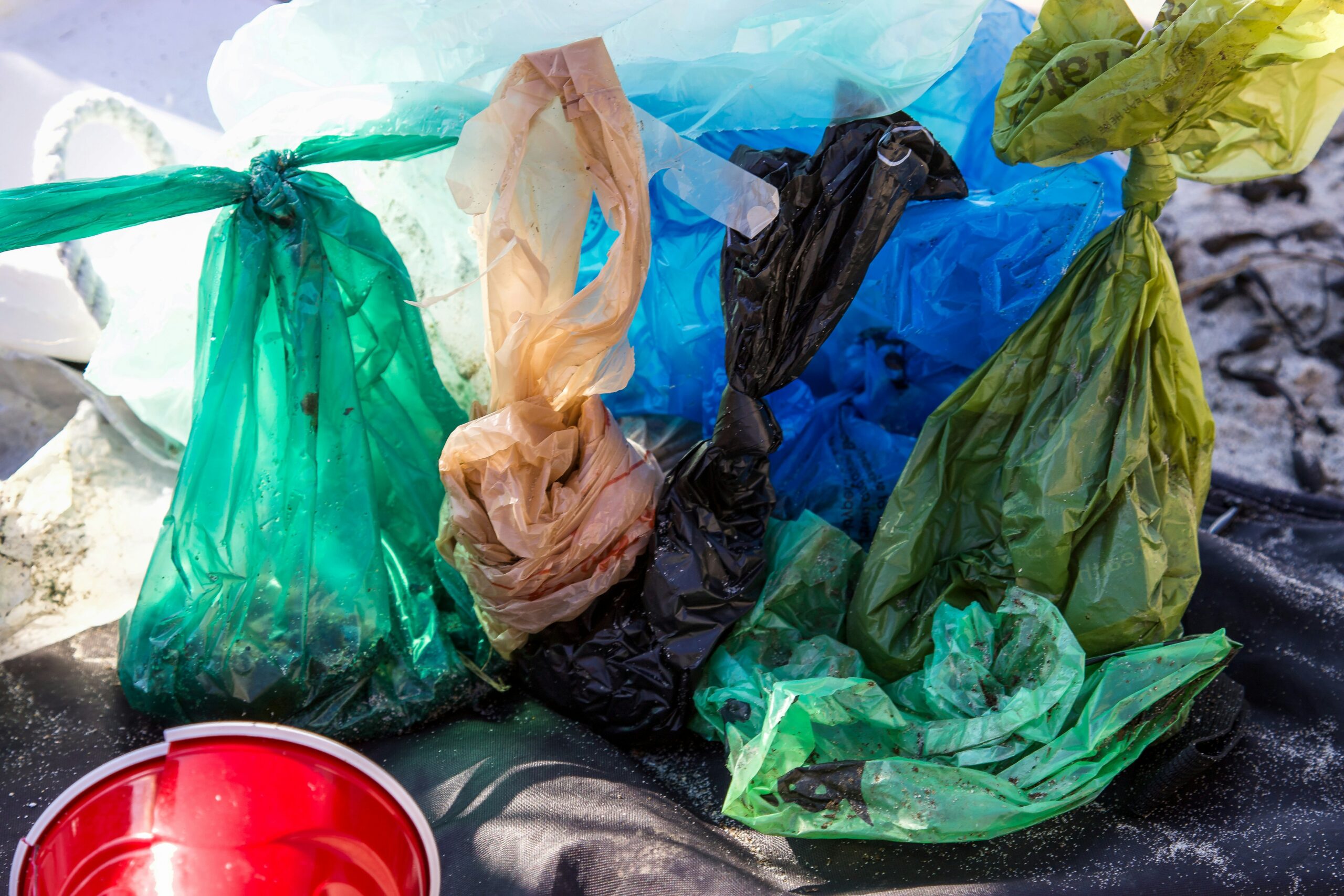
I WAS angered reading recent reports on how developed nations continue to ship their plastic waste to countries like Malaysia, Indonesia, and Turkey. It exposes a blatant double standard: nations that preach sustainability at home are still offloading their environmental burden onto others.
This is not responsible waste management; it is the deliberate export of a problem they are unwilling to confront themselves.
For too long, rich nations have treated plastic waste as something to be moved, not managed. They celebrate recycling goals at home while quietly shipping mountains of discarded packaging abroad, often to countries that have far less capacity to deal with it safely. The result is a global system built on denial, the consumer gets the convenience, the exporter gets the credit, and the importing country gets the pollution.
That system must end. Not be improved, not be “reformed” around the edges, but stopped decisively. Because if developed countries can export their waste to Malaysia and elsewhere, they will keep doing it. And as long as they keep doing it, the world will keep pretending that plastic pollution is being addressed when it is being outsourced.
The lie at the heart of the trade
The first thing that must be confronted is the basic dishonesty of the current model. A country cannot call itself sustainable if its recycling system depends on sending contaminated plastic to another nation. That is not circularity, it is displacement. It removes waste from public view without removing waste from the world.
This trade is especially harmful because it often targets countries with weaker regulatory systems or less enforcement capacity. Waste shipments may be mislabelled, poorly sorted, or contaminated beyond what local facilities can handle. Once that happens, plastic that was supposed to be “recycled” ends up dumped, burned, or leaked into waterways and soil. The damage is not theoretical. It is visible in burned processing sites, overloaded landfills, polluted air, and the burden placed on nearby communities.
Rich countries have long hidden behind the word “recycling” as though it automatically means environmental responsibility. It does not. If the collection, sorting, and processing chain breaks down at the point of export, then the system is failing, even if the shipping manifests are clean.
Stop the export loophole
The most immediate reform is simple. Developed nations should stop exporting plastic waste to countries that do not have the capacity, consent, and infrastructure to manage it safely. In practice, that means ending the loopholes that allow countries to send low-value, mixed, or contaminated plastic abroad under the label of recyclable material.
This requires tougher rules on contamination thresholds, stricter tracking of waste shipments, and full transparency about where exported waste ends up. If a country cannot prove that its plastic waste will be responsibly processed, it should not be allowed to ship it out. The burden of proof should rest with the exporter, not the recipient.
The idea that one nation’s rubbish can be another nation’s raw material is often used to justify the trade. But plastic is not like clean scrap metal. Much of it is chemically complex, mixed with additives, and expensive to reprocess. In real-world conditions, especially when contaminated by food residue or mixed polymers, much of it has little value. Exporting it simply passes the problem down the chain.
Make producers pay
The second fix is to make the companies that profit from plastic packaging pay the full cost of dealing with it. Extended producer responsibility should not be a slogan. It should be law with sharp teeth. If a corporation puts plastic on the market, it should be financially responsible for collecting, sorting, and safely disposing of that plastic wherever it is sold.
This changes the incentives. Right now, it is often cheaper to use throwaway packaging and export the waste than to redesign products or fund proper domestic systems. That must be reversed. Producers should face higher fees for hard-to-recycle materials, unnecessary layers of packaging, and single-use plastics that have no meaningful afterlife. The cheapest option should be the most sustainable one, not the dirtiest.
Governments should also require companies to disclose the true recyclability of their packaging. Too many products are marketed as recyclable in theory while being impossible to recycle at scale in practice. That kind of greenwashing fuels the illusion that plastic can be endlessly managed when only a fraction is recovered.
Build systems that work
Stopping exports is only part of the answer. Developed countries must also build domestic waste systems that can handle what they generate. That means investment in local sorting, reuse, repair, and recycling infrastructure, but also a serious shift toward waste prevention.
Recycling alone will never solve the problem. The volume of plastic being produced is simply too high. Countries need to reduce packaging at the source, eliminate unnecessary single-use items, and promote refill and reuse models wherever possible. Supermarkets, manufacturers, and logistics firms must be pushed to redesign their systems around durability instead of disposability.
This is especially important because many plastic items are used for minutes and persist for centuries. A system that keeps producing disposable goods faster than it can process them is not a recycling system at all. It is a waste generation machine. The only way to stop the machine is to slow production down.
Stop weak accountability
Another reason this problem continues is that accountability is fragmented. One country produces the plastic, other ships it, other processes it, and another cleans up the damage when the system fails. Everyone benefits from the convenience, but no one takes full responsibility.
That must change through international agreements with enforcement power, not just voluntary pledges. Developed countries should be required to report plastic waste exports transparently, itemize the receiving country, and demonstrate that waste is being handled under safe and lawful conditions. Penalties should be imposed for illegal dumping, false declarations, and shipments that violate environmental standards.
At the same time, importing countries should have the right to reject shipments they do not want and to demand compensation when contamination or illegal waste creates harm. If a country receives waste, it never truly consented to manage, it should not be left alone to bear the consequences.
Change the politics of convenience
The hardest part of solving this crisis is political, not technical. Exporting waste is politically attractive because it keeps the mess out of sight. Citizens are told their waste is being “recycled,” industries are spared major change, and governments avoid the backlash that comes with rethinking consumption.
That comfort must be broken. Public pressure should focus on the real story behind plastic waste. It is not disappearing, and it is not someone else’s problem. Media, schools, civil society groups, and local governments should keep exposing the gap between recycling claims and actual waste outcomes. The more people understand where their plastic ends up, the harder it becomes for leaders to hide behind vague environmental language.
Consumers also have a role, but this cannot be framed as an individual moral burden alone. The scale of the problem is too large for personal habits to solve it. The responsibility lies primarily with governments and corporations that shape production systems, design rules, and trade flows.
Responsibility cannot be outsourced
The central principle is plain: the countries especially the local authorities that create the waste must own the waste. They must pay for it, process it, and stop exporting harm under the banner of sustainability. Anything less is environmental hypocrisy.
If developed nations are serious about climate leadership and environmental justice, they should prove it by keeping their plastic waste at home and dealing with it responsibly. They should reduce production, redesign packaging, strengthen domestic infrastructure, regulate producers, and close the export loopholes that have turned poorer countries into dumping grounds.
The world does not need more promises that sound green. It needs governments willing to accept that convenience has consequences. And it needs them to act now, before the cost of inaction is measured not in policy debates, but in poisoned land, polluted seas, and communities forced to live with the waste of others.
Sustainability is not an elite academic concept to be confined within the halls of Oxford, Harvard, or Imperial. It is a lived reality with real consequences, and it must be treated with the seriousness, respect, and urgency it demands. – June 14, 2026
Ravindran Raman Kutty is an award winning PR practitioner