

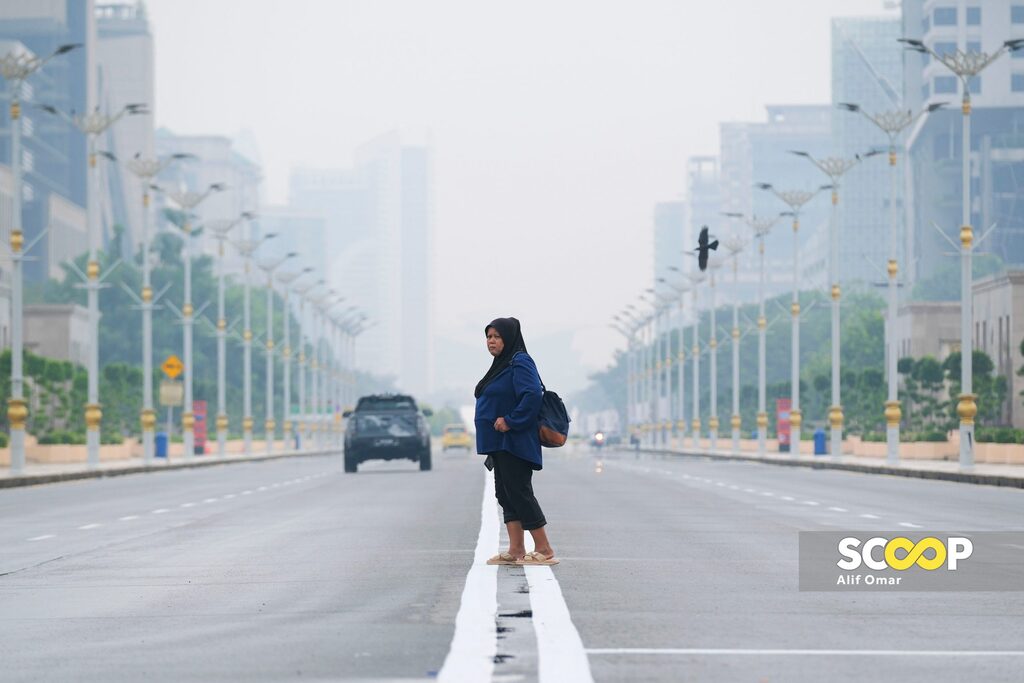
DRIER conditions may spark major fires across Southeast Asia. But what we do between haze seasons matters more.
The natural but irregular Pacific Ocean cycle between warmer El Niño and cooler La Niña conditions causes year-to-year fluctuations in the global climate.
El Niño intensity can be forecast using a range of models and informed by global environmental observation systems. Currently, they clearly indicate that the emerging El Niño will strengthen over the remainder of 2026.
However, the degree of strengthening is uncertain. Some models predict a moderate El Niño, while others predict very strong Pacific warming – what has been dubbed in the media as a “Godzilla” El Niño.
Latest forecasts from the US National Oceanic and Atmospheric Administration indicate a more than 60% chance of a very strong El Niño happening by the end of 2026.
El Niño and the haze
A stronger El Niño usually means significantly warmer and drier conditions across much of Southeast Asia.
These conditions can prime the land for fire, thereby increasing the risk of a major regional haze episode. For example, very large haze events in 1997 and 2015 coincided with very strong El Niño episodes.
While El Niño increases the risk of haze, there are, of course, also other factors involved.
Long-term climate change means that a strong El Niño this year could produce more extreme climatic impacts than one in decades past. And conditions on the ground, linked to land management practices and governance, are the actual determinants of whether fires start in the first place.
We have not seen a major transboundary haze episode since 2019, most probably due to the dominance of La Niña (cooler and wetter) conditions. However, there have been minor haze episodes, indicating that underlying drivers of fires persist.
There have been various regulatory developments to mitigate haze at the national and regional levels.
Indonesia’s President Prabowo introduced a new Desk Koordinasi Penanganan Karhutla (Forest and Land Fire Handling Coordination Desk) in 2025 to coordinate operations to prevent and mitigate haze.
Furthermore, the long-promised ASEAN Coordinating Centre for Transboundary Haze Pollution Control was inaugurated in Jakarta in April this year. Previously, ASEAN-level haze coordination was handled by the overburdened Asean Secretariat Environment Division.
The Coordinating Centre is part of the many initiatives identified in the Second ASEAN Haze-Free Roadmap 2023-2020, launched after the First Roadmap failed to deliver a “Haze-Free Asean by 2020”.
Our air quality during this likely upcoming Godzilla El Niño – haze or no haze – will be a litmus test of the effectiveness of such recent regulatory and policy developments.
Out of sight, out of mind
However, without sustained pressure beyond the haze season, there is less motivation for corporate and government actors across the region to fully mobilise existing solutions and explore novel ones to prevent the next haze season.
Our research has found that the seasonal nature of haze has influenced how we respond to the issue and may help explain why haze remains part of our lives after so many decades.
Concern and conversations about the haze are generally confined to when haze is in the air. People pay attention to air quality readings, stock up on masks, and share advice on how to stay safe. Government communication tends to focus on identifying hotspots, transboundary diplomatic processes, and predicting when the haze will end.
But once it does, government and media attention often shift quickly to the next headline. What is missing is sustained, longer-term concern and conversations about how to prevent future haze episodes.
The drivers of the haze do not disappear when the smoke does. Peatland degradation, deforestation, biodiversity loss, and other forms of environmental damage continue throughout the year.
If we only pay attention to haze during haze season, we risk becoming trapped in a cycle of reacting rather than preventing.
From reaction to prevention
Preparing for the next haze episode means thinking about haze year-round. Not just how to protect ourselves when it arrives, but also how to support the long-term political and economic solutions that can put a stop to it once and for all.
While there has been progress at the government and corporate levels in integrating haze issues into broader climate and sustainability agendas, more is still needed. Here are three practical and consistent ways you can also be part of the solution:
First, seek out accessible ways to learn about haze, its causes, and potential solutions. Google it, ask a scientist friend, or seek out educational experiences around your city.
Until June 30, you can visit the exhibition Seasonality of the Anthropocene at Jalan Negara Kita / A. POP Gallery in Melawati. Supported by the British Council, the exhibition invites us to reflect on what it means for haze to be called a “season” and the many ways the familiar rhythms of our lives are changing due to human impacts on the environment.
Second, use what you have learnt. Share your knowledge with your circle of friends, family, and colleagues. Make better purchasing decisions to support environmentally responsible corporations.
And engage with your elected representatives to place a higher priority on action against haze.
Finally, support or volunteer with environmental organisations working on haze-related issues, such as CERAH and Greenpeace Malaysia. These groups play an important role in advocacy, education, and environmental protection and offer meaningful ways to stay informed and involved throughout the year.
When haze is consistently top of mind, we can push governments and corporations toward lasting solutions. Let’s make sure this momentum is maintained even when the crisis fades. – June 20, 2026
Helena Varkkey is Associate Professor of Political Ecology at the Department of International and Strategic Studies, Universiti Malaya
This article was also contributed by :
Felicia Liu is Senior Lecturer of Sustainability at the Department of Environment and Geography, University of York UK
Matthew Ashfold is Professor of Atmospheric Science at the Faculty of Science, University of Nottingham Malaysia