

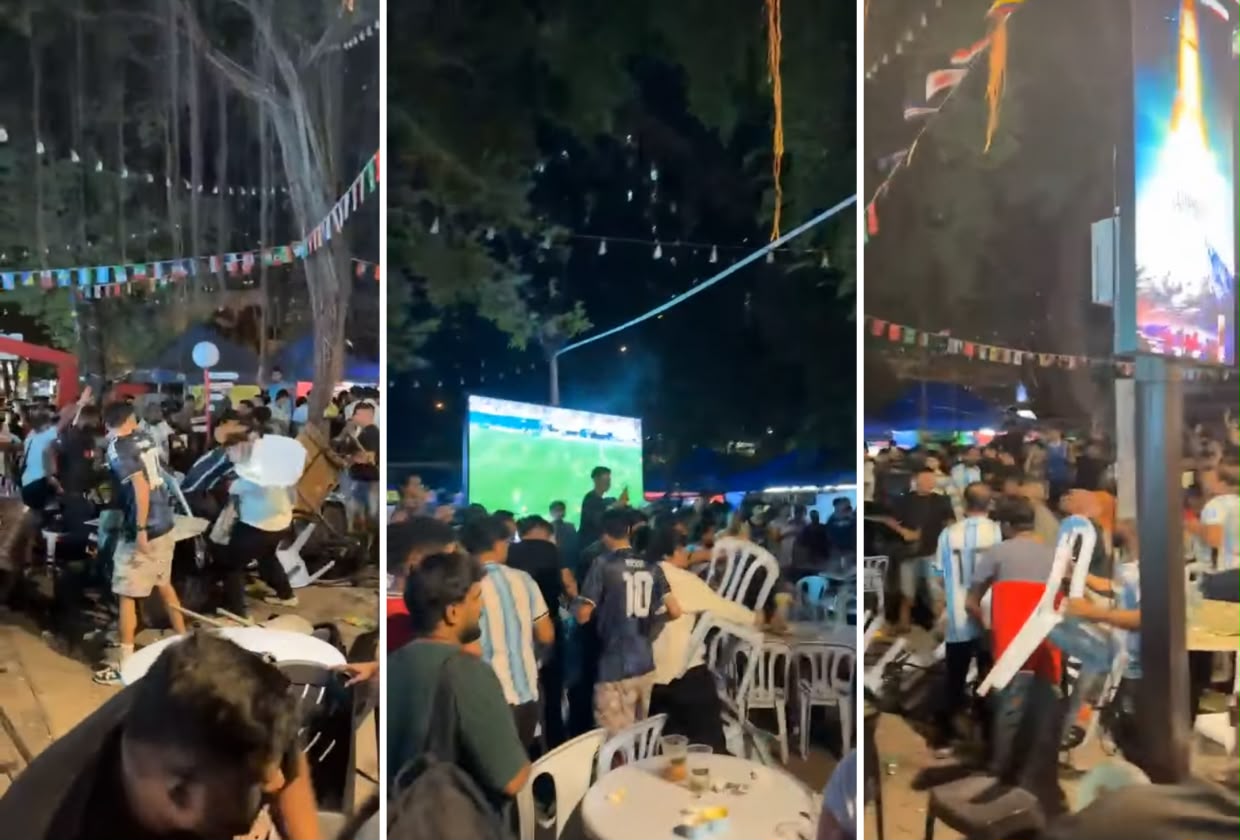

THE beautiful game turned ugly in Malaysia this week when two separate World Cup watch parties descended into chaos, with chairs reportedly thrown, punches exchanged and tempers boiling over among supporters during Argentina’s round of 16 clash against Egypt.
The incidents, which took place at a restaurant in Subang Jaya and another at a nasi kandar restaurant in Johor Bahru, quickly spread across social media after videos showing the violent confrontations went viral.
What was supposed to be a celebration of football — a gathering where fans could enjoy one of the biggest sporting events in the world — instead became a scene of disorder and embarrassment.
The incidents did not only attract attention locally. International media outlets also picked up reports of the brawls, once again placing Malaysia under unwanted scrutiny on the global football stage.
And that brings us to a difficult question:
Why are Malaysians fighting each other over foreign football teams and players who may not even know they exist?
Supporting a foreign team is not the issue.
Football has always been a global sport, and there is nothing wrong with Malaysians admiring some of the greatest players in history such as Lionel Messi, Cristiano Ronaldo and Neymar. These players have inspired millions around the world, including fans in Malaysia.
I am a Messi fan myself.
Having friendly banter with friends, celebrating victories and joking about rival teams are all part of football culture. That is what makes the sport enjoyable. Rivalries and debates are what create passion and excitement.
But there is a clear difference between passion and losing control.
When support for a team leads to violence, the meaning of football is completely lost.
Do these global superstars even know the fans who are fighting in their name?
Would Messi, Ronaldo or Neymar want supporters to hurt one another because of a football result?
The answer is simple — no.
For these players, football is their profession. They understand that their actions have consequences. A player who loses control on the pitch risks suspension, financial penalties and damage to their career.
But what does a fan gain from fighting?
Nothing.
A moment of anger can lead to injuries, police investigations, criminal charges and a permanent stain on someone’s reputation.
The sad reality is that the teams these supporters fight over will continue their journey. Argentina will continue playing. Messi will continue making history. The players will move on.
But those involved in the violence will be the ones left dealing with the consequences.
What makes these incidents even more disappointing is that Malaysia has already faced international criticism over football-related controversies.
Last year, the country found itself at the centre of global attention following the controversy involving seven ineligible naturalised players, which damaged Malaysia’s reputation and credibility in the football world.
Now, instead of headlines about our progress, development or ambition to grow as a football nation, Malaysia has once again made international news — this time because supporters could not control their emotions during a public screening.
This should serve as a wake-up call.
Because football culture is not built only by players, coaches or administrators.
It is also shaped by supporters.
If we want Malaysia to produce world-class footballers one day, we need to ask ourselves whether we are building a football culture that reflects discipline, respect and sportsmanship.
Football development is not just about having better facilities, more funding or stronger leagues. It is about creating an environment where young players understand the values of the game.
Respecting opponents.
Accepting defeat.
Celebrating victory without humiliating others.
If supporters themselves cannot display these basic values, how can we expect the next generation of players to embrace them?
Some may argue that football violence happens everywhere in the world — and that is true.
Even major football nations have experienced ugly scenes involving supporters.
However, there is a difference between historic rivalries involving clubs and countries with deep cultural connections and Malaysians fighting among themselves over foreign teams they have no direct connection to.
There is nothing wrong with supporting Argentina, Brazil, Portugal or any other nation during the World Cup.
Football is a global sport because it allows people to connect with teams beyond their own borders.
But admiration should never become an obsession.
A football jersey should never become an excuse for violence.
A match result should never determine how we treat another person.
The true test of a football fan is not how loudly they celebrate when their team wins. It is how they behave when emotions are running high.
Because at the end of the day, Messi, Ronaldo and Neymar will continue to play football. Their careers will continue. Their legacies will continue.
But the fans who chose violence will be remembered for the wrong reasons.
A football match lasts 90 minutes.
But the consequences of one reckless moment can last much longer.
The question we must ask ourselves is simple:
Are we supporting football — or are we allowing football to bring out the worst in us? – July 10, 2026
Sandru Narayanan is a journalist at Scoop.my