


PETRONAS is turning into a major global gas player with strategic acquisition and deals that is making it more that what it was previously – a “one-way pipe operation” that essentially drills for gas and sells it.
The gas strategy is rather impressive given that the upstream unit has moved from purely exploration and development to that of investor and exporter.
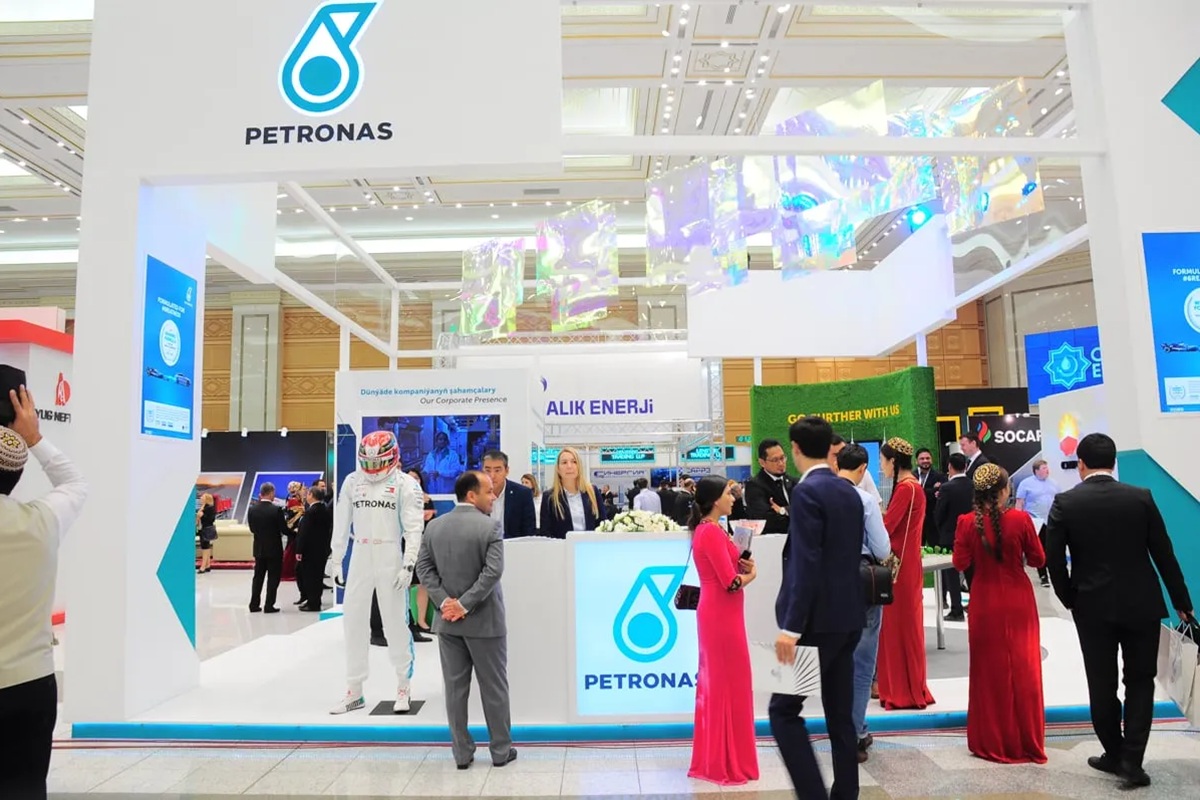
The national oil company’s recent deal in Turkmenistan, a place it has been operating for three decades, brought into focus what is believed to be a strategic, joined-up thinking and strategising that puts it on the way to be a major global gas player of significance.
Its one-way pipe operation, such as exploiting gas reserves in Sarawak and then exporting to Japan, is being re-fashioned into a top-tier global gas entity behavior by investing in new assets as well as locking in supplies from multiple regions for years ahead. With additional exploratory and development rights, it will have a significant resource base to meet future international supply contracts, too.
This evolution is also benefitting the country, especially in these days of uncertainty in the global oil and gas environment as well as declining domestic reserves. Petronas’ deals abroad have added surety to our long-term energy security – even if we are blissfully unaware of the schemes and complexities of things working in the background that make sure our pumps are not dry and our commerce and industry get the fuel they need for the foreseeable future at prices that we can live with.
Malaysia’s hydrocarbon fields are maturing and declining with crude production at about 350,000 barrels per day, from a peak of 700,000 barrels per day.
For the country, energy security is not just exploiting what we have under our feet, but also building a portfolio of assets even in faraway lands.
Petronas has been re-shaping its operations, especially its international portfolio, through strategic investments and partnerships where it is seeking to balance traditional upstream projects all the way to investments in global energy transition. From gas development and export in Canada, to deepwater exploration in Suriname and Brazil, to future fuels, green energy and renewables in India, Australia and Oman, and many more the world over.
The Turkmenistan deal punctuated a series of large and significant natural gas and liquefied natural gas (LNG) deals that Petronas had done recently, including securing access to large
deposits globally as well as increasing activities in the sector.
Prime Minister Datuk Seri Anwar Ibrahim during his visit to Turkmenistan was a witness to Petronas signing a Strategic Partnership Agreement with the government there. He described it as an extraordinary achievement to Malaysia’s energy security. Among others, the new agreement authorises Petronas to venture into new offshore gas blocks in the Turkmen sector of the Caspian Sea.
Its presence in Turkmenistan for 30 years gave Petronas enough goodwill to be trusted with access to some of the world’s largest gas reserves, including the massive Galkynysh gas field. It will also give Petronas a foothold in the highly competitive energy hub of Central Asia, which is yet another example of its strategic diversification strategy.
Right alongside the Turkmenistan announcement, Anwar revealed that Russian President Vladimir Putin had guaranteed Malaysia a 20-year long-term supply of oil, gas, and diesel.
In February we saw Petronas adding another traditional role purely as an exporter by signing its first-ever long-term supply agreement with QatarEnergy to buy up to two million tonnes per annum of LNG for 20 years.
This is an energy security strategy deal for Malaysia, too, as domestic natural gas consumption is expected to spike due to the power-hungry manufacturing sector as well as the upcoming data centers. Petronas will be able to protect the local economy from global volatility, and help the production for high-value exports products.
Petronas has also extended its one long-term supply deal with JERA Co., Inc., Japan’s largest power generation company. It will supply up to two million tonnes per year for 20 years that will\ give it a long-term revenue base into the 2040s.
Apart from Turkmenistan, Petronas is also in the final days of deciding on two major overseas investments this year and next. In Brunei, it is close to deciding to develop the country’s first ultra-deepwater gas project.
It is also close to giving the thumbs up for the Slonea gas field in Suriname, which it was announced recently to have a billion barrel equivalent in gas reserves. This will give Petronas a foot into the booming South American region.
In Canada, Petronas has invested in major upstream and downstream gas-related activities that will allow it to export Canadian natural gas to the fast-growing Asian markets.
In LNG and gas, it seems where Petronas is putting much of its efforts and assets these days, given its relative abundance as well as the growing preference for a cleaner fuel.
By aggressively buying from Qatar, expanding assets in the Americas and Central Asia, and retaining its core fields in Malaysia as well as in Canada, Petronas is positioning itself well in the global gas sector. – July 24, 2026
Datuk Zainul Arifin is the Chief Executive Officer of Big Boom Media that publishes Scoop.my
Turkmengeology State Corportation pic, July 22, 2026