

THE Negeri Sembilan state election is shaping up to be much more than a contest for 36 seats.
For the Anthony Loke-led DAP, the polls represent a crucial test of whether the party remains the dominant political force among urban and Chinese Malaysian voters, or whether its influence has begun to plateau after years of electoral success.
Two disappointing performances in consecutive state elections — Sabah and Johor — have created a narrative that will be difficult for DAP to escape, regardless of the circumstances behind those results. The Johor outcome, in particular, has intensified questions over Pakatan Harapan’s (PH) position ahead of the Negeri Sembilan battle.
For Loke, however, the state election is also a personal challenge.
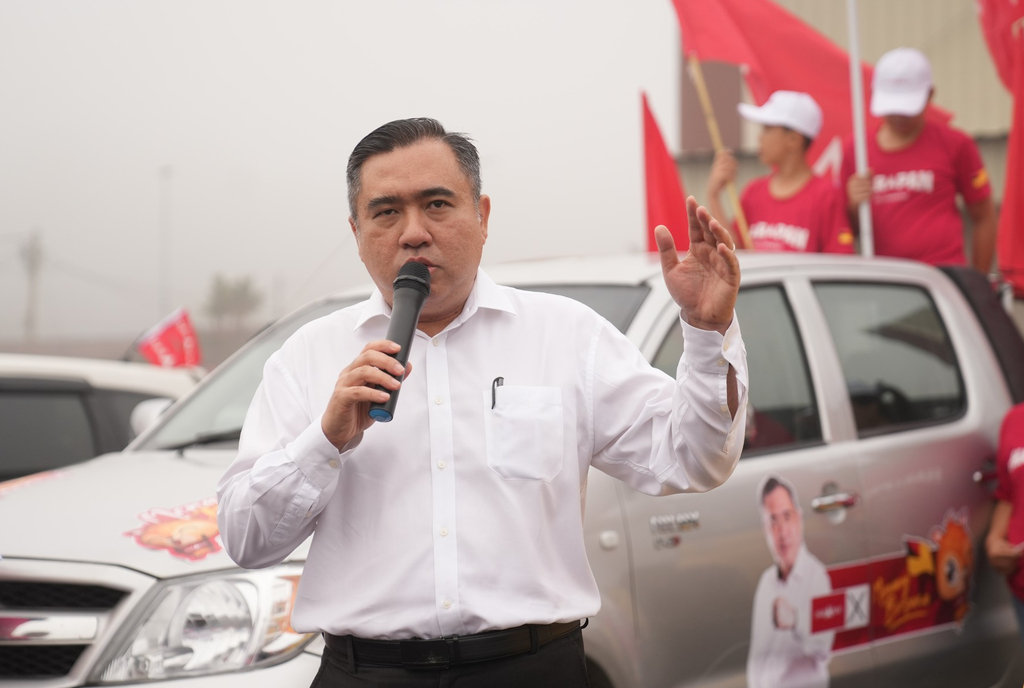
Negeri Sembilan is his political backyard. The Transport Minister and Seremban MP has spent more than two decades building DAP’s machinery in the state and remains one of the party’s most effective grassroots politicians.
Unlike leaders who become visible only during election periods, Loke has maintained a consistent presence among voters. Alongside ministers such as Hannah Yeoh and Steven Sim Chee Keong, he remains one of the most recognisable faces of DAP in government.
His decision to defend the Chennah state seat places him directly in the spotlight. The constituency will see a straight fight between Loke and Negeri Sembilan MCA Youth chief Siow Kong Choon, turning it into one of the symbolic contests of the election.
DAP enters Negeri Sembilan from a stronger position compared with Johor. The party is contesting 11 of the state’s 36 seats and remains confident of defending its existing strongholds due to the urban and mixed demographic profile of many constituencies.
But political expectations can be unforgiving.
If DAP manages to retain most of its current seats, Loke will likely be able to argue that the Johor setback was an exception shaped by Barisan Nasional’s (BN) traditional strength in the state rather than a broader rejection of DAP.
A strong performance would allow him to reinforce the argument that the party remains resilient despite the challenges of governing within a coalition.
However, another major setback would trigger deeper questions within the party.
A poor showing in Negeri Sembilan, following disappointing results in Sabah and Johor, would inevitably revive debates over whether DAP needs a leadership rethink and whether Loke should continue as secretary-general.
The questions that have quietly circulated among party supporters would become louder: Has DAP become too comfortable in government? Has it compromised too much within the Unity Government? Has it moved away from its reformist roots? And has it failed to address voter frustrations over economic pressures and the slow pace of institutional reforms?
Following the Sabah election defeat, Loke had announced a six-month moratorium to assess DAP’s future role in the Madani Government.
Eight months later, the party’s direction remains a subject of debate.
A disappointing Negeri Sembilan result would also reopen political space for former party secretary-general Lim Guan Eng.
Although no longer leading DAP, Lim remains one of its most influential figures. Political setbacks often revive calls for experienced leaders to play a larger role, and his supporters could argue that DAP was at its strongest when it maintained a sharper and more confrontational identity, particularly in its opposition to UMNO and BN.
That does not necessarily mean Lim would seek to reclaim the secretary-general position. Instead, a poor election result could strengthen his influence over the party’s strategic direction, candidate selection and ideological positioning.
Another figure who could benefit from any weakening of Loke’s standing is Steven Sim.
Representing a younger generation of DAP leaders, Sim has built a reputation as an effective communicator and minister while maintaining relatively broad acceptance across different factions within the party.
If Loke’s authority is weakened, Sim’s influence would naturally grow. However, this would not necessarily translate into an immediate leadership challenge.
DAP’s political culture has generally rewarded patience and organisational loyalty over open ambition. Any perception that Sim was exploiting electoral losses to advance his own position could damage his standing.
Instead, his rise would likely happen gradually through greater organisational responsibilities and a stronger policy role rather than through a direct contest for power.
Yet the biggest challenge facing DAP may not be leadership.
It is relevance.
For years, DAP benefited from a highly motivated urban electorate that rallied behind the promise of political reform and change. But after several years in federal government, voters are increasingly judging the party based on performance rather than promises.
Rising living costs, economic uncertainty and the compromises required in coalition politics have complicated DAP’s traditional political message.
The party must now convince voters that it remains capable of delivering meaningful change while operating within a government structure that requires constant negotiation.
A respectable performance in Negeri Sembilan would allow Loke to argue that DAP remains politically relevant despite difficult circumstances.
A weak result would not immediately threaten his position, but it would mark the beginning of a wider succession conversation within the party.
The wider political landscape may also provide DAP with some advantages.
BN’s decision to cooperate with Perikatan Nasional (PN), which includes PAS, could potentially benefit DAP by creating concerns among sections of the Chinese electorate. MCA’s own performance in Johor, where it won eight seats compared with DAP’s six, has added another layer of uncertainty to the contest.
In Negeri Sembilan, MCA is contesting seven seats, including Chennah, where it is directly challenging Loke.
The partnership between BN and PN may also complicate traditional voting patterns, particularly among voters who are uncomfortable with PAS playing a larger role within a broader opposition arrangement.
The Negeri Sembilan election, scheduled for August 1 with early voting on July 28, will see 103 candidates competing across all 36 constituencies. PH is defending power after winning 17 seats in the previous election, while BN won 14 and PN secured five. PH and BN later formed a unity government with a two-thirds majority.
This election was triggered after political tensions between PH and BN following a dispute involving the state’s royal institution, leading to the dissolution of the state assembly.
With cost of living pressures, leadership credibility and coalition dynamics dominating the campaign, Negeri Sembilan has become a key indicator of Malaysia’s changing political landscape ahead of the next general election.
For DAP, victory alone may not be enough.
The party needs a convincing result — one that proves it still commands voter confidence and that its political relevance extends beyond its years as an opposition force.
For Loke, the battle in Chennah is therefore not merely about defending a state seat.
It is about defending the future direction of DAP itself. – July 26, 2026