


Large political inflection points are seldom recognised in their own moment.
The Negeri Sembilan election will be recorded by many as another state contest, notable for the twin defeats of the sitting Secretary General of the DAP and the incumbent Menteri Besar, and little else.
Students of political history may come to read it differently, because beneath the personalities lies a structural transformation that has been approaching for a generation and has now arrived.
The age of single-party Malay dominance has given way to the age of complementary Malay leadership. No single Malay political party can now reasonably expect to govern alone, and the future belongs to coalitions that understand comparative strengths rather than compete to duplicate them.
It is the kind of moment that recalls the Romance of the Three Kingdoms, among the greatest works of Chinese literature and one of the most misunderstood. The novel is commonly mistaken for a story about war. It is in truth a story about coalitions.
After the collapse of the Han Dynasty, no kingdom possessed the strength to reunify China. Wei commanded the largest territory and armies. Shu possessed strategic brilliance and moral claim. Wu held geography and wealth.
The famous victory at Red Cliffs was won not because one kingdom overwhelmed the others, but because two of them understood that together they could achieve what neither could alone. Zhuge Liang, the greatest strategist of the age, never attempted to make Shu into Wei.
He accepted that his kingdom would never match Wei’s armies, and built instead a strategy of alliances and asymmetric advantage. Lasting influence, he understood, comes not from imitating another’s strengths but from combining different strengths into a coherent whole.
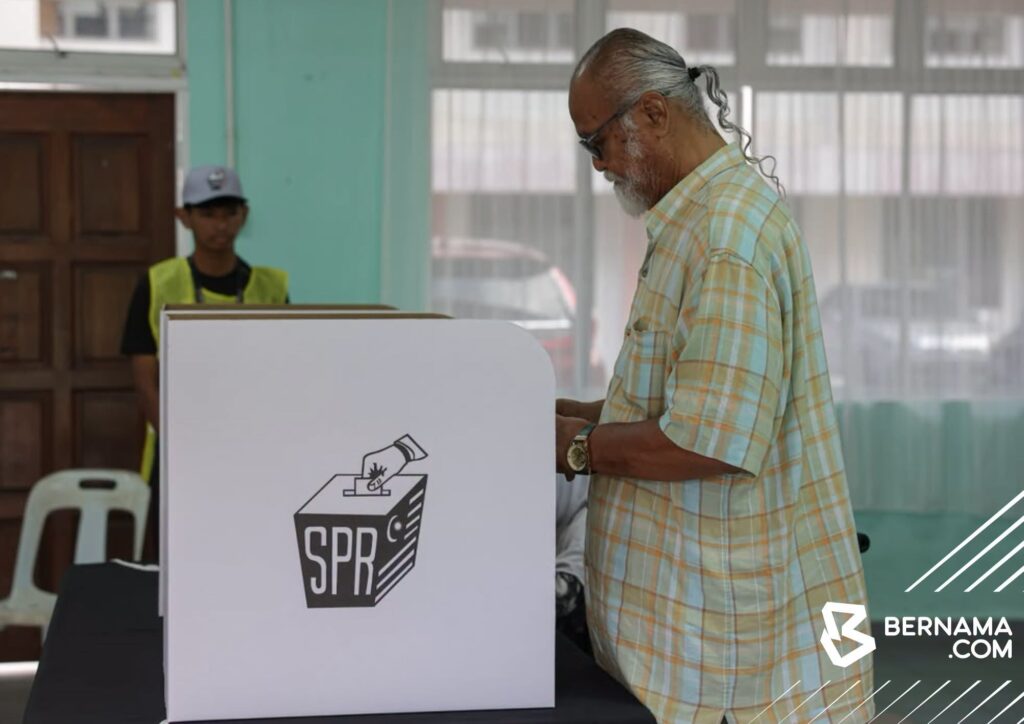
Negeri Sembilan tells a similar story. Barisan Nasional produced the standout performance of the election. Umno contested sixteen seats and won all sixteen, a perfect record that settles any question about the party’s organisational recovery.
With its partners, the coalition secured eighteen seats. Yet eighteen seats in a thirty-six-seat assembly remain one seat short of a majority. The oldest governing party in the country demonstrated its strength and its insufficiency in the same result.
Perikatan Nasional, for its part, won seven. PAS converted four of the five seats it contested, confirming once again that it operates the most disciplined electoral machinery in Malay politics.
Wawasan, the party I serve and among the youngest in the country, won three of its four allocated constituencies. Separately, neither coalition could govern.
Together they now do, commanding twenty-five seats, and twenty-five in an assembly of thirty-six is not merely a majority. It is a two-thirds majority, the threshold at which a government stops managing an assembly and begins to shape a state.
The arithmetic carries a lesson larger than the state itself. Umno did not require PAS to prove its electoral reach. PAS did not require Umno to demonstrate its organisational discipline. Neither is diminished by the other’s possession of different strengths.
On the contrary, each becomes more valuable precisely because it contributes what the other cannot readily replicate. That was the enduring strategic insight of the Three Kingdoms. Wei remained Wei. Shu remained Shu. Wu remained Wu.
The kingdoms that shaped history did not prevail by becoming alike. They prevailed when they recognised that complementary strengths are more powerful than competing similarities.
This brings the analysis to Wawasan. Its significance in this result is not measured in seats, and because I hold office within it, I will state its obligations rather than its achievements.
Umno and PAS are the two old houses of Malay politics. Between them lie seven decades of rivalry, doctrinal suspicion and accumulated grievance, and history suggests that old houses do not reconcile through sentiment. They reconcile through intermediaries: parties and figures who carry the trust of both sides precisely because they belong fully to neither.
At Red Cliffs, the alliance that changed Chinese history was not willed into being by the kingdoms themselves. It was constructed by those who could cross between the camps and be received in each. That is the inheritance Wawasan must earn.
Its responsibility is not to compete with Umno for Umno’s voters, nor with PAS for PAS’s voters.
Its responsibility is to make the coalition larger than either could make it alone: to serve as the bridge across which two historical rivals move toward a shared conception of governing, and to reach the voters and communities that sit outside the natural territory of both. A bridge is judged by what crosses it, not by what it claims for itself.
The deeper meaning of Negeri Sembilan is therefore not found in any single party’s tally.
It is that the long project of Malay political unity, attempted and abandoned repeatedly since independence, now has a working arithmetic and a working architecture: two established strengths and a bridge between them.
Whether that architecture holds will depend less on electoral machinery than on the discipline of mutual respect, because coalitions of complementary strengths fail not when they lose elections but when their members begin to covet one another’s roles.
That was always the true lesson of the Three Kingdoms. Not that the strongest kingdom prevails. Strength wins elections. Alliance shapes history. – August 2, 2026
Datuk Omar Mustapha is Vice President of Parti Wawasan Negara