

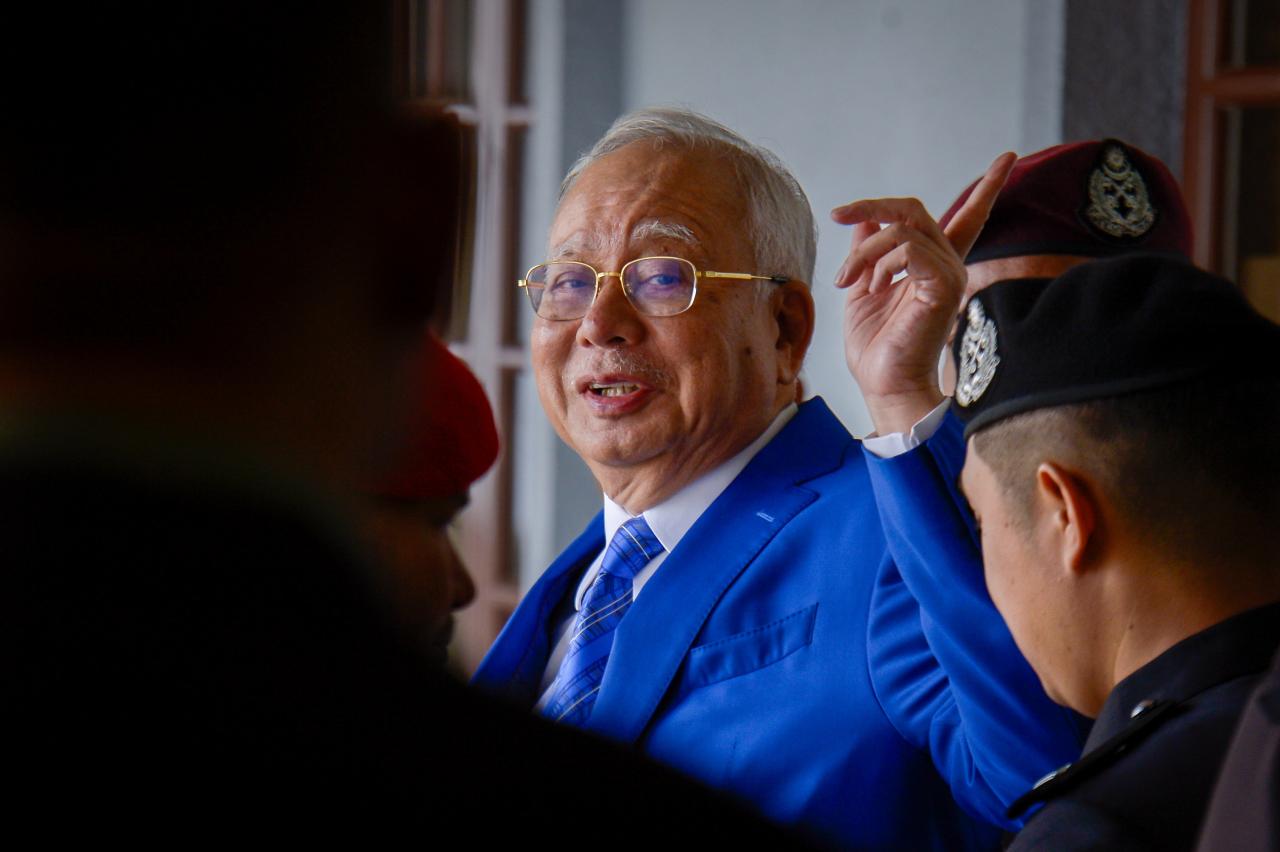

The house-arrest decision on PM6 Datuk Seri Najib Razak has created an awkward constitutional and political moment for the Madani Government. Now the Government has made its position known.
Hannah Yeoh, as the minister of Federal Territories and heading the Pardons Board had the awkward task of putting her signature on the instrument of government to facilitate Najib’s release from prison.
Yeoh said she gave her views honestly and in the national interest after considering the Attorney General’s written advice.
It is understood that both she and Attorney General Tan Sri Dusuki Ahmad had advised the Board as well as the Yang di-Pertuan Agong Sultan Ibrahim that releasing Najib to serve the remainder of his sentence at his Langgak Duta home may not in the best interest of the country and will put the Madani Government which had been tough on corruption, in the firing line from the Rakyat.
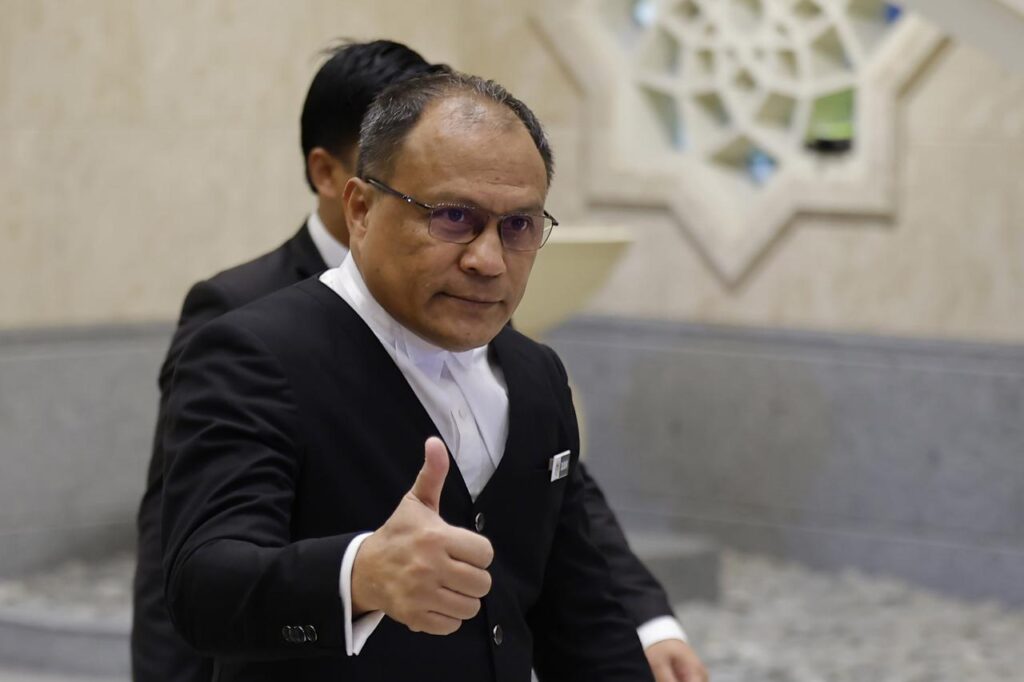
Just a week prior on Sept 11, the Pardons Board convened to deliberate the pardon petitions of 150 people. Sixty five were granted.
Najib’s was not on the agenda as the Board failed to meet full quorum. It is understood that the Yang di-Pertuan Agong wanted a full deck over an important decision such as this.
Which is why on Sept 18 the Board convened again specifically to decide on Najib’s house arrest. The King granted Najib a conditional pardon, allowing him to serve the remainder of his sentence under house arrest until Aug 23, 2028, subject to a RM50 million fine.
That distinction is important. The Government advised. The King decided. There is a temptation, particularly among those politically opposed to Najib, to portray the decision as a failure of PMX Datuk Seri Anwar Ibrahim’s anti-corruption drive where the campaign for accountability for 1MDB formed the crux of Pakatan Harapan’s 2018 election campaign to unseat Barisan Nasional.
Even Anwar’s colleagues have gone hysterical over the decision to release Najib to home confinement, with DAP secretary general Anthony Loke offering his resignation as Transport Minister. That reaction is too simplistic.
The Federal Constitution places the power of pardon in the hands of the Yang di-Pertuan Agong. The Pardons Board advises; the constitutional prerogative belongs to the King. The Board’s composition includes aforesaid Attorney General and minister responsible for the Federal Territories.
That does not mean the Government is irrelevant. Quite the opposite. The Government has a constitutional role in the process. And it exercised that role.
Apart from Yeoh confirming her views and the Attorney General’s written advice, Anwar too has said that his responsibility was to provide advice on the legal implications, national stability and rule-of-law principles, while ultimately recognising the constitutional power of the King. In other words, there is an important distinction between advising against something and being able to veto it.
The Government could say: We believe this will undermine public confidence in the fight against corruption. It could not simply say: Therefore it cannot happen. And once the constitutional authority has exercised that prerogative, the political argument changes.
One needs to distinguish between criticising the decision versus attacking the institution. This is where the politics becomes particularly delicate.
One can criticise the consequences of house arrest. One can debate whether it is consistent with the Government’s anti-corruption messaging. One can question whether the arrangement inspires public confidence. One can debate that house arrest appears to be the privilege of the wealthy, because seriously how can someone who lives in a low cost flat be subject to house arrest? It is impractical.
But there is a constitutional line that politicians need to be careful about crossing. If the argument becomes that the Pardons Board was illegitimate because it did not produce the outcome the Government wanted, or that the King should not have exercised the power granted to him by the Constitution, then the criticism begins to implicate the institution itself.
That is especially problematic in Malaysia because the monarchy is not merely ceremonial. Article 42 of the Federal Constitution expressly provides the constitutional framework for the exercise of the pardon power.
Indeed, the Government has previously defended precisely this constitutional principle. When Najib’s lawyers argued in 2025 that a High Court decision concerning the purported housearrest addendum diluted the King’s pardon powers, the Attorney General’s Chambers rejected that interpretation.

The AGC stressed that the King’s prerogative to grant pardons is constitutionally protected, while also pointing out that Article 42 requires the Pardons Board process to be followed. There is also a degree of selective amnesia in the outrage surrounding pardons. Malaysia has had royal pardons involving serious criminal convictions.
Former Culture, Youth and Sports Minister Datuk Mokhtar Hashim and Kenneth Lee – the grandson of a founding father Tun H.S. Lee come to mind. Both convicted for murder. Both had sentences reduced from death to life imprisonment. Lee served the remainder of the 20-year sentence at home. Mokhtar freed after eight years in jail.
And eight years ago, Anwar Ibrahim himself received a full pardon. On May 16, 2018, the 51st Federal Territories Pardons Board met at Istana Negara, chaired by the then Yang di-Pertuan Agong Sultan Muhammad V. The Board considered Anwar’s application and, on its advice, the King granted him a full pardon with immediate release.
The AGC later confirmed that then Prime Minister Tun Dr Mahathir Mohamad was present at that meeting and that written advice had been submitted under Article 42(9).
That pardon was consequential.
It released Anwar from prison and removed the immediate legal barrier to his return to politics. Within five years, he was Prime Minister. Nobody seriously argues that Anwar’s pardon somehow meant the Malaysia had abandoned the rule of law. So the question cannot simply be whether pardons are politically uncomfortable. The constitutional system expressly allows them.
The more legitimate question is what happens after the pardon. Anwar has already answered part of that. He said the conditional pardon does not weaken the Government’s commitment to fighting corruption and abuse of power, and that corruption cases, including ongoing proceedings involving Najib, must go ahead. That is where the Madani Government should be judged.
Not on whether it managed to prevent a constitutional prerogative from being exercised. But on whether the institutions under its executive authority continue to investigate, prosecute and adjudicate corruption without fear or favour.
The distinction is fundamental. A pardon is not an acquittal. It does not retrospectively declare that the conviction never happened. It changes the punishment imposed by the state.
The irony is that Anwar now finds himself on the opposite side of a constitutional equation from where he stood in 2018. Then, he was the beneficiary of a royal pardon. Today, he is Prime Minister of a Government that reportedly advised against a course of action involving another former prime minister.
That is precisely why Anwar’s response matters. He cannot simultaneously claim that the monarchy’s constitutional prerogatives must be respected when they benefit him and become politically illegitimate when they benefit his former political adversary. The same constitutional principle has to apply to both. That does not mean the Government must celebrate the decision.
Nor does it prevent ministers, lawmakers or citizens from debating whether house arrest is appropriate, whether the punishment remains proportionate, or what message it sends about corruption.
And perhaps that is the uncomfortable lesson from the Najib affair: Malaysia’s constitutional monarchy is most meaningful when its principles are applied even when the outcome is politically inconvenient. The Madani Government’s credibility on corruption therefore rests not on whether it can control a pardon.
It rests on whether, after the pardon, the law continues to operate independently, consistently and without political interference. That is the test Anwar should welcome — because it is a test of Government, rather than a test of whether the Government can overrule the King. – September 20, 2026
Terence Fernandez is Group Editor in Chief of Big Boom Media which publishes Scoop