

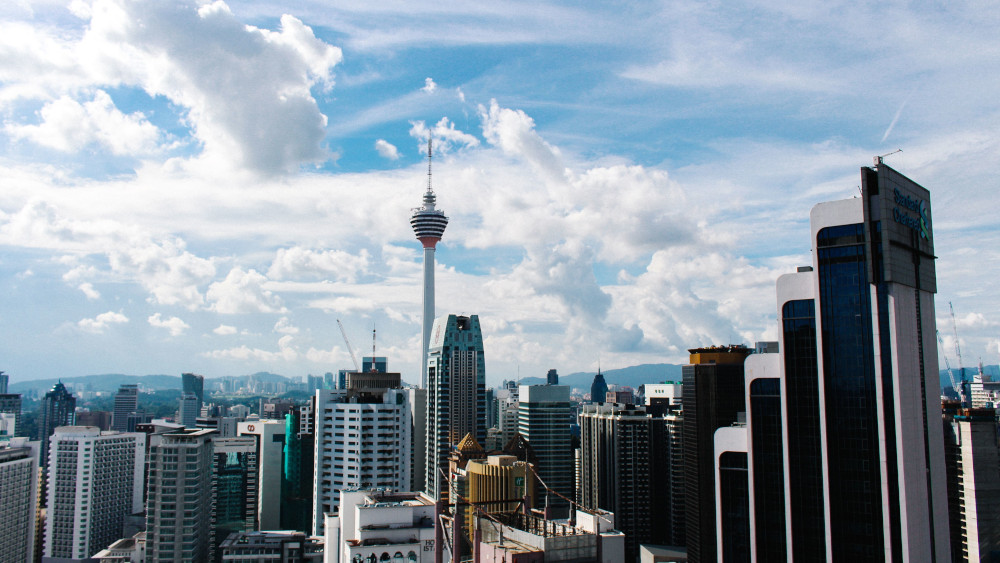
SEVEN September marks the International Day of Clean Air for Blue Skies, designated by
the United Nations General Assembly in 2019 and observed annually since 2020. It is an
occasion to reflect on something so essential to life that we often take it for granted: clean air
and blue skies.
Every moment, we inhale and exhale without thinking. Most of the time, we barely notice the
air around us. For many working adults who leave home before daybreak and return only
after sunset, even the sight of a clear blue sky can sometimes feel like a luxury.
It is usually only when the haze returns that we begin to pay attention.
The sky changes colour. Visibility drops. Outdoor activities are cancelled. Schools and
families begin checking the Air Pollutant Index. Suddenly, the air around us becomes a
subject of concern.
This is especially familiar in Malaysia during hot and dry periods, when discussions about
haze often turn to emissions, vehicles, industries, open burning and other environmental
causes.
We already know much of this. Science has helped us understand the causes,
consequences and measurements of air pollution.
But what can the energy humanities add to the conversation?
Energy humanities encourages us to look beyond technologies, emissions data and energy
systems to consider how environmental and energy issues are experienced by people. It
asks us to think about culture, memory, inequality, imagination and everyday life.
A scientific report can tell us how haze affects public health, but a novel can show us what it
means to live within a changing environment.
Amitav Ghosh’s The Hungry Tide, for example, presents a world in which rivers, tides,
storms, animals and human settlements are deeply interconnected. The environment is not
simply scenery in the background. It shapes how people live, where they move, what they
remember and what they are able to hold on to.
The novel reminds us that environmental questions rarely remain purely environmental.
They quickly become questions of livelihood, memory, survival and belonging.
There is a similar sense of place in the work of Malaysian writer Tash Aw. In We, the
Survivors, rural and plantation landscapes form part of the everyday lives of ordinary
Malaysians and migrant workers. The novel is not about air pollution, but it reminds us that
development and environmental change are never experienced in exactly the same way by
everyone. The same is true of pollution.
An unhealthy sky means one thing to someone sitting in an air-conditioned office and
something very different to a delivery rider who spends hours on the road. It means
something else again to an elderly person who decides not to leave the house, or to a child
whose football practice has been cancelled.
Pollution may be measured collectively, but it is experienced individually.
This is where stories matter.
Consider two ways of describing a haze episode. One tells us that the Air Pollutant Index
has reached an unhealthy level. Another describes a child standing at a window, trying to
make out buildings that are normally clearly visible across the street.
Both tell us something important. The first gives us information. The second places us inside
the experience. And lived experience matters.
This is also why energy humanities has a place in the broader educational landscape.
Students should certainly learn about pollution, climate change, renewable energy and
sustainability through science. They need to understand emissions, atmospheric processes,
energy technologies and environmental systems.
But they can also explore these issues through literature, film, drama, visual arts and new
media.
A student could stage a short drama about the sky they hope to see in 2050. A class could
write poems about haze. Students could create fictional social media posts written during a
severe pollution episode, imagining how different members of society might respond.
These may appear to be simple classroom activities, but they encourage students to connect
different forms of knowledge. They ask students not only to understand an environmental
problem, but also to imagine how that problem is experienced by others.
Such an approach is especially important as societies move towards cleaner and more
sustainable energy systems.
The energy transition is often discussed in terms of technologies: solar panels, electric
vehicles, hydrogen, batteries and renewable energy. But every transition also involves
people. It changes landscapes, livelihoods, habits, expectations and relationships with the
environment.
Energy humanities reminds us that understanding the transition therefore requires more than
engineering and economics. It also requires stories, histories, cultures and human
experiences.
On this International Day of Clean Air for Blue Skies, perhaps we should talk not only about
pollution and emissions, but also about the stories we tell about the environment.
A blue sky may appear ordinary when it is above us every day. Yet once it disappears behind
a curtain of haze, we quickly realise its value.
Before we decide that something is worth protecting, we often first need to understand and
sometimes feel — what it would mean to lose it. – October 7, 2026
***The authors are Dr. Chong Seng Tong, Senior Lecturer, and Maslinda Md Yusof, Lecturer, at the College of Continuing Education, Universiti Tenaga Nasional.