

KUALA LUMPUR does not lack sustainability conferences. It lacks consequences when sustainability commitments fail on the ground.
In banquet halls and boardrooms, corporate figures discuss environmental, social, and governance (ESG) principles. Consultants present colourful charts. Developers showcase their green credentials. Politicians assure the public that mitigation measures are well underway.
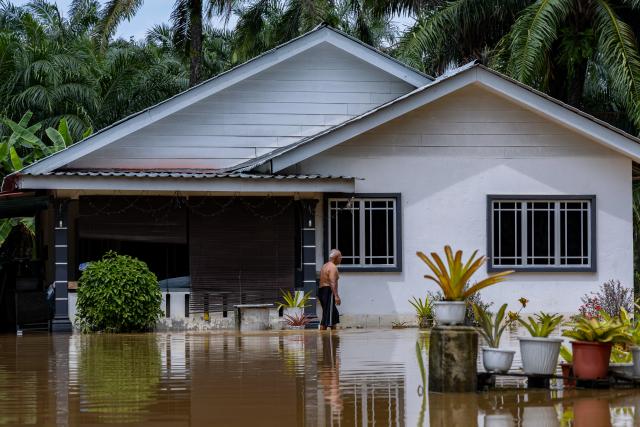
Outside, another downpour leaves residents counting their losses.
The recurring question is no longer simply why it rained so heavily. It is why, despite repeated warnings, massive public expenditure, and readily available technical expertise, the same vulnerabilities remain.
Rain is a natural event. Whether preventable failures turn it into a disaster is a question of governance.
Warnings without consequences
This is not a newly discovered problem.
In 2016, former Kuala Lumpur mayors Tan Sri Ahmad Fuad Ismail and the late Tan Sri Elyas Omar raised sharp concerns about drainage, maintenance, rampant development, and lax enforcement. They called for closer scrutiny of construction sediment runoff and a comprehensive approach involving all relevant agencies.
These were not passing observations from people unfamiliar with City Hall. They came from men who had run the capital.
The Auditor-General’s Report 2021 Series 1 subsequently concluded that Kuala Lumpur’s flood mitigation management had failed to achieve its objectives. Short-term measures had not been fully implemented, and floods persisted despite millions spent on mitigation infrastructure.
The audit highlighted procurement shortcomings involving three projects worth RM27.68 million, incomplete asset inventories, and a lack of documented evidence that routine maintenance work had been monitored.
These findings do not prove that every official is negligent or every contractor corrupt. What they do prove is that systemic weaknesses were formally documented.
Once a weakness is documented on the public record, failing to remedy it demands an explanation. Another inter-agency meeting is not an explanation.
The sustainability performance
There are 17 Sustainable Development Goals, but memorising the list is hardly proof of meeting them. The real examination begins once the PowerPoint presentation ends.
Are erosion controls actually maintained? Are sediment traps functioning? Are perimeter drains inspected before seasonal storms? Do engineering consultants conduct independent physical site audits? Are contractors paid strictly against verified milestones?
A glossy sustainability report cannot stop muddy runoff. An ESG award cannot clear a choked culvert. A ministerial photo opportunity cannot restore lost flood-storage capacity.
Recent reporting on urban mud floods in the Klang Valley pointed directly to failures in maintaining Erosion and Sediment Control Plans (ESCP) and a distinct absence of physical audits by developers’ consultants.
That distinction matters. Often, the missing ingredient is not another national policy—it is strict compliance with the policies already approved.
Where enforcement becomes negotiable, sustainability becomes theatre.
Nobody should escape scrutiny
Kuala Lumpur City Hall’s (DBKL) statutory responsibilities include primary drainage maintenance and flood mitigation infrastructure. It must therefore be judged on physical outcomes, not merely on the activities it announces.
Accountability, however, cannot end at the steps of Menara DBKL.
Developers must answer for sediment runoff. Contractors must answer for execution. Accredited consultants must answer for their certifications and site inspections. Overlapping agencies must demonstrate how their jurisdictions interface during an emergency.
Highway concessionaires, including PLUS where its infrastructure connects with local drainage networks, should face the same evidence-based scrutiny within their respective boundaries.
This is not an accusation that any single operator caused a particular flood. It is a demand that institutional responsibility follow the physical assets and engineering decisions involved.
Ministers and lawmakers must also field uncomfortable questions: Which audit recommendations remain unresolved? Which flood-alleviation projects missed their completion deadlines? Which enforcement lapses were investigated and penalised?
Their job is not merely to tour disaster areas, hand out relief hampers, and announce emergency allocations. Their primary duty is to scrutinise the system before it fails again.
Land is not merely an opportunity
The controversy surrounding the land adjacent to the Bohol flood retention pond illustrates the high stakes involved.
Reports highlighted proposals to develop land surrounding the retention basin, prompting strong pushback from the Department of Irrigation and Drainage (DID) due to the pond’s crucial role in downstream flood attenuation.
A development proposal in itself is not proof of impropriety. Nevertheless, land serving a critical flood-management purpose demands far greater rigour than routine commercial consideration.
Who proves that retention capacity will not be compromised? Who independently verifies that hydraulic model? Who answers to downstream neighbourhoods if those assumptions prove fatally flawed?
“Affordable housing”, “urban renewal”, and “development for the rakyat” must never be used as convenient rhetorical shields to shut down technical debate.
Homes are for the rakyat. So is flood protection.
Demand proof, not promises
Reported reductions in Kuala Lumpur’s flood hotspots deserve recognition. However, progress on paper does not erase the obligation to investigate recurring failures or safeguard communities that remain exposed.
True progress must be demonstrated through open public records: assets inspected, structural defects identified, maintenance schedules completed, enforcement penalties levied, and audit queries resolved.
Publish the ownership and maintenance schedules of all critical drainage assets. Disclose project timelines and reasons for delays. Make public the engineering justifications behind any decision that impacts flood-storage reservoirs.
Every planning approval should leave an indelible paper trail: who recommended it, who signed it, what safeguards were mandated, and whether those safeguards were physically built before the public was exposed to the risk.
Major developments must be assessed across the entire catchment basin, not just within their lot boundaries. Rainwater cleared efficiently from one private project must not become an adjoining neighbourhood’s disaster.
Where statutory breaches occur, authorities must impose proportionate contractual, regulatory, and professional sanctions. Where evidence suggests corrupt practices, enforcement bodies must step in without fear or favour. Procedural jargon should never serve as a shield against uncomfortable inquiries.
The lingering public cynicism that “cash is king” reflects a deep deficit of trust. Only transparent decision-making and uncompromised enforcement can begin to repair it.
Kuala Lumpur does not need another declaration that sustainability matters. It needs decision-makers willing to uphold unpopular technical advice, enforcement officers empowered to penalise non-compliance, engineers ready to withhold sign-offs, and politicians committed to pursuing accountability long after the floodwaters recede.
Until responsibility carries tangible consequences, ordinary residents will continue paying the price for failures they did not cause.
The rain will return. Accountability must arrive first. – November 7, 2026
Ravindran Raman Kutty is a communications and public relations practitioner with a keen interest in local governance and community affairs