

THERE is a quiet test of any institution’s character: what it does when someone points out a problem.
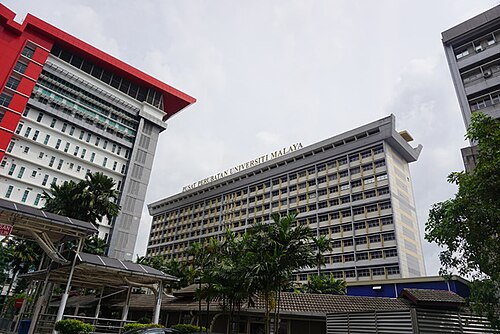
Six months ago, on May 1, 2026, I wrote about two contrasting experiences at Universiti Malaya Medical Centre (UMMC), known to generations of Malaysians as University Hospital. Inside, I found efficient, affordable and caring treatment. Outside, I found a frustrating struggle simply to park and find my way to the clinics or procedure rooms.
Many institutions would have let such an article pass, or answered it with a defensive statement. UMMC chose a different path. It opened its door.
On Nov 3, I met UMMC, CEO, Prof Dr Mohd Zulkiflee Abu Bakar, together with colleagues from the hospital’s engineering and communications teams.
Excellence where it matters most
Let me first be clear about what was never in question. The medical service at UMMC is par excellence. Its specialists are highly skilled, its doctors attentive and its nurses combine professionalism with genuine compassion. On one visit, by the time I reached the pharmacy, my prescription had already been processed and my medication was being prepared. That is a system that works.
Prof Zul briefed me, with justifiable pride, on the hospital’s achievements and ongoing work. What struck me was that he did not stop there. He listened, patiently and attentively, as I explained my concerns and walked him through a proposal I had prepared, “Towards a Patient-Friendly UMMC”.
It was a genuine two-way conversation: the institution’s perspective on one side, a patient’s lived experience on the other, and a shared goal in the middle.
The journey to care
My concerns were practical. On one visit, I arrived at 8.15am for a 9am appointment to find the car park full. On another occasion, I spent more than 40 minutes searching for a bay, followed by a 15-minute walk to the Department of Blood Transfusion in Menara Utama, asking for directions along the way. The outpatient pharmacy was a walk of about 500 metres.
I could manage. But I kept thinking of the elderly patient, the person in pain, the one with a walking stick or in a wheelchair. For them, every wrong turn costs something.
The proposal also noted poor lighting, tight ramp turns, haphazard motorcycle parking, and too few maps and directional signs at lift lobbies. These are a layman’s observations, submitted for the hospital’s professional assessment, not engineering findings.
The point I made to Prof Zul was simple: parking, walkways and signage are not separate issues. To a patient, they are one continuous journey to care.
Ideas on the table
The proposal offers immediate, short-term and longer-term ideas. They include repairing faulty lights; adding reflective markings, convex mirrors and corner guards at ramp turns; dedicated motorcycle bays; “Car Park Full” signs pointing to alternatives; “You Are Here” maps; colour-coded floor lines to frequently visited services; and peak-hour “May I Help You?” desks, at all the leading entrances. If possible, keep parking bays specially catered for patients and families, and keep the staff parking separately.
Further ideas include coordinated Malay-English signage, real-time parking displays, shuttles from LRT Universiti and overflow parking, a buggy service for elderly patients and, over time, rest points along walking routes and a park-and-ride option.
None of these suggestions were approved. Each must be weighed for cost, safety and feasibility. But they are now on the table, and that matters.
A leader who listens
What gave me the greatest confidence was Prof Zul’s decision to bring engineering and communications colleagues into the room. A ramp, a walkway and a sign may fall under different departments, but patients experience them as one route. Bringing those perspectives together is how whole-journey thinking begins.
Better still, Prof Zul has invited me to a technical meeting planned for December, where the recommendations will be explained, the technical team’s assessment heard and feasible priorities discussed. That is how suggestions become considered decisions.
I am realistic. An invitation is not implementation, and progress will need assessment, resources and follow-through. But a hospital that invites a patient’s voice into its planning has already taken the most important step.
A lesson for public institutions
Too often, public criticism is met with silence or defensiveness. UMMC has shown another way: treat feedback as free consultancy from the very people you serve.
Prof Zul’s openness, inclusiveness and willingness to engage reflect a leader who understands that patient care does not begin at the consultation room door. It begins at the hospital gate.
UMMC already delivers outstanding care through its specialists, doctors and nurses. With this spirit of listening, I am confident the journey to that care will soon match the excellence of the care itself, so that compassion is felt not only in the wards, but at every step leading to them. – November 25, 2026
Ravindran Raman Kutty is an award winning PR practitioner