

KUALA LUMPUR – Deputy Communications Minister Teo Nie Ching has emphasised the role of the Appeal Tribunal as a key safeguard for Malaysians who disagree with content removal decisions made by the Malaysian Communications and Multimedia Commission (MCMC).
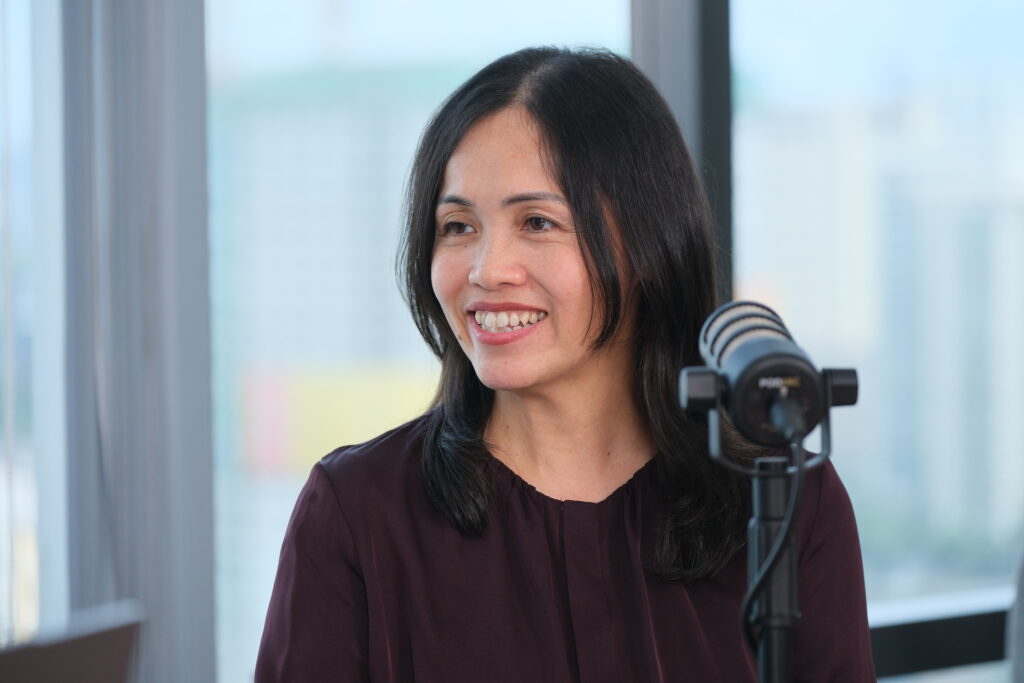
Speaking on the recent Scoop Insight podcast, Teo said that while MCMC has the authority to request online platforms to remove harmful content, members of the public retain the right to challenge such decisions through an independent review process.
“Anyone unhappy with this decision, they can actually still go to the Appeal Tribunal,” she said, noting that the tribunal is part of the checks and balances introduced to address concerns over potential censorship and misuse of authority.
The tribunal will be chaired by a High Court judge, with two additional panel members appointed to consider appeals against MCMC rulings.
“So it will be a High Court judge, and then he has the power to appoint two other persons to be the panel to actually decide on whether you can actually go there to actually review or challenge the decision of MCMC,” the Kulai MP explained.
Acknowledging that MCMC’s decisions may not always be flawless, Teo encouraged the public to make use of the tribunal.
“I also welcome people to utilise it and test it out because I agree. We cannot say MCMC’s decision are all perfect or there can be some disagreement as well,” she said.
Under the Online Safety framework, MCMC’s enforcement will focus on eight categories of harmful content, with Child Sexual Abuse Material (CSAM) and financial fraud prioritised. Teo clarified that MCMC does not define harmful content; instead, the classifications are set by a committee under the Prime Minister’s Department’s Legal Affairs Division.
The tribunal is designed to offer a more accessible and cost-effective review process than court proceedings, particularly for ordinary citizens who may lack resources for lengthy legal battles.
“And we set up a tribunal because it will be more cost effective. You do not necessarily need to engage a lawyer instead of going to court because we know that if you want to go to the court to actually challenge MCMC, then you need to engage a lawyer,” she said.
Teo stressed that the review process exists to uphold public accountability and protect citizens within the online safety system.
“So the review procedure, I think, is there to protect, I think, the general public.”
As Malaysia moves to enforce social media restrictions for users under 16, parents remain pivotal in guiding children, especially since online gaming platforms like Roblox are not currently included in the regulations.
Teo highlighted that regional authorities are increasingly adopting stricter age restrictions online.
“Indonesia also saying that they want to impose this 16-year-old ban and their scope actually can be wider than Malaysia because they are not only looking at social media, but they are also looking at other platforms,” she said.
“Any platforms they feel that there is a high risk, then this age limit or age restriction might be imposed,” she added.
Similar initiatives have been introduced internationally, including in Australia, which began implementing its age verification measures last December.
Malaysia is now consulting platform providers on age verification, considering options such as identity documents or the national MyDigitalID system.
“Of course, in Malaysia, there are a few ways for you to verify your age. Of course, you can submit your IC, you can submit your passport,” Teo explained.
“Another option available now is to get it done through MyDigitalID,” she added, noting that the system only verifies whether a user is above or below the age threshold without sharing full personal details with the platform.
“So it’s just one simple question. And then MyDigitalID, because they are also having your data, so they will come back and say, oh, yes, this person is above the age of 16, or this person is below the age of 16.”
Platforms will ultimately be responsible for confirming account holders meet the minimum age requirement, and accounts belonging to underage users must be removed.
“And so this is what we are expecting the platforms to do, verify the account owners, see whether they are above the age of 16,” she said. – May 10, 2026