

KUALA LUMPUR — Bersatu vice president Datuk Seri Faizal Azumu has alleged that efforts linked to Datuk Seri Hamzah Zainudin and his allies to challenge party leadership were aimed at gaining control of Bersatu for political leverage rather than ensuring orderly succession.
Speaking on the Trick Lama podcast hosted by Big Boom Media editor-in-chief Terence Fernandez, executive director Datuk “Rocky” Ahiruddin Attan, and CEO Datuk Zainul Arifin Mohammed Isa, Faizal, who is also widely known as Peja, claimed the faction aligned with Hamzah sought to position itself as the dominant bloc within the party.
He alleged that the objective was to use Bersatu’s parliamentary strength as a bargaining chip in future political negotiations.
Faizal, who is also widely known as Peja, noted that tensions escalated after Bersatu lost federal power, despite earlier internal discussions on leadership transition within the party.
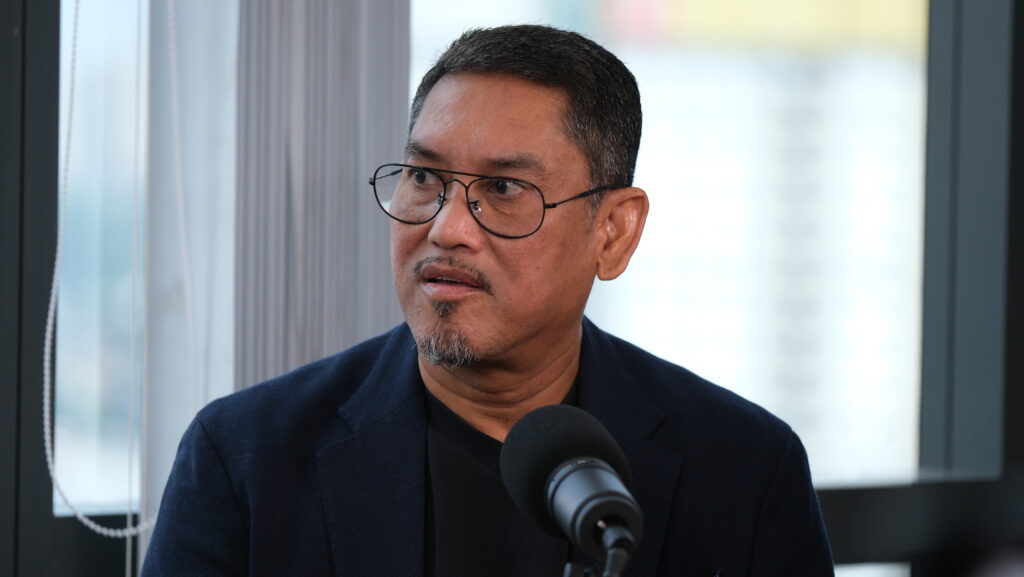
“Since we are no longer in power, our President is no longer the Prime Minister. Somehow, a bunch of leaders, Hamzah and his team, decided to topple the President and they did so many bad things to the party,” he said.
The first episode of the podcast is released alongside yesterday, while the second part will be aired on streaming platforms this Friday.
The former Perak Menteri Besar said the roots of the dispute could be traced to an announcement by party president Tan Sri Muhyiddin Yassin during Bersatu’s 2024 annual general assembly, where he indicated his intention to eventually step down.
Faizal said the announcement prompted him, in his capacity as deputy president at the time, to convene an emergency meeting with senior leaders to gauge support for a leadership change.
“I called that meeting and I did ask everybody, did anybody here want to replace Muhiyiddin? Do we agree with this?,” he asked in the meeting.
He said the response during the meeting was largely in favour of Muhyiddin continuing to lead the party, and that subsequent discussions with senior leaders reinforced that position.
Faizal also disclosed that he had expressed his own intention to step down as deputy president, and during discussions with Muhyiddin, he proposed potential successors for the role.
“I mentioned, it should be either Hamzah or Azmin,” he said addding that
Muhyiddin ultimately appointed Hamzah to the post, a decision Faizal said was broadly accepted within the party at the time.
However, he claimed internal tensions surfaced shortly after the appointment, particularly during the party election period.
“Immediately after that appointment, or endorsed by everybody and there was a competition, at the time of the election, we saw that he was trying to form his own team,” the former Youth and Sports Minister added.
Faizal alleged that some within the party began promoting Hamzah as a future prime minister candidate, gradually shifting loyalty away from Muhyiddin.
He said this development was unexpected, given that Hamzah was already widely seen internally as a natural successor figure.
Asked why Hamzah’s camp would continue to manoeuvre despite holding a senior position, Faizal said he believed it was an attempt to consolidate control over the party.
“My theory is that he wants to control the party so that he can bring the party as a commodity,” he explained.
He said such an approach reflected a style of politics driven by power negotiations rather than ideological commitment or public service.
Drawing from his earlier experience in Umno, Faizal compared the approach to political operators who build influence networks to strengthen bargaining positions.
“There are those who play politics and fight for the interests of the people. Those who play politics and those who fight politics. It’s two different animals,” he added.
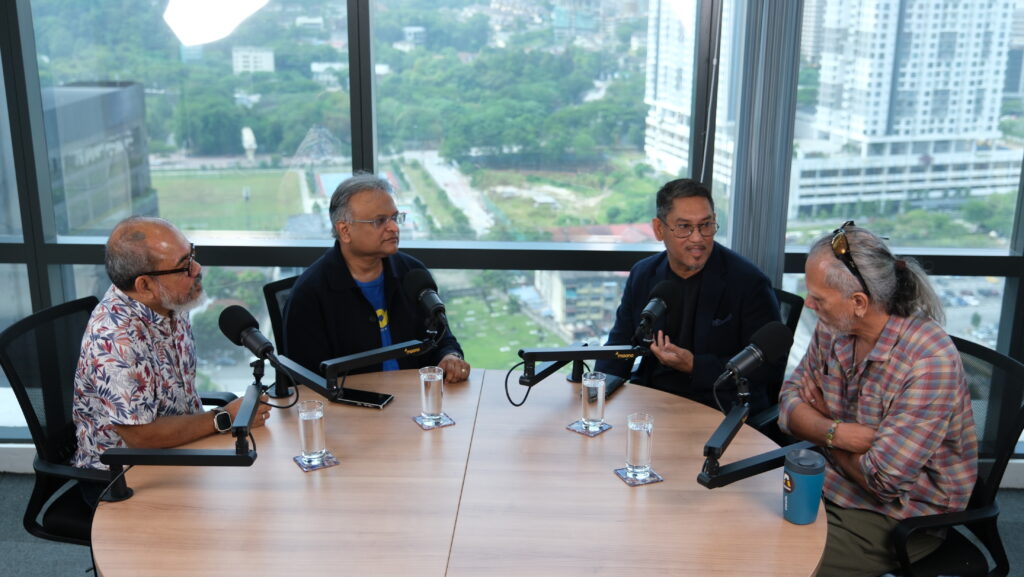
Faizal also expressed regret over his past support for Hamzah’s rise within the party hierarchy.
“I have to apologise to all the allies,” he said.
Having known Hamzah since their days in Umno’s Ipoh Barat division, Faizal said he initially believed the senior politician would prioritise party interests over personal ambition.
“I thought he would change. But somehow, immediately, I saw that he’s trying to have his own team.”
The remarks are likely to intensify existing tensions within Bersatu, which has faced internal divisions since its formation.
Despite the controversy, Faizal insisted that Muhyiddin continues to command strong support within the party, maintaining that the leadership challenge was never truly about succession planning.
Hamzah has since been expelled from Bersatu and announced the formation of a new party, Parti Wawasan Negara (PWN), on June 13, 2026. – June 25, 2026