


KUALA LUMPUR — The ability to change governments peacefully through elections is among the biggest achievements of the Reformasi movement, says former PKR vice-president Tian Chua, who believes Malaysia’s democratic progress reflects a major transformation in the country’s political landscape.
Speaking on the latest episode of Trick Lama, a podcast co-hosted by Big Boom Media Group Chief Executive Officer Datuk Zainul Arifin, Group Editor-in-Chief Terence Fernandez and Group Executive Director Datuk “Rocky” Ahiruddin Attan, Tian Chua said the ability for political parties to gain or lose power through the ballot box marked a significant institutional shift from the era when one coalition dominated Malaysian politics.
“So, the situation where you can rotate power and you can change political party, that’s again, a big institutional reform from virtually one-party states, although multi-racial, but then it’s still a one-party situation to a situation that everyone has a chance to,” he said.
He said another sign of democratic maturity was the willingness of political parties to accept election outcomes, regardless of whether they emerged victorious or suffered defeat.
“Nobody comes out and says, ‘Oh, yeah, we got defeated’ or ‘we win Negeri Sembilan’, and someone else comes out and says, ‘No, no, no, it’s all tipu (lies)’,” he said.
“The winner and loser accepted the legitimacy of the institution. That itself is a very important reform.”
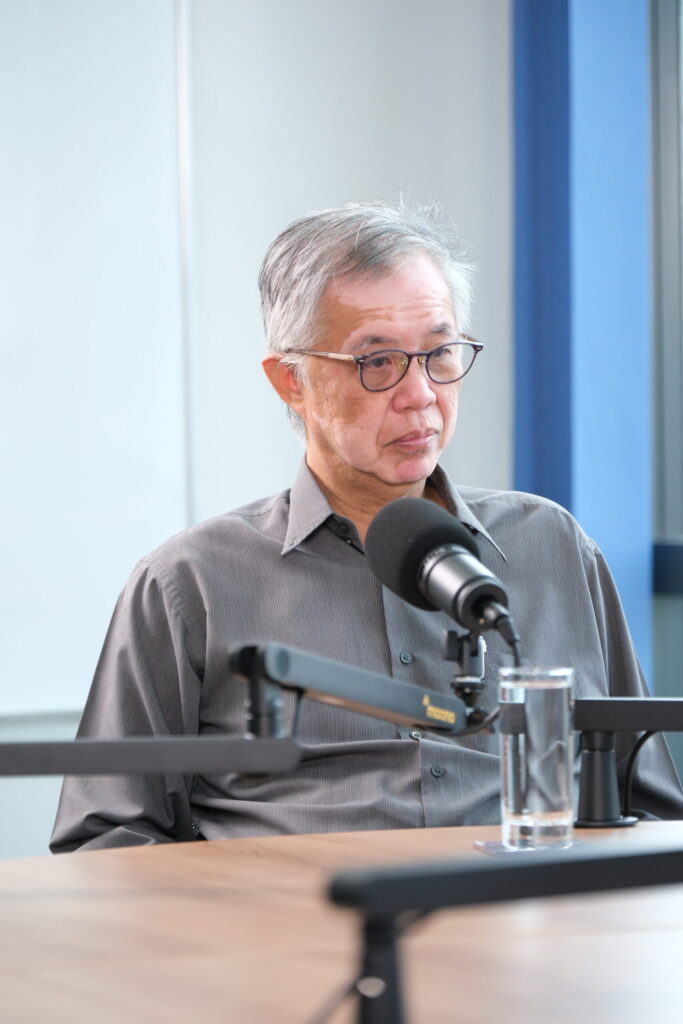
Tian Chua said political parties were now more prepared to accept defeat and facilitate peaceful transitions of power, unlike the political environment during the early years of the Reformasi movement.
“‘We lost, we thank you, we thank you, the voters, we will do better. We hand over power.’ So that itself, yeah, that is important,” he said.
He said such changes had taken decades to develop, with Reformasi activists initially pushing for greater political freedoms, democratic participation and accountability while challenging the existing political order.
“Before Reformasi, I used to say this in a rather flippant way. It took Malaysians 20 years to be brave enough to tell the Prime Minister to get down,” he said.
Tian Chua said Malaysians had since become more willing to hold leaders accountable, pointing to the political pressure faced by successive prime ministers.
“Datuk Seri Najib Razak, after one term, people asked him to step down. Datuk Seri Anwar Ibrahim, not yet one term, people asked him to step down,” he said.
“This itself is a form of Reformasi because we have created a much more politically conscious people.”
However, he stressed that democratic reform remained an ongoing process and should not be measured solely by electoral victories.
“Power is not everything. Winning an election also is not everything,” he said.
“What is important is how do we continue the political party with the values of democracy, freedoms and human rights.”
He said Malaysians must continue safeguarding the democratic space developed over decades while ensuring future governments uphold institutions and respect the people’s mandate.
“I’m optimistic that this reform will continue,” he said.
Meanwhile, another former PKR vice-president and Reformasi veteran, Dr Xavier Jayakumar, said Malaysia had experienced significant changes since the movement began, particularly in public awareness and attitudes towards governance.
“I think in the past, from the time we started Reformasi, it’s about 35 years now. You can say that tremendous change has taken place in the country in terms of information and how people think about governance and government,” he said during the podcast.
Xavier said the peaceful nature of Reformasi demonstrations was another achievement that should be recognised, highlighting that activists pursued political change without resorting to violence.
“I would say the things that we can be proud of, 20 years we were fighting in the street, we did not destroy any public building,” he said.
“There was no throwing of Molotov cocktails. No police got injured and all these things. That’s very rare.”
He said the peaceful nature of the demonstrations helped encourage greater public participation in political movements.
“People finally dared to come out, 100,000, 200,000, because they knew there was not going to be a riot. They could bring their children there also,” he said.
Xavier said Malaysia’s democratic journey should be viewed as a long-term process, with political and institutional changes evolving gradually over several decades. – September 5, 2026