


KUALA LUMPUR — The prospect of returning to royalty to lead the Football Association of Malaysia (FAM) has raised a more fundamental question: has Malaysia failed to produce football administrators capable of steering the body through one of its most turbulent periods?
Speaking to Scoop, veteran sports analyst Datuk Pekan Ramli said the renewed push to bring a royal figure back as president is less about prestige and more about stabilising an association mired in internal turmoil.
Pekan, a senior lecturer at the Universiti Teknologi MARA (UiTM) Faculty of Sports Science and Recreation, said the proposal should not be seen as an admission that Malaysia lacks credible leaders among its 34 million citizens.
Instead, he described it as an urgent effort to restore FAM’s image, reunite affiliates, reduce politicking, cronyism and nepotism, and curb external interference from vested interests that have fuelled disharmony within the association.
“There are many other factors, but these are the most pressing reasons behind the idea,” he said.
Pekan noted that decades ago, royal involvement in sports associations offered clear advantages in attracting sponsorship and government support through influence and networks.
He linked this to the ‘self-esteem needs’ described in Maslow’s Hierarchy of Needs, where status and privilege carried value.
However, he stressed that professional football management has since changed.
“Today, FAM must be run like a global corporate organisation that demands expertise in governance, finance, audit, human resource management and a clear understanding of stakeholders, including affiliates, sponsors and supporters,” he said.
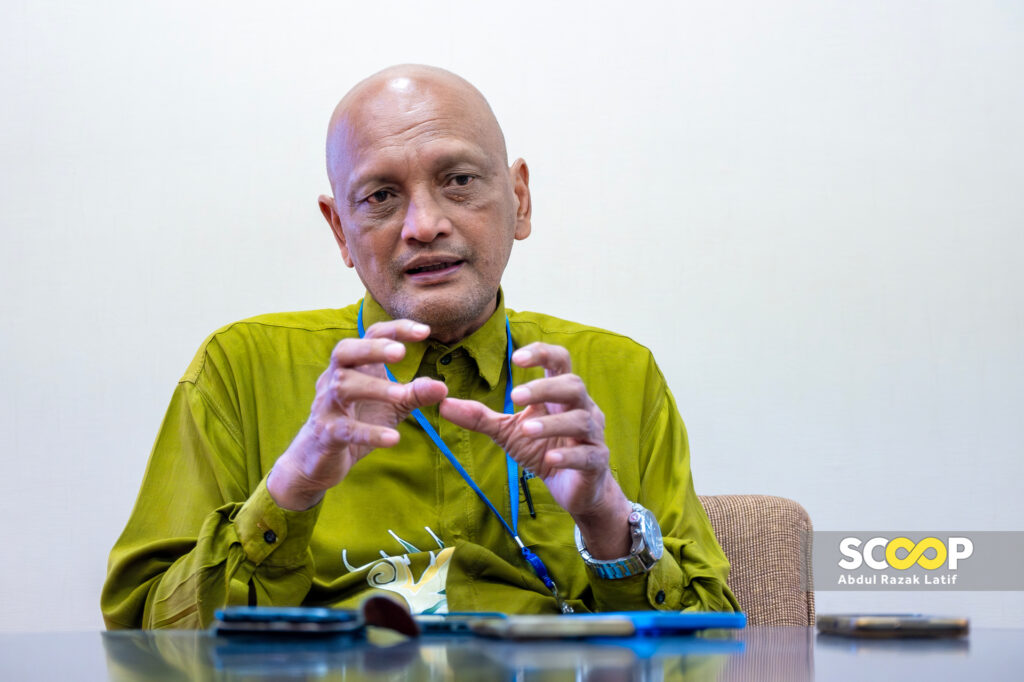
While cautioning against negative perceptions of royal involvement, Pekan emphasised that leadership quality, accountability and professionalism must take precedence over status. Any president must avoid mixing personal or palace interests with the interests of football.
Drawing comparisons abroad, he pointed to royals from the UAE and Saudi Arabia who own European clubs such as Manchester City and Newcastle United, but do not manage their national teams.
Closer to Asia, Pekan cited the transformation of the Korea Football Association under Chung Mong-gyu, chairman of Hyundai Motor Company, where former players now hold key leadership roles — an element he said Malaysia has yet to fully realise.
He argued that experience in football administration should outweigh influence when selecting a president. However, he acknowledged a key weakness: many former Malaysian footballers lack the academic and management background for such roles, though this may change as more athletes pursue higher education through sports pathways.
Pekan also warned that royal involvement could reduce accountability and scrutiny — a risk not limited to royals. In the social media era, he described this as the most challenging time for any royal to lead a national sports association.
“What matters is giving capable people the opportunity and support to grow into strong leaders,” he said.
Meanwhile, senior sports analyst Mohd Sadek Mustaffa echoed the sentiment more bluntly.
“Royal or not is not the issue. The person must be capable and just,” he said.
Sadek described the belief that only royals can command support and sponsorship as a Malaysian myth, noting that credible individuals from ordinary backgrounds can also gain backing if they are strategic and able to reshape perceptions among supporters and stakeholders.
He added that while the Malaysian football ecosystem is small and many aspire to be influential figures, royals are already accustomed to that environment. The real question, he said, is whether they can remain fair.
For Sadek, the ideal FAM president must possess knowledge, dynamism, effective communication skills and the ability to adapt quickly to responsibility.
“A person who understands the pulse of Malaysians, works hard, commands respect and respects others — that is the type of leader Malaysian football needs,” he said.
Three royals have emerged as leading names for the vacant FAM presidency: the Sultan of Pahang, Al-Sultan Abdullah Ri’ayatuddin Al-Mustafa Billah Shah; the Regent of Johor, Tunku Ismail Sultan Ibrahim; and the Raja Muda of Selangor, Tengku Amir Shah Sultan Sharafuddin Idris Shah.
Al-Sultan Abdullah previously served as FAM president from 2014 to 2017, while Tunku Ismail led the association from 2017 to 2018. Tengku Amir has headed the FA of Selangor since 2018.
Last month, FAM’s executive committee for the 2025–2029 term resigned en bloc, leaving a leadership vacuum after the heritage players controversy that led to sanctions from FIFA. – February 13, 2026