



KUALA LUMPUR – With Malaysia navigating ongoing economic pressures and tightening fiscal priorities, the prospect of hosting the Asian Games has been met with strong caution, as analysts warn the country is not in a position to take on such a costly mega event in the near term.
Their responses come following the recent visit of the President of the Olympic Council of Asia, Sheikh Joaan Hamad Al Thani, who held courtesy meetings with the Yang di-Pertuan Agong, Sultan Ibrahim, Prime Minister Datuk Seri Anwar Ibrahim, and the President of the Olympic Council of Malaysia, Tan Sri Norza Zakaria, on April 20.
The discussions touched on sports cooperation and the possibility of Malaysia hosting future Asian-level events, including the Asian Games.
Veteran sports analyst and senior lecturer at UiTM’s Faculty of Sports Science and Recreation, Datuk Pekan Ramli, believes the financial realities facing the nation make any immediate ambition to host the Asian Games both challenging and strategically questionable.
“Taking into account the current economic pressures and the burden of hosting costs for the Asian Games, which are far greater than the Commonwealth Games, any plan to host it in the near future would be very challenging and less appropriate from the perspective of the country’s current fiscal strategy,” he said when contacted.
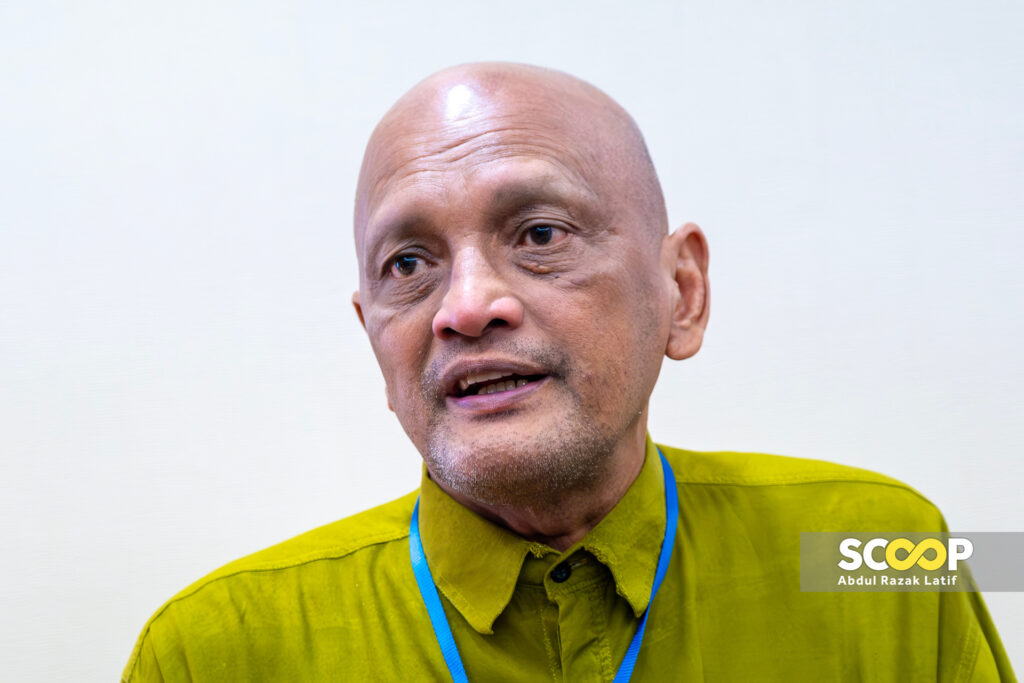
Pekan stressed that the government’s priorities at present are rightly focused on strengthening the domestic economy rather than pursuing mega sporting events.
“In the current fiscal situation which focuses on strengthening public finances, hosting the Asian Games in the near term will tend to be seen as a short-term financial burden rather than an economic benefit to the country,” he added.
While acknowledging that hosting international events can deliver long-term gains, he cautioned that the immediate risks remain significant.
“The fiscal risk of bearing high costs and ensuring sufficient supporting funds will certainly burden the government,” he said.
Malaysia’s earlier decision to withdraw from hosting the 2026 Commonwealth Games, Pekan noted, should not be seen as a sign of incapability, but rather a reflection of prudent timing and financial considerations.
“The rejection was more due to time and financial factors rather than technical capability and infrastructure. We must be cautious not to use public funds merely to accept hosting rights at the last minute,” he said.
However, Pekan pointed out that if approached strategically, the Asian Games could still offer long-term value.
“We need a ‘low cost, high impact’ model by upgrading existing venues rather than building new ones, and by involving the private sector as strategic partners. This can transform hosting from a burden into a driver of economic and sports development,” he said.
He also warned of the persistent risk of underutilised facilities.
“The risk of ‘white elephants’ is high if we build new venues without proper long-term planning. Facilities can become a financial burden instead of delivering economic returns,” he said.
Despite the concerns, Pekan maintained that Malaysia still possesses the capability to host major events, provided investments are made wisely.
“We have international-standard facilities, but upgrades and long-term planning, including an athletes’ village, must be considered early. At the same time, we must enhance our technological capabilities such as AI and 5G to remain competitive,” he added.
Meanwhile, fellow sports analyst Sadek Mustaffa emphasised that any serious consideration of hosting the Asian Games must begin with long-term financial planning and strategic collaboration.
“Everything depends on financial planning for the eight years prior to the Asian Games. Cost savings can be achieved by using existing facilities and developing human resources, including athletes, officials and experts,” he said.
Sadek stressed that cooperation between the government and private sector would be crucial in managing the financial burden.
“Financial planning must involve collaboration between the government and the private sector. It becomes a burden if national development has to be set aside, whether for grassroots sports or community well-being,” he said.
He drew a clear distinction between the Asian Games and the Commonwealth Games, noting that the latter’s short preparation window made it unfeasible.
“The Commonwealth Games in two years’ time would have been a burden. For the Asian Games, we have a longer time frame to plan, design, develop and organise,” he said.
Nonetheless, Sadek acknowledged that the Asian Games presents a significantly higher level of challenge.
“In reality, the Asian Games is more demanding because its performance standards are higher,” he said.
He added that Malaysia already has a strong foundation in terms of infrastructure, particularly in key sporting hubs.
“We already have the facilities, especially in Bukit Jalil, Selangor and Sarawak. These can be further developed through collaboration with higher education institutions and turned into regional high-performance sports research centres,” he explained.
On the question of returns, Sadek urged a broader perspective beyond financial gains.
“The return on investment for sport is similar to education. It is not measured purely in financial profit, but in human capital development and socio-economic well-being,” he said.
He also called for a more grounded approach in benchmarking.
“There is no need to follow other countries’ standards entirely. We must measure according to our own capacity and Malaysia’s standards,” he added.
As discussions around hosting ambitions resurface following recent high-level engagements, both analysts agree on one point — while Malaysia has the potential, the timing and economic realities must ultimately dictate whether the nation is ready to take on the Asian Games. – April 23, 2026