


KUALA LUMPUR – The Football Association of Malaysia (FAM) is facing what has been described as a “chronic condition” following widespread systemic weaknesses involving governance, accountability and organisational management.
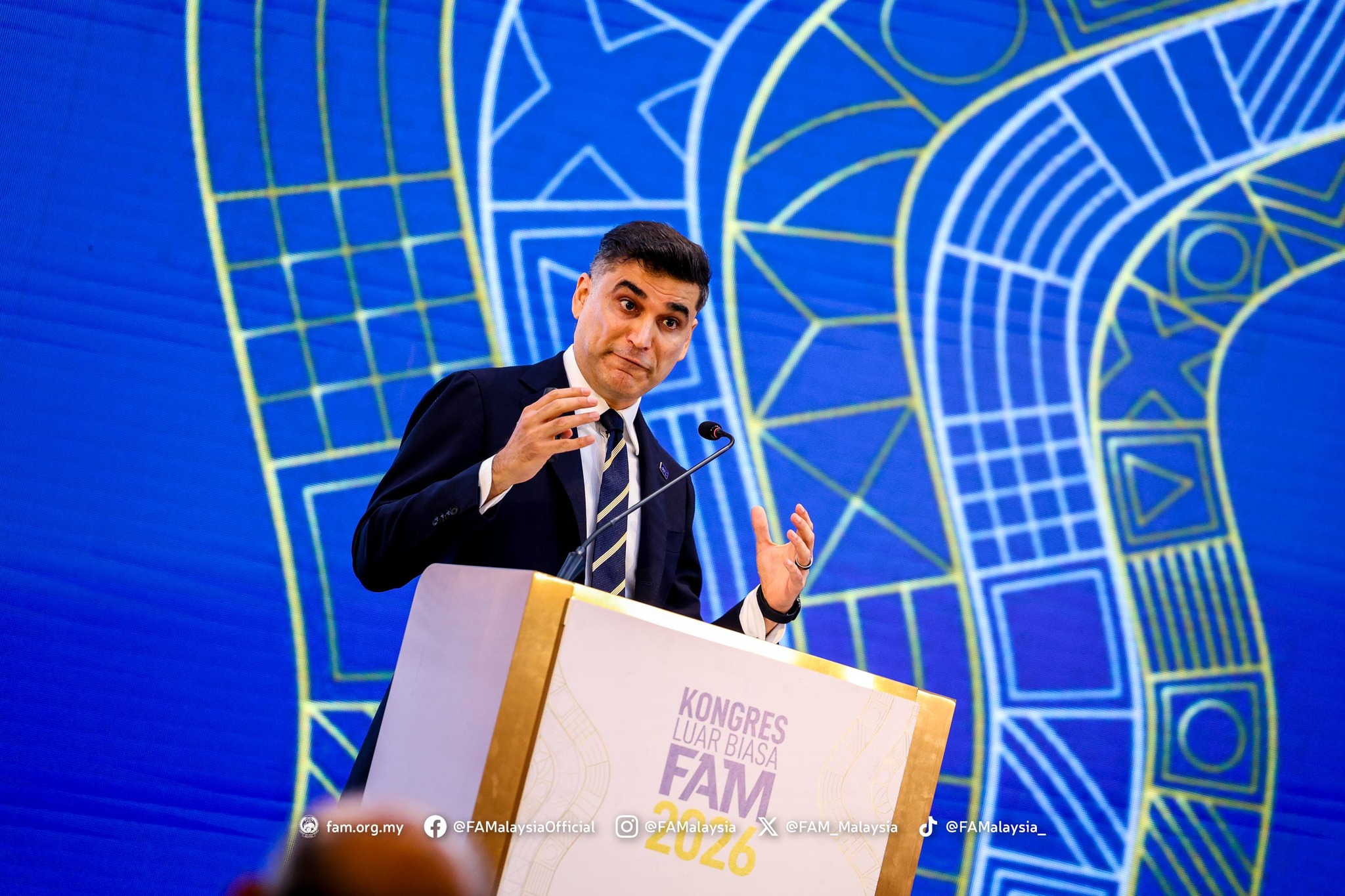
The matter was highlighted in a comprehensive audit by the Asian Football Confederation (AFC), presented by its deputy secretary general, Vahid Kardany, at the FAM Extraordinary Congress today.
Kardany said the issues were not isolated to any single department but reflected deeper structural failures across the organisation.
“What we are seeing is a chronic condition across the organisation.
“The problems are not confined to one area but are recurring across the entire structure, pointing to systemic weaknesses in governance, accountability and institutional design,” he said during his presentation.
The report stated that FAM’s shortcomings are systemic in nature, with governance and structural deficiencies significantly affecting operational effectiveness.
It also found that several critical functions were overly dependent on individuals rather than established systems, posing risks to continuity and sustainability.
Among the key findings was that governance structures existed on paper but had not been formally approved or enforced by the executive committee.
Decision-making authority was also found to be informally concentrated at the top level, bypassing official reporting lines.
The audit further noted that essential functions had been built around individuals rather than institutions, increasing reliance on key personnel across departments.
It also highlighted the absence of annual business plans, activity calendars and performance reports.
Policies that were drafted but not approved were deemed unenforceable and potentially exposed the organisation to legal risk.
The AFC additionally pointed out that no key performance indicators (KPIs) or formal performance measurement frameworks were in place across departments.
Staff were also reportedly given additional responsibilities without corresponding salary adjustments or workload reviews.
The findings also raised concerns over weak succession planning, with institutional knowledge concentrated in only a few individuals.
The organisational culture was said to discourage staff from raising concerns through formal channels. – June 4 , 2026