


KUALA LUMPUR – The Malaysian Weightlifting Federation (MWF) has urged the Youth and Sports Ministry (KBS) and the National Sports Council (NSC) to urgently address the long-standing welfare issues faced by state-level weightlifting coaches, warning that many dedicate their lives to producing national champions only to retire with little or no financial security.
The federation said many state coaches are employed on allowance-based arrangements rather than formal salary schemes, leaving them without Employees Provident Fund (EPF) contributions despite playing a crucial role in identifying, nurturing and developing athletes who eventually represent Malaysia on the international stage.
MWF vice-president Ahmad Janius Abdullah said discussions with coaches nationwide revealed that most do not receive EPF contributions because they are paid monthly allowances by their respective state sports councils instead of being employed under proper service schemes.
“The reality is that many of these coaches are not employed under proper salary schemes. Instead, they receive allowances, and after speaking to coaches across several states, the overwhelming majority told me they do not receive EPF contributions,” Janius told Scoop.
“They dedicate years of their lives to developing athletes, but when they eventually retire, many discover they have almost nothing saved for their future. After decades of service, they are left without the financial security that any employee should reasonably expect.
“This is an issue that deserves immediate attention from KBS, NSC and the relevant sporting authorities. These coaches have sacrificed so much for Malaysian sport, yet many are struggling simply because they have never been placed under a proper employment structure.”

Janius said the financial reality faced by state coaches remains deeply concerning, with many earning salaries that barely reflect the responsibilities placed upon them.
“Some states can only afford to engage part-time coaches who receive between RM450 and RM600 a month. Even among full-time coaches, salaries generally range from RM1,000 to RM4,000, with those earning at the higher end being very much the exception rather than the norm.
“Despite receiving such modest remuneration, they are still expected to produce medal-winning athletes for their states at the Malaysia Games (Sukma). The expectations placed upon them are enormous, but the financial support they receive simply does not match those expectations.”
He stressed that state coaches form the backbone of Malaysia’s weightlifting development pipeline, laying the foundations long before athletes reach the national squad.
“These are the individuals who spend years scouting for talent, introducing children to the sport and convincing parents to allow their sons and daughters to continue training. That is often the hardest part because it requires trust, patience and persistence.
“Developing an elite athlete does not happen overnight. It takes years of consistent guidance, and much of that crucial foundation is built by state coaches. By the time these athletes join the national programme, national coaches are largely refining athletes who have already been developed through years of hard work at state level.”
Janius also said improving salaries, employment terms and retirement benefits would help attract and retain better-qualified coaches, ultimately strengthening the sport nationwide.
“One of the biggest challenges we face is that individuals with stronger academic backgrounds are understandably reluctant to become state coaches because the remuneration is simply not attractive.
“As a result, many of those who remain in the system have fewer educational opportunities, and this becomes evident when we send them to advanced coaching courses overseas. Some struggle to absorb the latest knowledge, methodologies and technical developments because they have not been given the same educational foundation.
“If we want Malaysian weightlifting to continue progressing, we must invest not only in our athletes but also in the coaches who build them from the ground up. Better pay, proper employment status and a secure retirement scheme will encourage more capable and highly qualified individuals to pursue coaching careers at state level.”
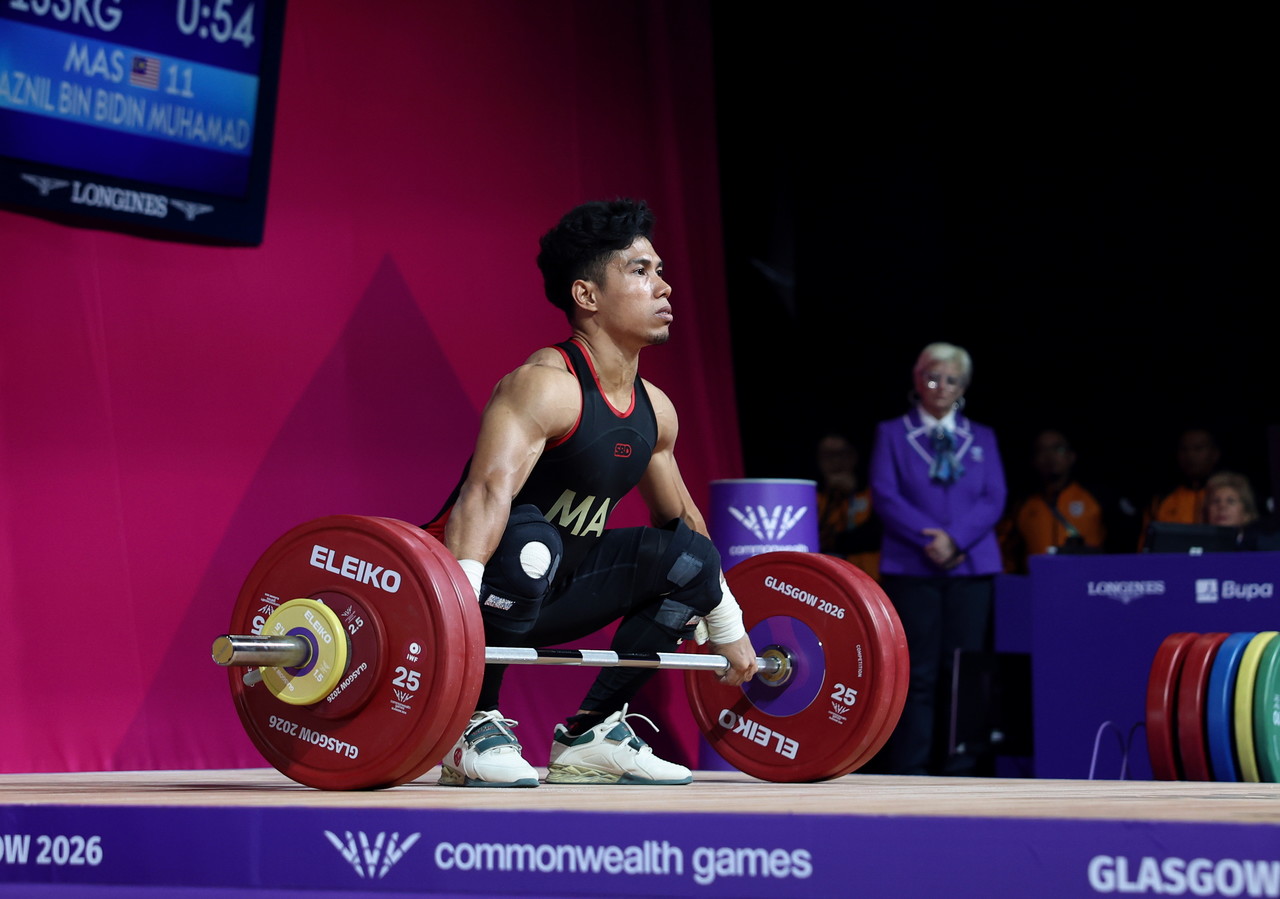
The federation’s appeal comes after Malaysian weightlifting enjoyed its most successful Commonwealth Games campaign in Glasgow, returning with a record haul of five gold, one silver and one bronze medal.
Malaysia also captured the prestigious Trafalgar Trophy for the first time after finishing as the best-performing men’s weightlifting team at the Games.
Buoyed by that success, MWF has requested an annual RM1 million allocation from KBS to strengthen athlete development and sustain the sport’s momentum, a proposal that has received the backing of the Olympic Council of Malaysia (OCM).
OCM president Tan Sri Mohamad Norza Zakaria said the federation had earned the right to seek greater support through its results, describing weightlifting as one of Malaysia’s most consistent medal-winning sports and deserving of sustained investment. – August 4, 2026