

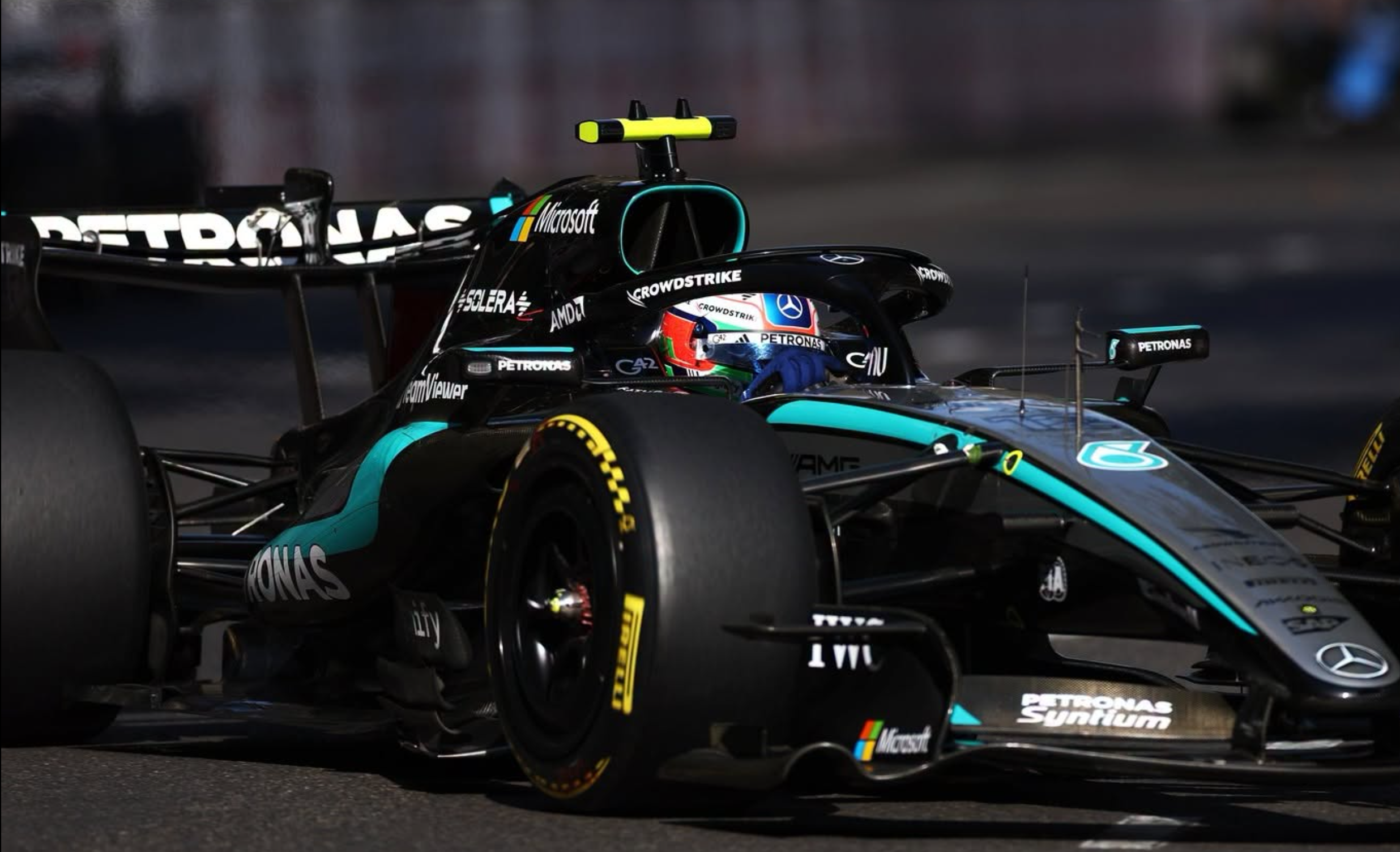
KUALA LUMPUR — Petroliam Nasional Bhd (Petronas) is exploring ways to lower the cost of its advanced sustainable fuel (ASF) while preserving its performance, as it continues developing the technology in tandem with upcoming Formula One (F1) power unit changes.
Petronas downstream executive vice president and chief executive officer Datuk Seri Sazali Hamzah said improving the fuel’s cost competitiveness was one of the key challenges being tackled by the company’s researchers, Bernama reported.
“We are also challenging ourselves on how to make it much more economical. And that is also part of the challenge that we are facing now. Our scientists are focusing on other options that we can do to make it cheaper, but still maintaining the performance,” he said during a media session with Mercedes-AMG Petronas F1 team principal and chief executive officer Toto Wolff here today.
Sazali was responding to a question on how changes to F1’s power unit regulations could affect the development of Mercedes’ engines and Petronas’ sustainable fuel technology.
Under the revised regulations, F1 will adjust its power unit framework in 2027 and 2028, including reducing electric power output to encourage more aggressive racing.
From 2027, internal combustion engine output will increase by 20 kilowatts (kW) to 420kW, while battery-generated electric power will be reduced by 50kW.
Energy harvesting will also be increased, changing the power balance between the internal combustion engine and electric components from 53:47 to 58:42, according to International Automobile Federation (FIA) data.
A further adjustment in 2028 will see internal combustion engine output rise to 450kW, shifting the split to 60:40.
Wolff said the regulatory changes would allow higher fuel flow to generate more power, requiring both the engine and fuel package to evolve further to meet the new demands.
However, he said the changes would not alter the fundamental approach behind the sustainable fuel currently being developed.
“On the engine and fuel side, things need to stretch even more in order to accommodate regulatory change. Keeping a performance advantage, that’s exactly what we want,” said Wolff.
Sazali said F1 serves as a platform for Petronas to develop, test and refine fuels and related technologies, with innovations from the racing environment potentially adapted for wider commercial applications.
He said the partnership with Mercedes also allowed Petronas to develop future fuel technologies and specifications ahead of sustainability requirements, ensuring the company would be prepared when those standards reached the market.
Petronas has been collaborating with Mercedes-AMG on ASF development since 2022, following the Singapore race, in preparation for F1’s 2026 regulations. The fuel has been used in Mercedes’ F1 cars since the start of the current season.
Sazali said the team’s performances in the opening races in Australia and China demonstrated the potential of combining fuel technology, power unit development and vehicle engineering into a single package.
He also highlighted the Malaysian expertise behind the ASF project, saying the fuel was developed by local specialists, including three key personnel involved in its creation who are Malaysians.
Sazali said Petronas had around four years to prepare for the 2026 regulations, describing the transition from initial development to commercial production within that period as a demanding target.
He added that developing the fuel alongside Mercedes’ engine programme allowed both sides to make adjustments throughout the process, while Petronas also had to ensure its fuel production facility was completed on schedule.
Sustainable fuel certification was another challenging stage, he said, as it involved detailed greenhouse gas assessments.
However, he said the experience gained through the certification process would help Petronas assess other future fuel options more efficiently.
Beyond motorsports, Sazali said Petronas uses F1 as a testing ground to develop and validate fuels, lubricants and other functional fluids under extreme conditions, with lessons from the racetrack applied to commercial products.
These include Petronas Primax fuels, Syntium lubricants, IONA fluids for electric vehicles and IONA Terra, a cooling medium for data centres.
Meanwhile, Wolff described the relationship between Petronas and Mercedes as a technical partnership rather than a conventional sponsorship arrangement.
He identified Petronas, Mercedes’ chassis division and its engine operation as the three main contributors of hardware and intellectual property to the F1 team.
“We can talk a lot about sponsors and we can talk a lot about other relationships, but this is not a sponsorship relationship. This is a technical partnership. This is an integrated works team between Petronas and Mercedes,” he said.
Wolff said sustainable fuel would continue to play a role regardless of whether future mobility relies more heavily on electric vehicles, hybrid technology or internal combustion engines.
“Energy transition is happening, whether you like EV or whether you like hybrid or whether combustion cars are going to still have a larger share in the future. Sustainable fuel is the way forward,” he said. – September 30, 2026