

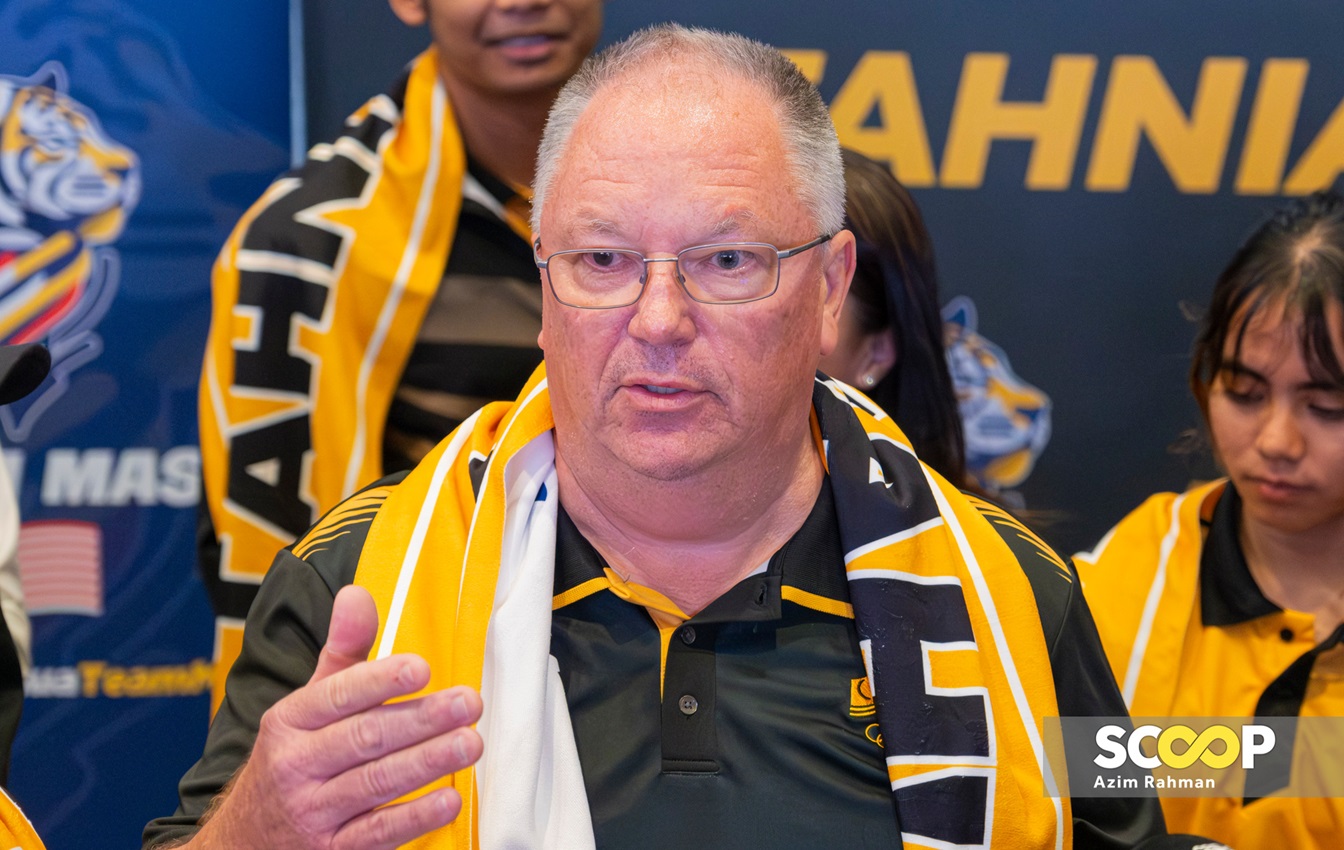

KUALA LUMPUR – A lack of institutional backing and a failure to address structural problems in Malaysian cycling contributed to John Beasley’s decision to leave the country, with the outgoing national technical director insisting that building an internationally competitive programme requires more than simply demanding medals.
Speaking to Scoop, Beasley said he had spent years trying to improve Malaysian cycling but struggled to implement meaningful changes, despite the results achieved during his tenure and the pressure placed on him to deliver success.
He said the lack of support from those above him became particularly difficult when he faced public criticism, leaving him feeling that his contributions were no longer valued.
“When you’re employed by people and you’re personally attacked by idiots, but your boss doesn’t stand up for you, you no longer feel valued, and it’s time to go,” he said.
The Australian, who has spent more than two decades working in Malaysian sport, maintained that his departure was not simply about results but also the difficulties of trying to build a sustainable programme within a system he believed needed fundamental reform.
Beasley also questioned whether those criticising his work understood the demands of elite sport, where selection decisions inevitably disappoint athletes who fail to make the cut.
“It’s not easy when you’re in charge of high performance. Someone will always complain because they’ve missed out on a spot. But that’s high performance. It’s not development, where every participant gets a ribbon just like the winner,” he said.
“If you’re not good enough, you’re not good enough. That’s the brutal reality of high-performance sport. It’s not easy, and it’s not for everybody.”
He said he was prepared to have his record scrutinised but argued that any assessment should be based on facts and include the perspectives of athletes and staff who had worked closely with him.
“I’m happy for my contributions to be measured by facts. No one will know for a few more years whether I was a good coach or a bad coach in Malaysia,” he said.
Beasley also recalled the pressure surrounding Malaysia’s pursuit of an Olympic cycling medal, revealing that he was threatened with dismissal shortly before the competition at the 2016 Rio Games.
“Two days before the competition started, I was told that I would be sacked if we didn’t win a medal,” he said.
“I was at the Olympic Games, just two days before the competition, and I was already under enormous pressure. I was trying to keep the athletes as calm as possible, and then I was told that.”
Beasley said he survived another decade in the role, but the experience illustrated the pressure placed on those responsible for delivering results at major international competitions.
Despite the criticism, Beasley, who was recently appointed as the assistant head coach for Japan’s national track cycling team, said he felt privileged to have served Malaysia and pointed to the country’s progress during his time in high-performance cycling, including medals at world championships, the Olympic Games, the Commonwealth Games and the Asian Games.
“I feel lucky, privileged and honoured to have served Malaysia to the best of my ability. I’m not perfect, and I’m not saying I’m the best coach in the world, but I think I’m solid, and I think the results speak for themselves,” he said.
Beasley said he hoped the programme he helped build would continue to progress under new leadership, but stressed that its future depended on a willingness to address longstanding problems and sustain the work already undertaken.
“I’m really proud of it, and I hope someone else picks it up and takes it to another level. I’d love nothing more than to see that happen,” he said. – October 20, 2026