

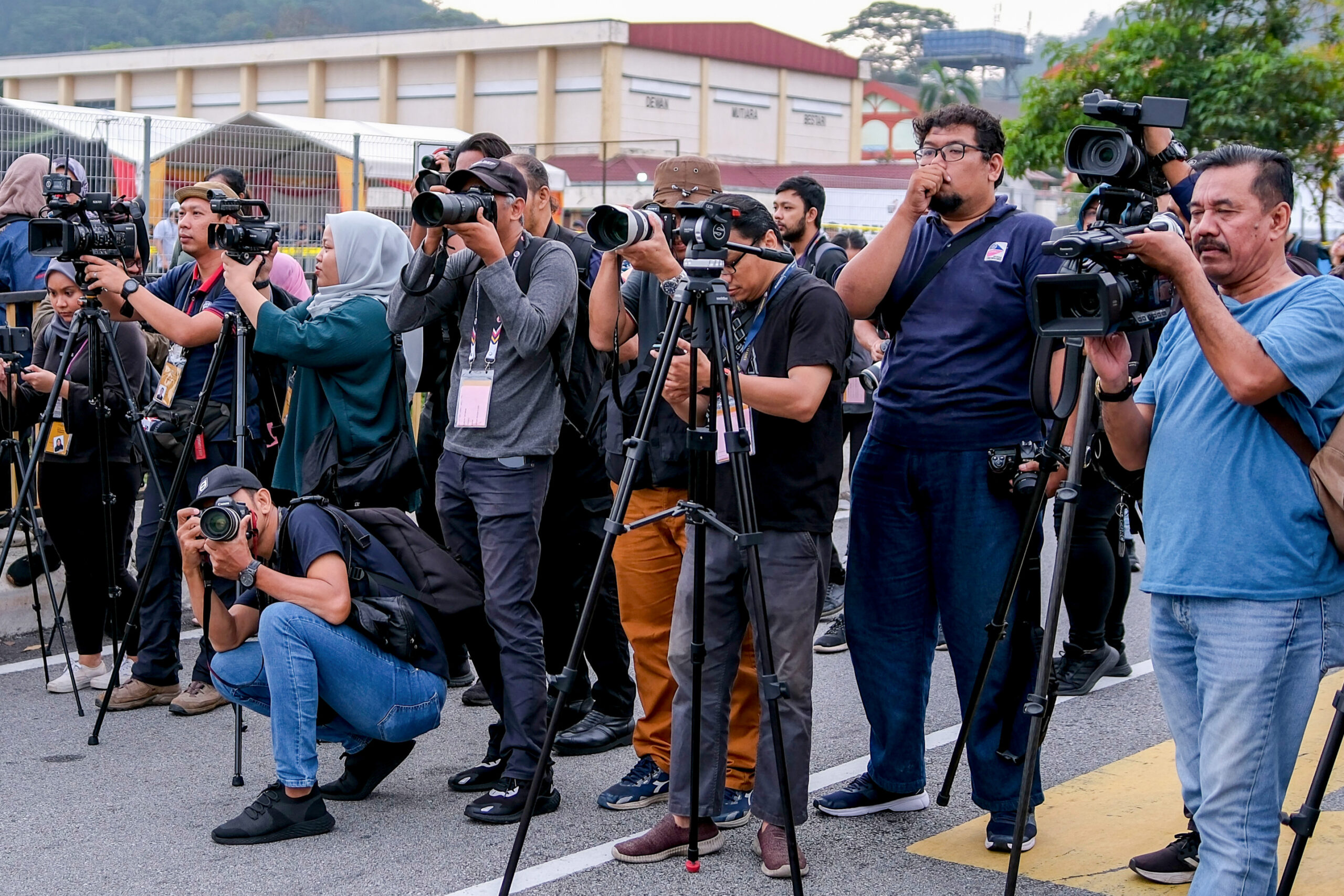
KUALA LUMPUR – Malaysia has moved up 19 places in the 2025 World Press Freedom Index, climbing to 88th out of 180 countries, according to the latest findings by Reporters Without Borders (RSF).
This marks an improvement from 2024, when the country dropped to 107th position with a score of 52.07. Malaysia now scores 56.09 and has re-entered the “problematic” category, having previously fallen into the more severe “difficult” tier. Despite the upward trend, the nation remains behind its 2023 standing of 73rd.
In the regional context, Malaysia ranks second in Asean, just behind Thailand (85th), but ahead of other neighbours such as Brunei (97th), the Philippines (116th), Singapore (123rd), and Indonesia (127th).
While Malaysia showed gains in economic (60th), social (81st), and security (90th) indicators, it continues to perform poorly on the legislative (133rd) and political (92nd) fronts. The report flagged challenges including threats to investigative journalism, sensitivities surrounding the monarchy, and limitations on discourse involving race and religion.
“The authorities are after investigative reporters, and the monarchy is an extremely sensitive subject, as are discussions on race and religion,” RSF said.
“Any form of commentary or reporting deemed critical of the monarchy can result in prosecution, leading to widespread self-censorship on the matter.”
The report further highlighted that launching a media outlet in Malaysia remains a high-risk endeavour due to strict licensing requirements and media ownership concentration, both of which continue to restrict editorial freedom.
“Several media moguls (are) threatening the independence and pluralism of the entire sector,” RSF said.
Although physical attacks on journalists are rare, RSF noted that some in Malaysia continue to face legal harassment and public smear campaigns.
Earlier this year, the government introduced a journalism code of ethics in an attempt to address the growing influence of social media.
The Malaysian Media Council Bill, passed in March, will soon establish an independent regulatory body to oversee the industry. Nevertheless, calls persist for the repeal of outdated laws such as the Sedition Act 1948 and the Printing Presses and Publications Act 1984.
Globally, RSF warned of increasing threats to press freedom, stating that economic pressures have become the dominant challenge for journalism.
The organisation noted that over half of the world’s population lives in countries where the press is under significant threat and journalism is considered a dangerous profession.
“In the Asia-Pacific region, press freedom and access to reliable news sources are severely compromised by the predominance of regimes — often authoritarian — that strictly control information, often through economic means,” the RSF report stated.
“In several countries, the concentration of media ownership in the hands of political magnates threatens media plurality. In India (151st), Indonesia (127th) and Malaysia (88th), a handful of politically connected conglomerates control most media groups,” it added.
RSF’s editorial director Anne Bocandé emphasised the importance of securing financial stability for media institutions in order to preserve editorial independence.
“When news media are financially strained, they are drawn into a race to attract audiences at the expense of quality reporting, and can fall prey to the oligarchs and public authorities who seek to exploit them,” she said. “When journalists are impoverished, they no longer have the means to resist the enemies of the press — those who champion disinformation and propaganda.”
Bocandé underscored the need for systemic reforms that prioritise public-interest journalism, noting that reliable information “is inherently costly” and requires sustained support.
The World Press Freedom Index evaluates journalism across 180 countries using a combination of qualitative assessments and quantitative data, focusing on political context, legal environment, economic conditions, sociocultural factors, and journalist safety. – May 2, 2025