

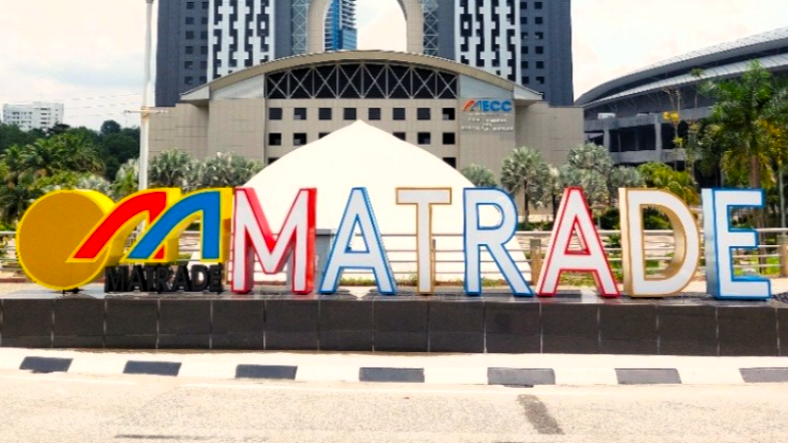
KUALA LUMPUR – The allocation for the Malaysia External Trade Development Corporation (Matrade) should be increased to RM100 million to support the exploration of new markets and assist small and medium enterprises (SMEs) in dealing with the impact of United States (US) tariffs.
Speaking to Scoop, SME Association of Malaysia national president Chin Chee Seong, said that currently, SME exporters account for 11% of total exports, with around 6 to 8% of that going to the US.
“Some SMEs may be affected, some may not. What matters is, if we lose the US market, we need other markets to compensate for that export loss. That’s why alternative avenues are needed to help explore other countries’ markets.
“The additional RM50 million allocation (for Matrade) is good, but if possible, a larger injection up to RM100 million would be even better, so that Matrade can promote more Malaysian products.

“That’s crucial. It would also be helpful if Matrade could support us (SMEs) in tapping into the Chinese market or others that already have trade ties with us.
“Breaking into certain markets isn’t easy, so Matrade can serve as a gateway to explore new ones,” he said today.
Earlier, in his address to the Dewan Rakyat yesterday, Prime Minister Datuk Seri Anwar Ibrahim said the government agreed to increase the business financing guarantee scheme by RM1 billion to help SME exporters manage the impact of US tariffs.
Anwar, who is also finance minister, added that the government has approved an additional RM500 million in soft financing through development financial institutions to benefit affected SME entrepreneurs.
He also announced an extra RM50 million allocation for Matrade to expedite efforts to explore new markets.
Commenting further, Chin said these initiatives show that the government and prime minister understand the needs of SMEs.
“If we’re looking to apply for loans, the extra RM1 billion is timely – there’s definitely demand in the market if the US tariffs continue to hurt our export performance.
“This can be considered a ‘soft landing’ for us, with additional funds for impacted SMEs. But not all SMEs can take out loans – that’s why we need supplementary initiatives,” he added.
He also said that the US tariff issue warrants government consideration to defer several policies, including the targeted RON95 fuel subsidy and electricity tariff adjustments for this year.
“With the tariff issue, postponement is necessary. If SMEs are already struggling, added costs will make things worse.
“We understand that the government needs to boost revenue, but given the current situation, more government initiatives are needed to support affected parties,” he said.

Meanwhile, Small and Medium Enterprises Association Malaysia (Samenta) president Datuk William Ng urged for all new cost increases to be halted to help SMEs stay afloat.
He said that although most SMEs are not exporters or manufacturers, they are still impacted by rising operating costs and shrinking consumer spending triggered by the tariffs.
“Postpone or cancel any plans that would increase cost burdens, including expanding the sales and service tax, and lift the ban on hiring foreign workers in the service sector.
“What we need now is a comprehensive intervention, as the impact of tariffs varies by industry sector. Most importantly, SMEs should avoid panicking – the majority operate in the domestic market.
“If consumer confidence drops and spending declines, the effect on SMEs will be far more significant than the tariffs themselves,” he said. – May 7, 2025