

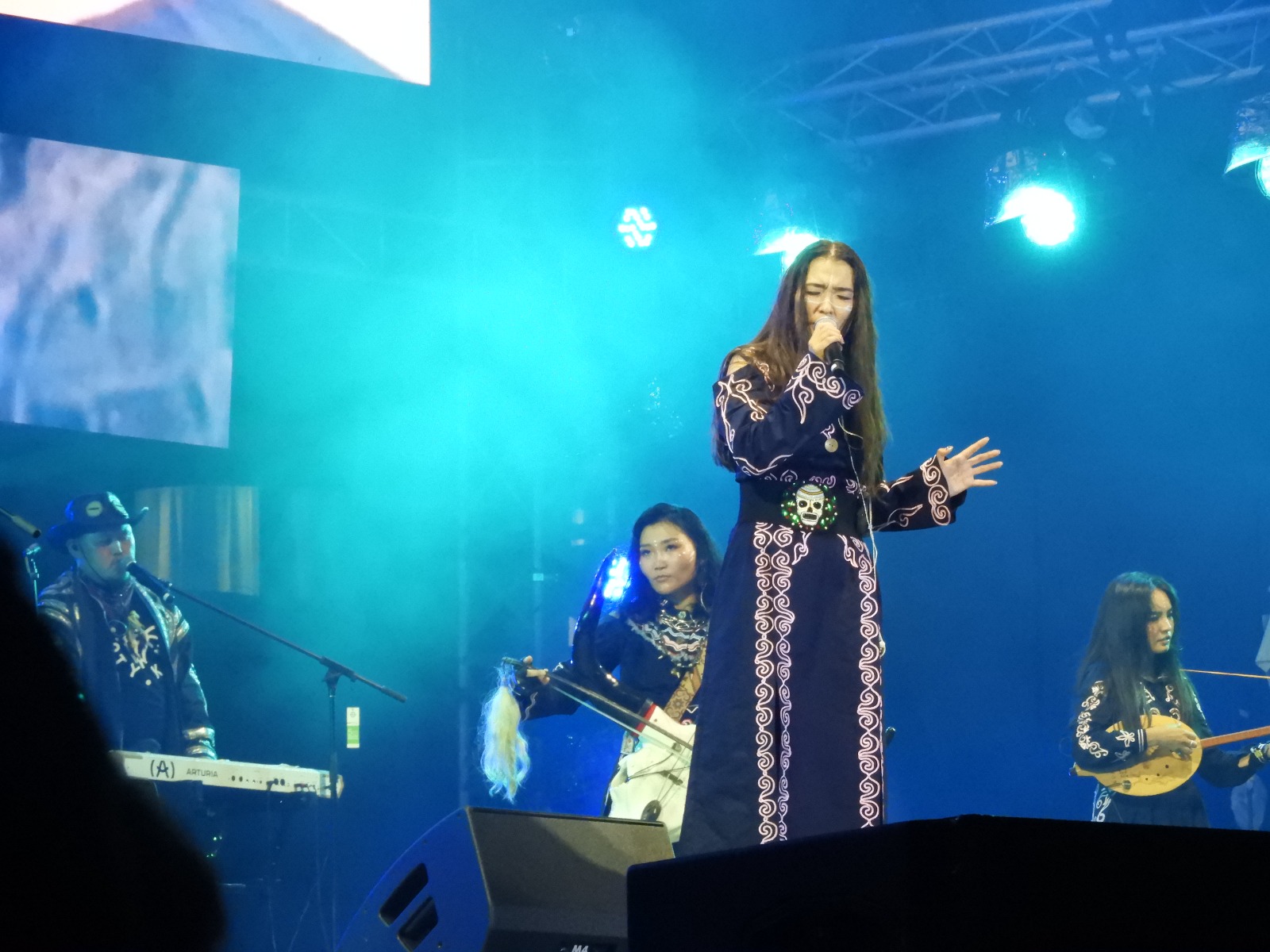

THE first night of the Rainforest World Music Festival 2025 opened with a sonic eruption, and headliner Otyken did more than just impress — they mesmerised.
Hailing from Siberia, the Indigenous group delivered a genre-bending, hour-long set that fused throat singing, tribal drums, rave synths, hip-hop beats and the unrelenting energy of a K-pop spectacle. Imagine Baby Metal colliding with Blackpink, all while channeling the ancient spirit of shamanic rituals — that was Otyken’s stage.
From the moment they opened with PHENOMENON, it was clear this wasn’t going to be a typical folk performance. Dressed in Japanese and manga-inspired costumes, the band made no attempt to blend in. Their anime visual aesthetic alone turned heads, but it was the music that held the audience spellbound.
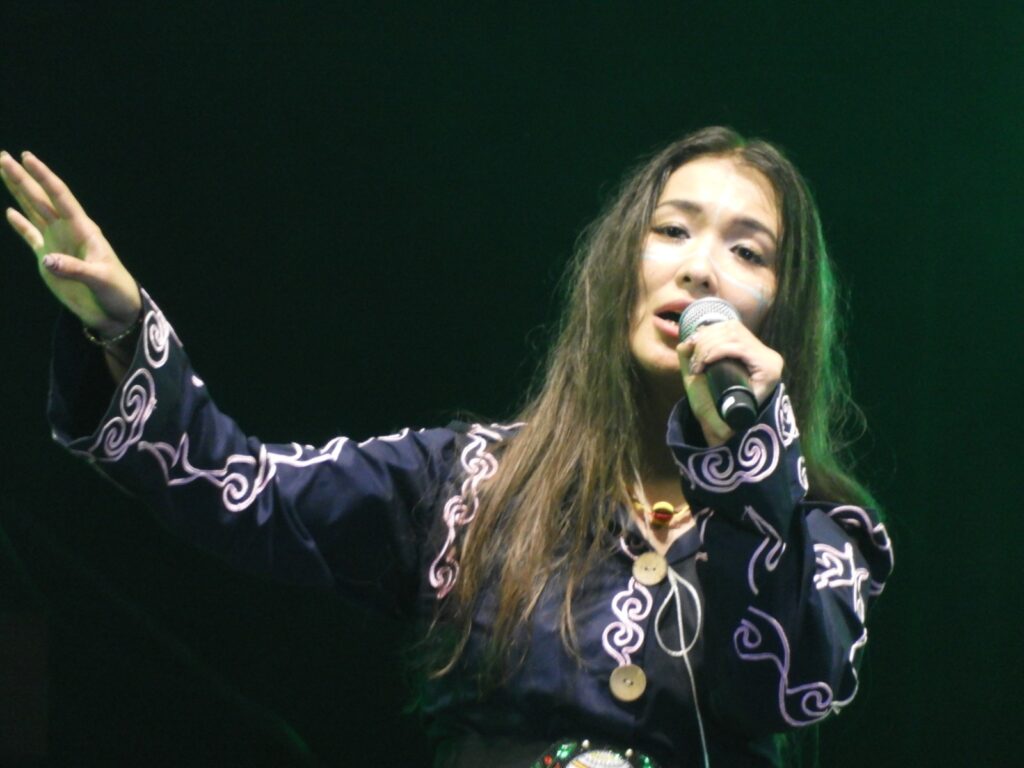
Language proved no obstacle; barely a word of English was spoken, yet the message was deeply felt. Songs like GENESIS, DAY BY DAY, and fan favourite ALTAY moved effortlessly between pulsing electronic rhythms and haunting melodies.
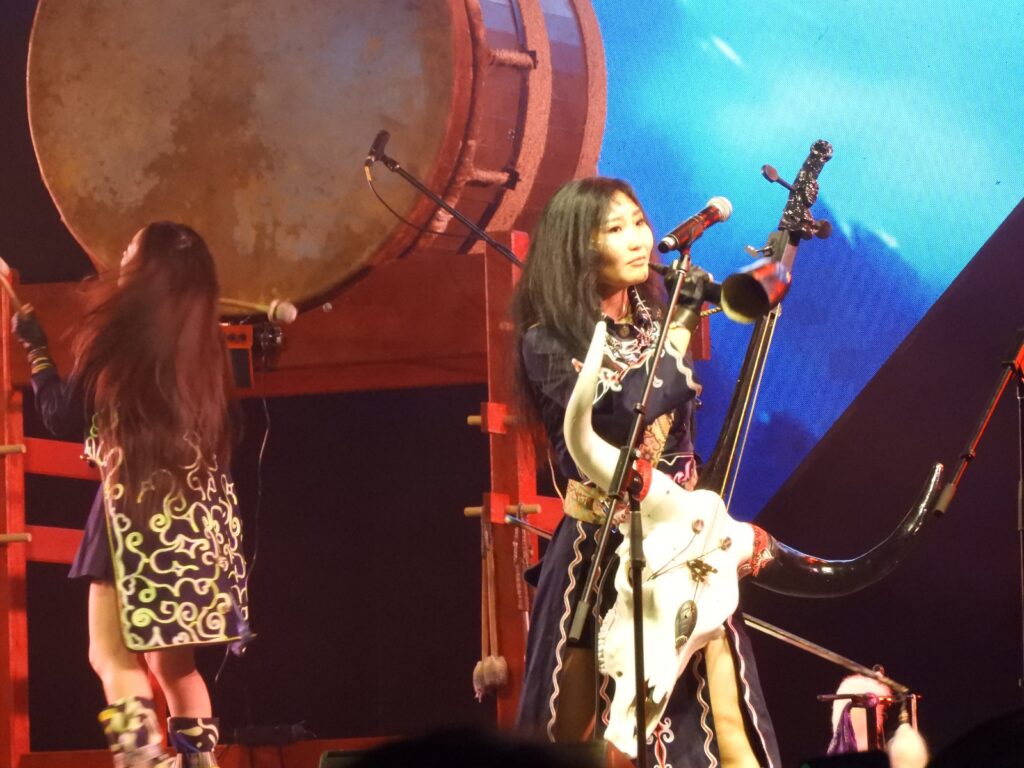
Their instruments were as unique as their sound — forget guitars and pianos. At one point, a cello-like string instrument fashioned from a replica bull skull took centre stage, producing eerie, resonant tones that echoed through the Sarawak rainforest.

The group’s throat singing — mystical, guttural, almost primal — evoked scenes straight out of Marco Polo or Vikings. It was at once ancient and futuristic, as if time itself collapsed in the vibrations of their voices.
There were barely any pauses between the 16-song set, which climaxed with explosive renditions of MAMMOTH, LORD OF HONEY, and PSYCHE. Throughout, massive barrel drums pounded a rhythm that coursed through the crowd, who danced, shouted, and stared wide-eyed in collective awe.
Highlights of their set — Legend, My Wing, and Belief — drew some of the loudest cheers, but it was the entire experience that lingered. The crowd didn’t just watch Otyken — they felt them.
While Otyken’s set was the undisputed highlight, the night also featured other captivating performances that set the tone for the weekend.
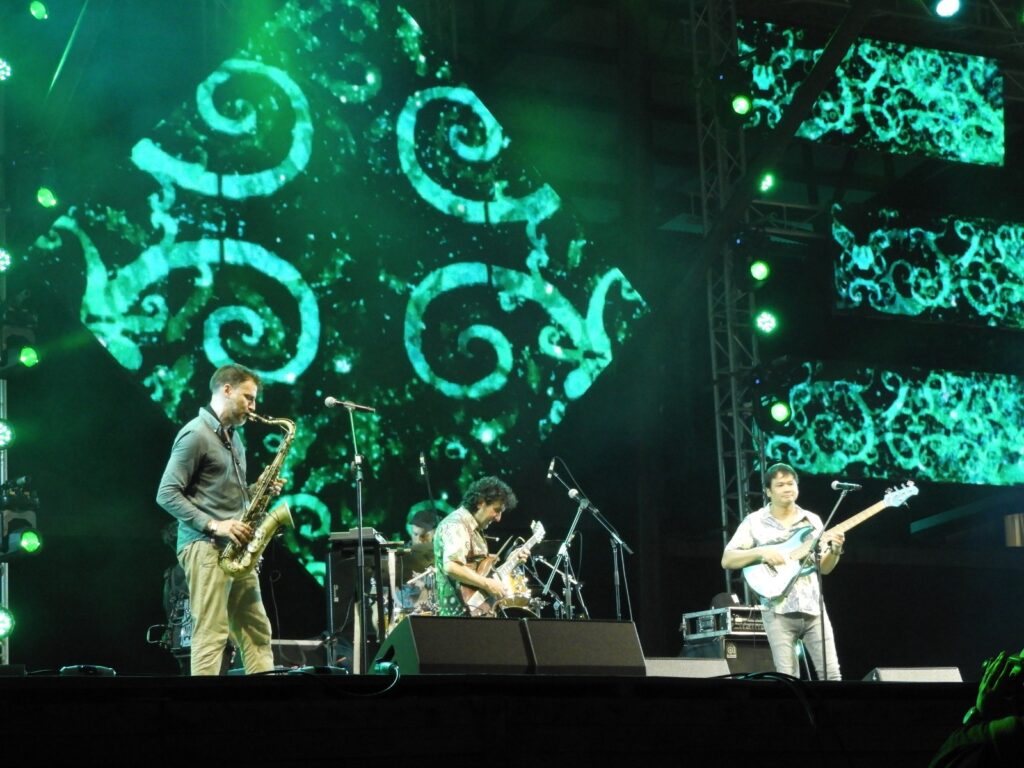
Gaga Gundul, a boundary-pushing collaboration between French electric jazz outfit Peemaï and Indonesia’s Gayam 16 gamelan collective, delivered a vibrant, groove-heavy performance.
With shimmering Javanese metallic tones layered against saxophone, electric guitar and rock rhythms, the ensemble created a soundscape that felt both mischievously playful and musically sophisticated.
Their track Merapi’s Party encapsulated their ethos perfectly: joyous, irreverent, and cross-cultural in every sense.
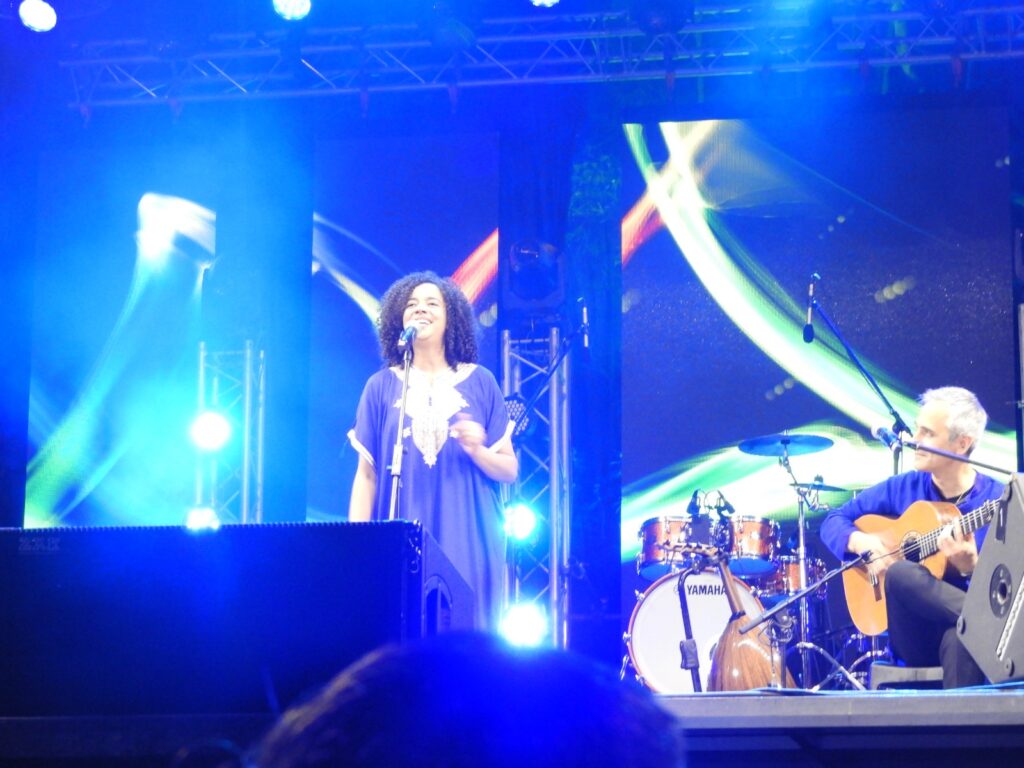
Meanwhile, Seffarine, the Moroccan-American duo of vocalist Lamiae Naki and guitarist/oud player Nat Hulskamp, offered a more intimate, meditative interlude.
Their fusion of Andalusian melodies, Persian modal structures, and jazz guitar conjured a sense of centuries-old artistic exchange. Songs such as Une Autre Chance floated through the night air with soul and elegance, echoing the historic East-West dialogue their music represents.
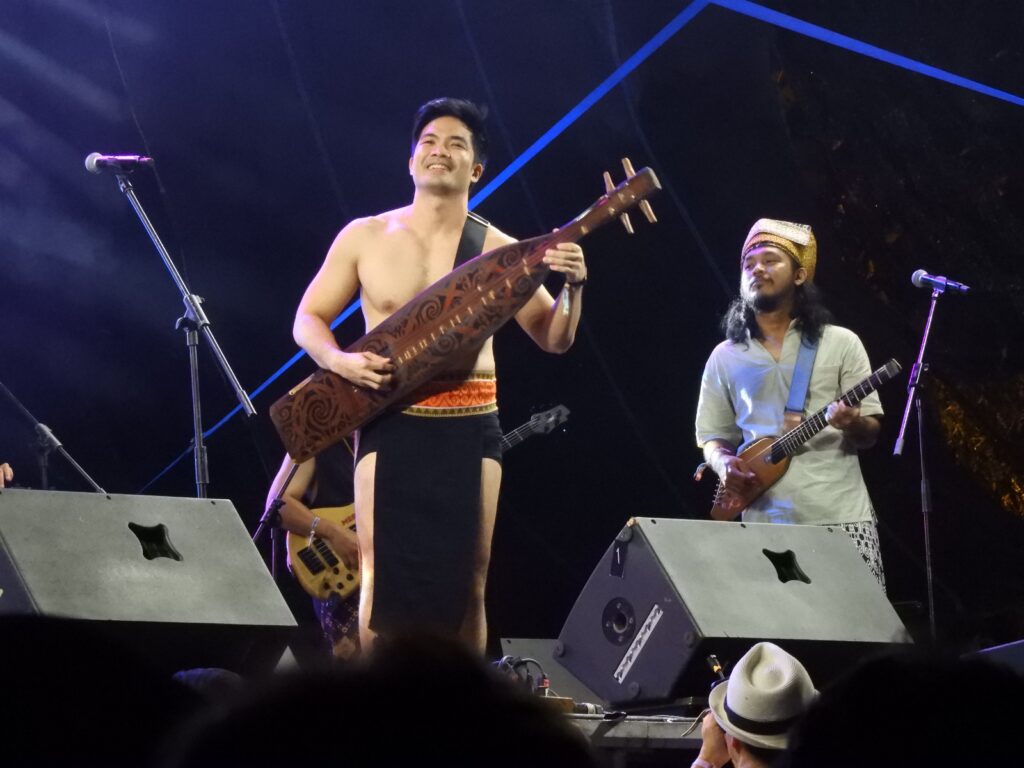
Local favourites Meruked brought their signature post-rock atmosphere to the stage, blending ambient instrumentation with the haunting tones of the sope’ — a traditional Bornean instrument. Tracks like Kining Posah carried an emotional weight, rooted in cultural memory yet forward-looking in sonic design, a testament to the band’s commitment to preserving Indigenous heritage through experimental music.
As the first night came to a close, the diversity of performances set a high bar for the rest of the weekend — from ancient chants to ambient post-rock and genre-bending gamelan-jazz — reaffirming the Rainforest World Music Festival’s reputation as one of the most eclectic and progressive festivals in the world. — June 21, 2025
A. Azim Idris is a news editor at Scoop. He has previously written extensively for music outlets such as NME, The Wknd, and TAPAUtv.