

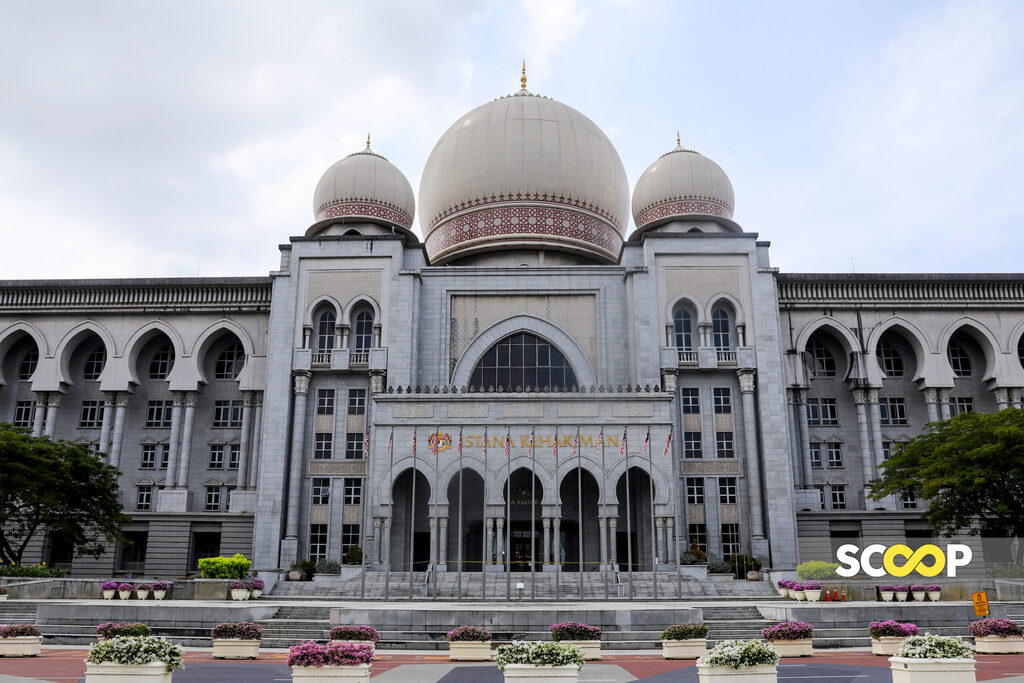

KUALA LUMPUR — As political pressure mounts in the lead-up to the retirement of Chief Justice Tun Tengku Maimun Tuan Mat on July 1, senior lawyers warned that lobbying for her extension or replacement risked turning a constitutional process into a political contest — with lasting damage to public confidence in the judiciary.
Tengku Maimun, who was appointed in 2019 as Malaysia’s first female Chief Justice, stepped down yesterday after reaching the mandatory retirement age of 66.
While the Federal Constitution allows a six-month extension with the King’s consent, the government has yet to announce its decision.
The uncertainty has fuelled lobbying and public campaigns calling for her term to be prolonged.
Joachim Xavier, senior partner at Xavier & Koh Partnership (XK Law) said the growing calls and pressure risk eroding both perception and reality of judicial independence.
“Judicial independence relies on perception as much as process. Even if the constitutional process is followed — the Prime Minister advising the King after the Judicial Appointments Commission recommendation and Conference of Rulers consultation — public confidence depends on the perception that appointments are made free from political considerations,” he said.
“If it appears that the appointment or non-extension is being swayed by political campaigns, lobbying, or populist demands, it could erode trust in the judiciary’s impartiality.”
Xavier added that Malaysia has learned from past crises how political noise can corrode institutions.
“The judicial crises in the late 1980s and early 1990s show how confrontations between the judiciary and executive can cripple institutional integrity for decades. Even today, public confidence remains fragile, especially when judges are perceived to be caught in political crossfire.”
He also cautioned that prolonging the debate damages confidence in both branches of government.
“Prolonged public or political pressure has dual and compounding effects. The judiciary may be seen as vulnerable to lobbying, or worse, as aligned with certain political agendas. Even when judges act impartially, a taint of doubt undermines their moral authority and weakens the rule of law.”
“If the Prime Minister delays action in the face of mounting pressure, it may be perceived as hesitation or political calculation. Public confidence suffers when the executive seems unable or unwilling to carry out constitutional duties promptly and transparently.”
Senior lawyer Datuk Seri Dr Jahaberdeen Mohamed Yunoos agreed that perceptions matter as much as substance.
“Not only must there not be any political or public pressure on the constitutional process, but the powers that be must also ensure that such a perception is not created,” he said.
“Perception is crucial. Justice must not only be done, but must be seen to be done.”
He stressed that any new Chief Justice must have the confidence of the legal community and the public.
“The person appointed must have judicial experience and be respected. The appointment should not sidestep seniority unless there are exceptional reasons, as it would otherwise demotivate other judges. Integrity and reputation are equally important.”

Muhamad Hisham Marzuki, President of the Muslim Lawyers Association of Malaysia, said many misunderstand the process, pointing out that the Federal Constitution does not compel extensions of a Chief Justice’s term.
“The power to grant an extension is neither mandatory nor absolute. Some groups simply do not understand how the Constitution operates,” he said.
He added that allowing the appointment process to proceed without lobbying is essential to safeguard the judiciary’s credibility.
“Some cases have already been decided based on doctrines preferred by certain groups. This should not set a precedent.
We cannot on one hand demand that the Prime Minister does not engage in judicial interference, and yet in the same breath demand that he must recommend the extension of a retiring judge.”
With Tengku Maimun’s tenure ending yesterday, legal observers say Malaysia must respect the Constitution and allow the appointment — whether it is her extension or a new Chief Justice — to proceed without political gamesmanship. — July 2, 2025