

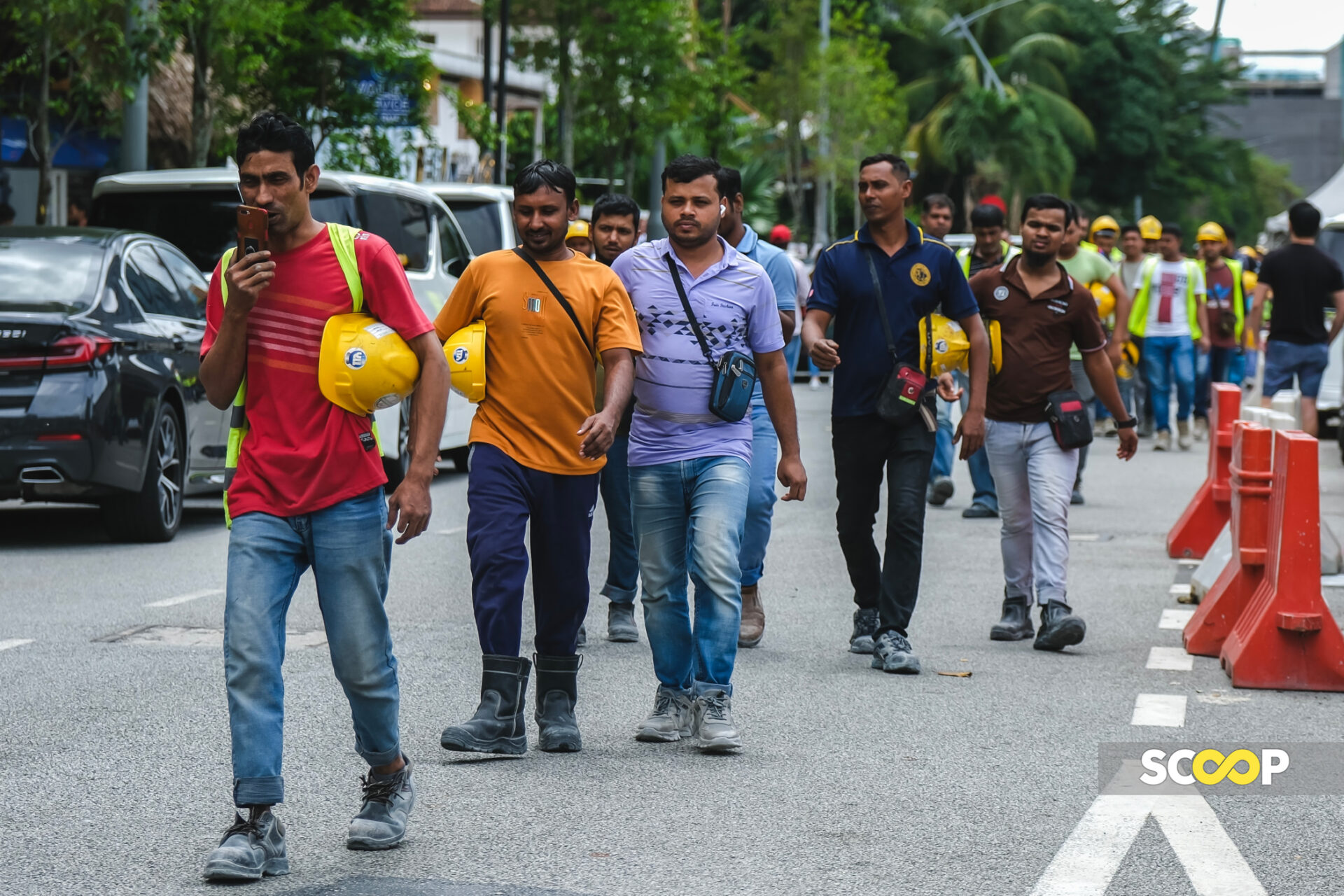

KUALA LUMPUR – On June 19, 74 Bangladeshi migrant workers were awarded over RM1.5 million in back wages after the labour office ordered their former employer, Meranti Binamas Sdn Bhd, to pay RM1.54 million.
The workers had each paid up to RM25,000 to secure jobs in Malaysia, but were left stranded without work or pay. They lived in overcrowded conditions in a hostel in Pudu, Kuala Lumpur, and endured months without income – with some reportedly experiencing suicidal thoughts.
Glorene Das, executive director of rights group Tenaganita, which handled the case, said it highlighted the urgent need for Malaysia to adopt binding, rights-based labour agreements with migrant worker source countries – not just Bangladesh, but also Nepal, Cambodia, Indonesia, India, Myanmar, and others across Southeast Asia.
“These agreements should be built on clear, enforceable obligations with mechanisms for grievance redress, ethical recruitment standards, and shared accountability between governments,” she told Scoop.
Das said existing memoranda of understanding (MoUs) are non-binding and lack enforceability, allowing abuse to thrive under a veneer of legality. She criticised the secretive nature of such agreements, which are often finalised without consultation with civil society, labour unions, or worker representatives.
“As a result, syndicates comprising politically connected recruitment agencies are awarded quotas with no due diligence,” she said.
“Many of these companies have no active operations or financial capacity, yet receive permits to bring in hundreds of workers.”
She warned that continuing with flawed MoUs risks exposing Malaysia to global scrutiny and possible sanctions, especially as forced labour practices face mounting attention worldwide. The country’s credibility could suffer, particularly among international brands seeking to avoid exploitative supply chains.
“If nothing changes, Malaysia runs the risk of becoming known as a hub for modern-day slavery, a place where migrant workers are treated as disposable, and justice is either delayed or denied. The time for reform is now, and binding bilateral agreements must lead the way,” she stressed.
Benefits of binding agreements
Das said binding bilateral recruitment agreements could replace the current system by enforcing transparency in agency selection, setting legal obligations for ethical hiring, and ensuring payment of wages and decent accommodation.
Such agreements, she added, could also establish bilateral grievance mechanisms accessible in real time and allow civil society oversight.
Her comments came in response to former Klang MP Charles Santiago’s recent call for binding agreements to end the “syndicate-styled system” of recruiting Bangladeshi workers.
Santiago, who co-chairs Asean Parliamentarians for Human Rights (APHR), said Bangladeshi migrants are forced to pay RM20,000 to RM30,000 in fees, pushing them into debt even before entering Malaysia. He said this is enabled by a “toothless” MoU that carries no penalties or risk of licence revocation.
Santiago’s remarks followed a statement by Asif Nazrul, an adviser to Bangladesh’s expatriates’ welfare and overseas employment ministry, who said on July 3 that Dhaka may impose a moratorium on sending workers to Malaysia unless the agreement is amended. The current deal allows a syndicate of agencies to dominate recruitment.
Malaysia and Bangladesh signed a recruitment MoU in 2021, effective until December 2026, which includes a list of agencies Malaysia may choose from.
Das argued that despite its proven failures, the syndicate system persists because it serves entrenched financial and political interests. It is protected by its profitability – driven by debt bondage, kickbacks, and false job promises – and the impunity enjoyed by those with political connections amid weak enforcement.
Doubts over govt’s commitment
Adrian Pereira, a migrant rights activist with the North-South Initiative (NSI), agreed binding MoUs are necessary to curb labour abuse but expressed scepticism that either the Malaysian or Bangladeshi government is ready to commit.
He noted both are “caught in a web of corruption”, pointing to Bangladesh’s 2024 request for Malaysia to arrest and extradite two Bangladeshi businessmen – Datuk Seri Mohd Amin Abdul Nor, founder of IT solutions firm Bestinet Sdn Bhd, and Ruhul Amin – over alleged money laundering, extortion, and migrant trafficking.
“Over the past years, both governments have reported irregularities in the recruitment process and visa issuance,” he told Scoop.
“These are indicators of grand corruption facilitating the movement of people into Malaysia, whether through trafficking or labour migration.”
While Pereira supports the idea of binding agreements, he said real change will only come when such agreements are tested in court or civil suits. He also criticised Malaysia’s lack of action on regional worker protection, despite holding the Asean chair.
“How serious are we as the chair of Asean? Are we just putting on a show with well-organised events? Where is the actual impact for migrant workers?” – July 12, 2025