

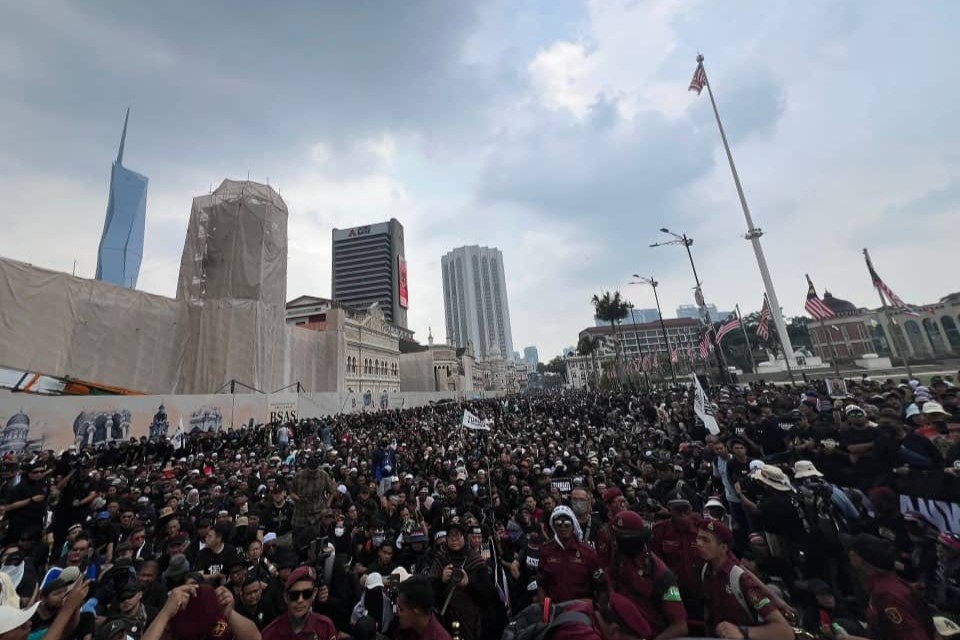

KUALA LUMPUR – The Madani government’s handling of yesterday’s “Turun Anwar” rally has drawn praise from government MPs and observers, who said it reflects Malaysia’s maturing democracy – a stark contrast to the “iron fist” approaches of the past, where rallies were often met with blockades and tear gas.
Political analyst Azmi Hassan of Akademi Nusantara said the government, particularly Prime Minister Datuk Seri Anwar Ibrahim – no stranger to street protests since the Reformasi era – did not want to be seen as “hypocritical” in its response to a rally calling for his resignation.
“Datuk Seri Anwar wants to portray that they can criticise him and demonstrate because he knows very well that he has the support of the MPs. He has a very strong support (from them),” he told Scoop when contacted.
Azmi also noted that Anwar ultimately “benefited” from the rally, with many praising the authorities for not clamping down on demonstrators.

Meanwhile, Hulu Langat MP Mohd Sany Hamzan commended the way Putrajaya, the police and Kuala Lumpur City Hall (DBKL) facilitated the protest – a clear departure from how authorities handled rallies in the past.
“We did not hear about demonstrators being hurt or shot at with tear gas or being arrested yesterday,” he told Scoop.
“This shows the practice of democracy from the prime minister and the Madani government (in action).”
Bukit Bendera MP Syerleena Abdul Rashid (DAP) told Scoop the rally was not disruptive, but rather “a reflection of a maturing democracy”.
“This government chose to respond not with force, but with composure,” she said.
PKR communications director and Deputy Youth and Sports Minister Adam Adli said the peaceful rally in the heart of the capital was “not a sign of the administration’s weakness but the strength of real democracy”.
The former student activist said Malaysia had previously experienced a time when dissent was criminalised and protests were routinely suppressed. This, he said, has shifted under the current administration.
“The Madani government created democratic spaces that are not only mere rhetoric, but were felt (in reality),” he said in a statement.
“The right to assemble has become a norm that should be respected and protected.”
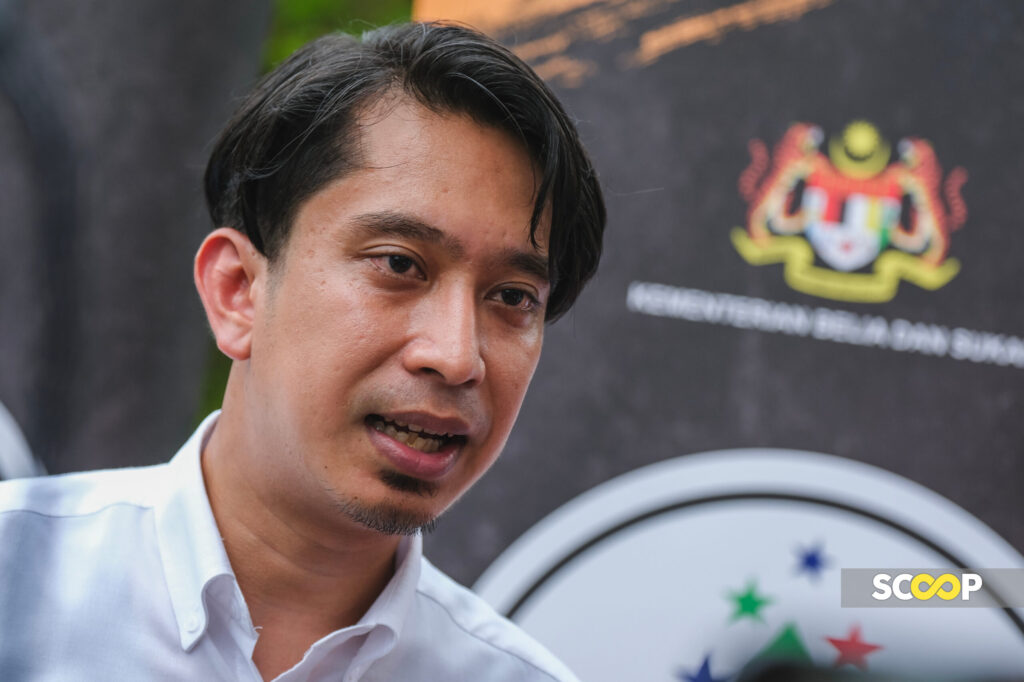
Adam stressed that PKR does not see the rally as a threat, but a symbol of political change.
“Differences in opinions should be celebrated. In a democracy, both supporting and opposing voices are important and should be protected.”
Prior to the protest, Anwar had instructed the police to extend full cooperation to ensure public safety and the smooth conduct of the rally. Transport Minister Anthony Loke also assured that LRT services in the capital would operate as usual, dismissing online claims of service disruptions.
There were no reported blockades, arrests, or deployment of riot police against protesters – a departure from how some past mass gatherings were managed. For context, previous instances include:
i. The Bersih 3.0 rally in 2012, where participants were dispersed with water cannons, tear gas, and arrests
ii. The Bersih 3.0 rally also saw police blocking access from the Pasar Seni LRT exit to the KTM station, with incidents of police brutality documented by the Bar Council
iii. The Bersih 5.0 rally in 2015, where access to Dataran Merdeka was blocked to participants
iv. The Hindraf rally in 2007, where demonstrators were met with tear gas and chemical-laced water cannons, on top of police deployed to set up roadblocks
Post-rally, organisers in past years were also frequently called in for police questioning, with the Peaceful Assembly Act 2012 used to penalise them.
Rally not a vote of no confidence against Anwar
Perikatan Nasional (PN), which organised the rally, claimed it was a vote of no confidence against Anwar. The coalition had expected a crowd of 300,000, but police estimated about 20,000 turned up.
PAS secretary-general Datuk Seri Takiyuddin Hassan insisted the rally still served as a vote of no confidence.
Syerleena, however, dismissed the claim, saying the PAS leader appeared to have confused a street protest with a parliamentary process.
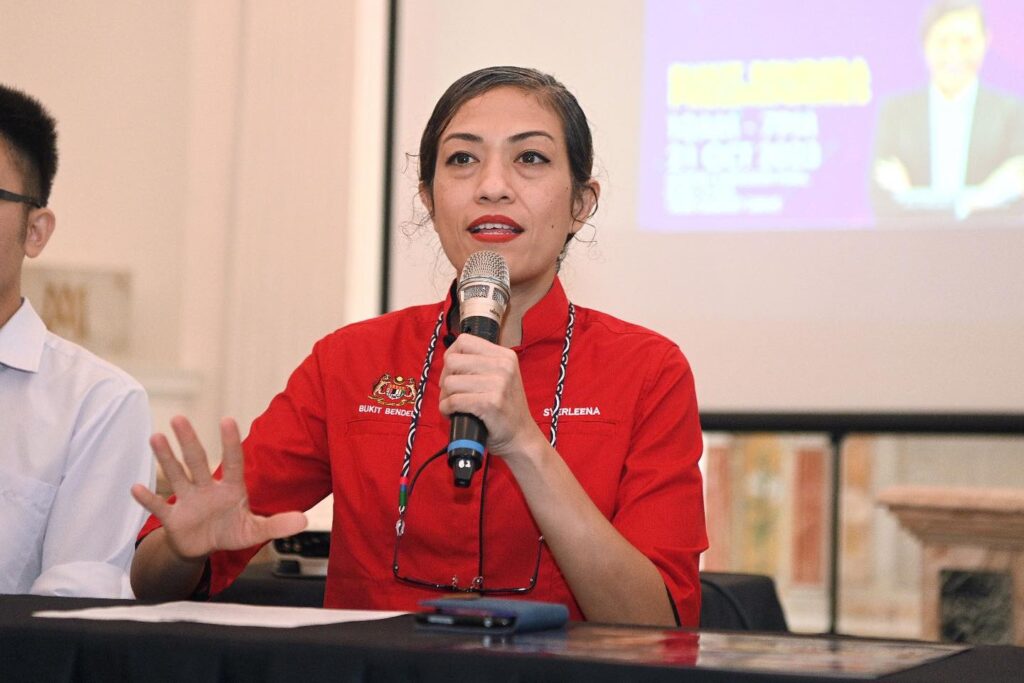
“If 20,000 protestors equals a vote of no confidence, then what do the millions who voted for the prime minister represent? By that logic, any gathering larger than a wedding reception is suddenly a referendum.
“It is a weak spin. Honestly, when one has no real alternative to offer, shouting from the sidelines is all that’s left.”
Sany agreed that while the rally was legal, it was ultimately a waste of time – especially as the government is already addressing issues raised by PN such as judicial appointments, the cost of living, petrol prices and food supply.
He also criticised the opposition for lacking a clear plan on who would replace Anwar, adding that the Yang di-Pertuan Agong had already made clear he would not tolerate moves to destabilise the government.
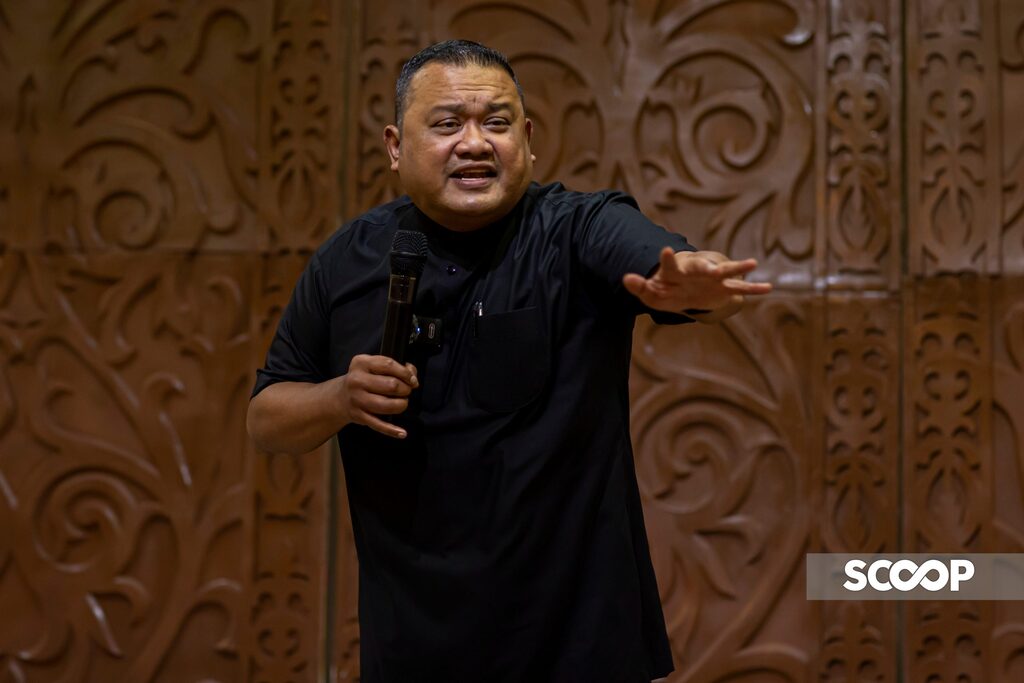
The Amanah MP also took aim at PAS for leading the protest, noting that the state governments it controls still rely on federal funds for infrastructure.
“It seems that they are trying to hide the internal tensions within PN – between PAS and Bersatu,” he said.
Adam, meanwhile, challenged PN to uphold the same democratic values they now seek to leverage.
“Can the opposition educate its supporters to be fair and literate, as well as disciplining its MPs to present better debates?” he asked. – July 27, 2025