

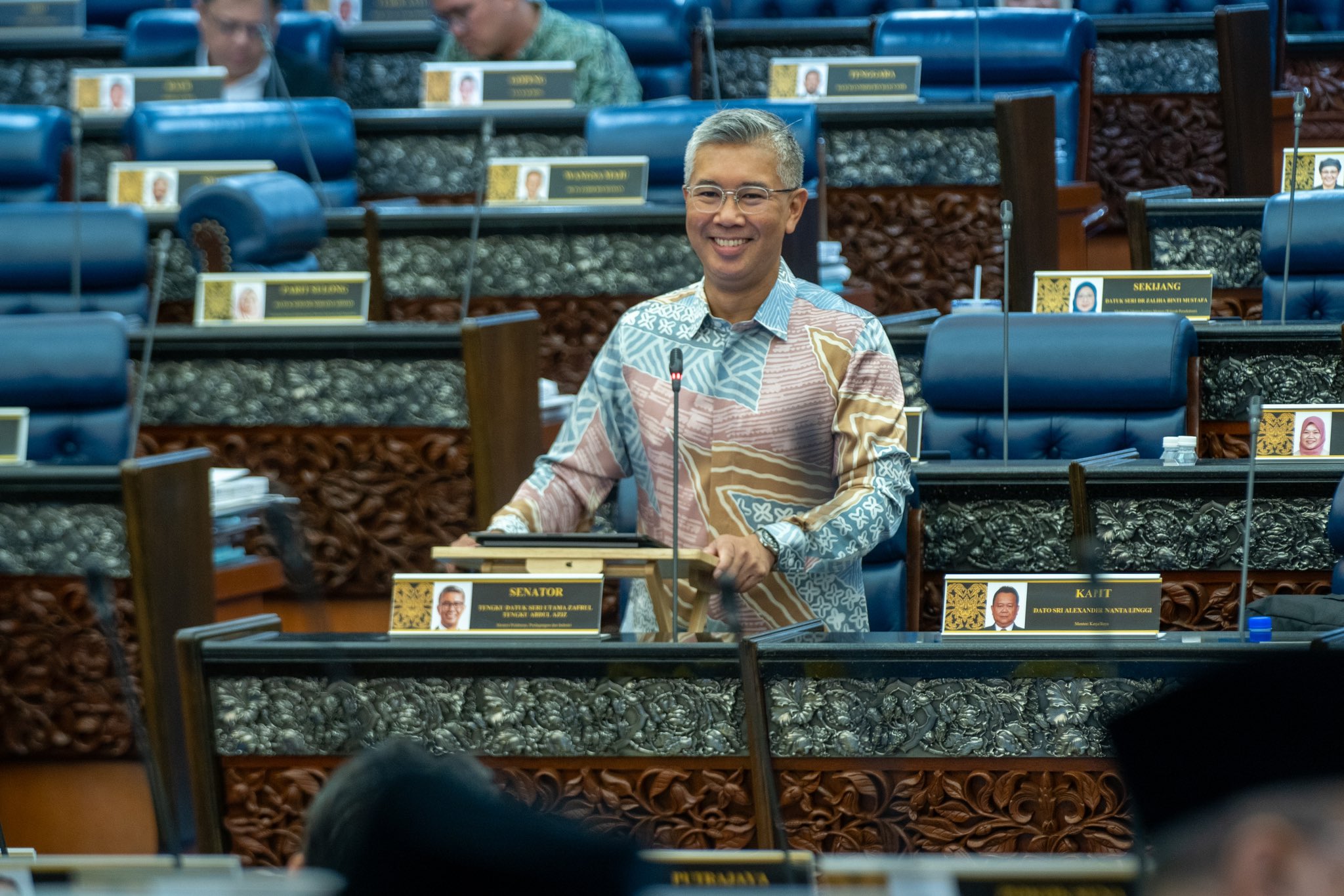
KUALA LUMPUR — The United States’ decision to lower tariffs on Malaysian exports from 25% to 19% marks a significant achievement, reflecting Malaysia’s firm and methodical approach to negotiations, said Investment, Trade and Industry Minister Datuk Seri Tengku Zafrul Abdul Aziz.
Tengku Zafrul said Malaysia had defended several “red line” items during the discussions and secured the reduced tariff rate without compromising its sovereign right to implement socio-economic policies.
“This positive outcome follows sustained engagement between both governments via various bilateral platforms, and reflects the high degree of complementarity between Malaysia and the US in trade and investment over the past 60 years,” he said in a statement.
He noted that the revised 19% rate aligns broadly with those imposed on several other Southeast Asian countries.
Malaysia’s negotiations with the US began on May 6 and concluded on July 31.
Tengku Zafrul said the Investment, Trade and Industry Ministry (MITI) had worked closely with Bank Negara Malaysia to assess how various tariff levels would impact Malaysia’s gross domestic product.
“In managing the implications of the 19% tariff, MITI will continue to coordinate with relevant ministries and agencies to mitigate the impact on exports, encourage the full utilisation of Malaysia’s 18 free trade agreements, and further diversify and expand export markets,” he said.
“At the same time, we will continue implementing industrial reform programmes in line with key national policies such as the New Industrial Master Plan 2030, the Green Investment Strategy, and the National Semiconductor Strategy — all designed to help Malaysian firms boost productivity through automation and operational efficiency.”
Tengku Zafrul acknowledged the growing uncertainty in the global economic outlook since March, citing volatile trade policies, tariff uncertainty, and rising geopolitical tensions.
“As an open and trade-dependent economy, Malaysia’s growth prospects remain closely tied to these external headwinds.
“However, we are approaching these challenges from a position of strength and resilience — underpinned by strong domestic demand and ongoing economic and industrial reforms,” he said.
He added that MITI, along with other relevant ministries and agencies, will conduct targeted outreach sessions in the coming months to brief stakeholders on the implementation of the revised US tariff rate. — August 1, 2025