


KUALA LUMPUR — Managing expectations among non-Malay communities has become one of the most delicate challenges for the Pakatan Harapan-led government, particularly as reform timelines collide with long-standing socio-economic demands, said Law and Institutional Reforms Deputy Minister M. Kulasegaran.
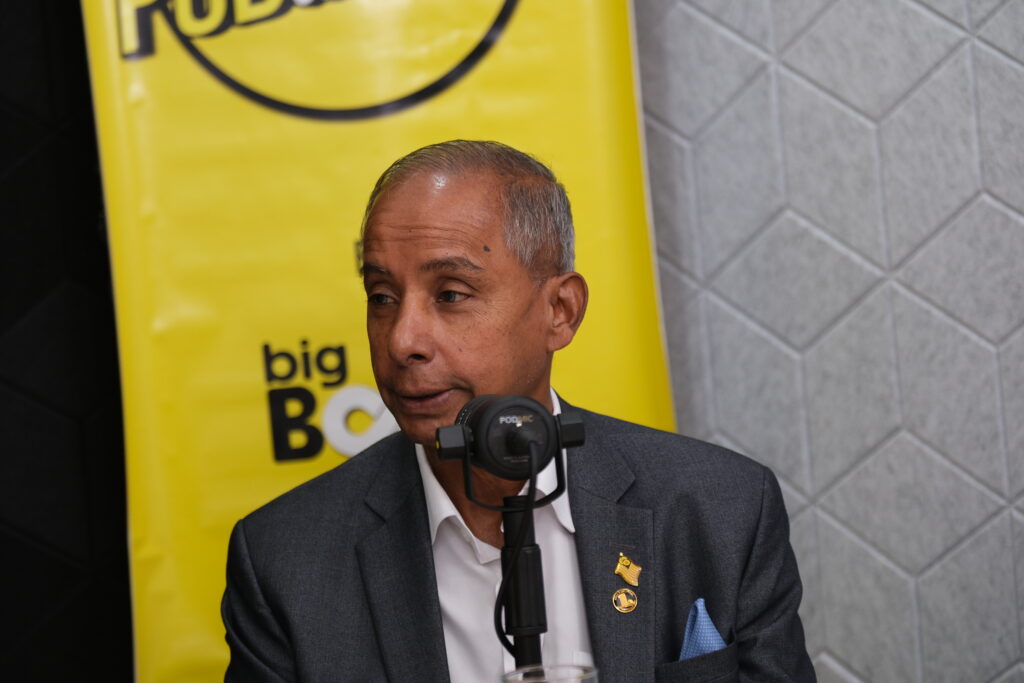
Speaking during a Trik Lama podcast episode hosted by Big Boom Media Chief Executive Officer Datuk Zainul Arifin and Group Editor-in-Chief Terence Fernandez, Kulasegaran said dissatisfaction among segments of the Chinese and Indian communities stems largely from the pace of delivery rather than the absence of policy intent.
He said expectations were set extremely high following the formation of the unity government, creating pressure on component parties to deliver immediate results on issues that have accumulated over decades.
Within the Indian community, Kulasegaran said there is a strong belief that the Malaysian Indian Community Transformation Unit (MITRA) should play a more assertive role, particularly in empowering Tamil schools and addressing grassroots concerns that go beyond infrastructure alone.
He noted that while the government has channelled resources such as smart boards and educational support to Tamil schools, political realities on the ground often shape how these efforts are perceived.
“Sometimes what is done does not translate into what people feel,” he said, adding that community politics and local narratives frequently influence public reception of government initiatives.
Kulasegaran also addressed persistent perceptions surrounding DAP, saying the party continues to face identity-based attacks despite its multi-ethnic makeup and representation across Peninsular Malaysia, Sabah and Sarawak.
He said such narratives complicate efforts to build trust across communities, especially within a coalition framework where compromises are unavoidable and policy progress is incremental.
The deputy minister said coalition governance requires balancing reform ambitions with political stability, a process that can frustrate voters who expect rapid transformation.
At the same time, he said representation within government remains important in fostering confidence among minority communities, pointing to recent Cabinet appointments as steps towards improving engagement on community-specific issues.
Kulasegaran stressed that while criticism from non-Malay voters is real and should not be dismissed, it must be viewed within the broader context of coalition politics and structural reform.
“Governing is not just about intent,” he said. “It is also about managing expectations.” – January 4, 2026