

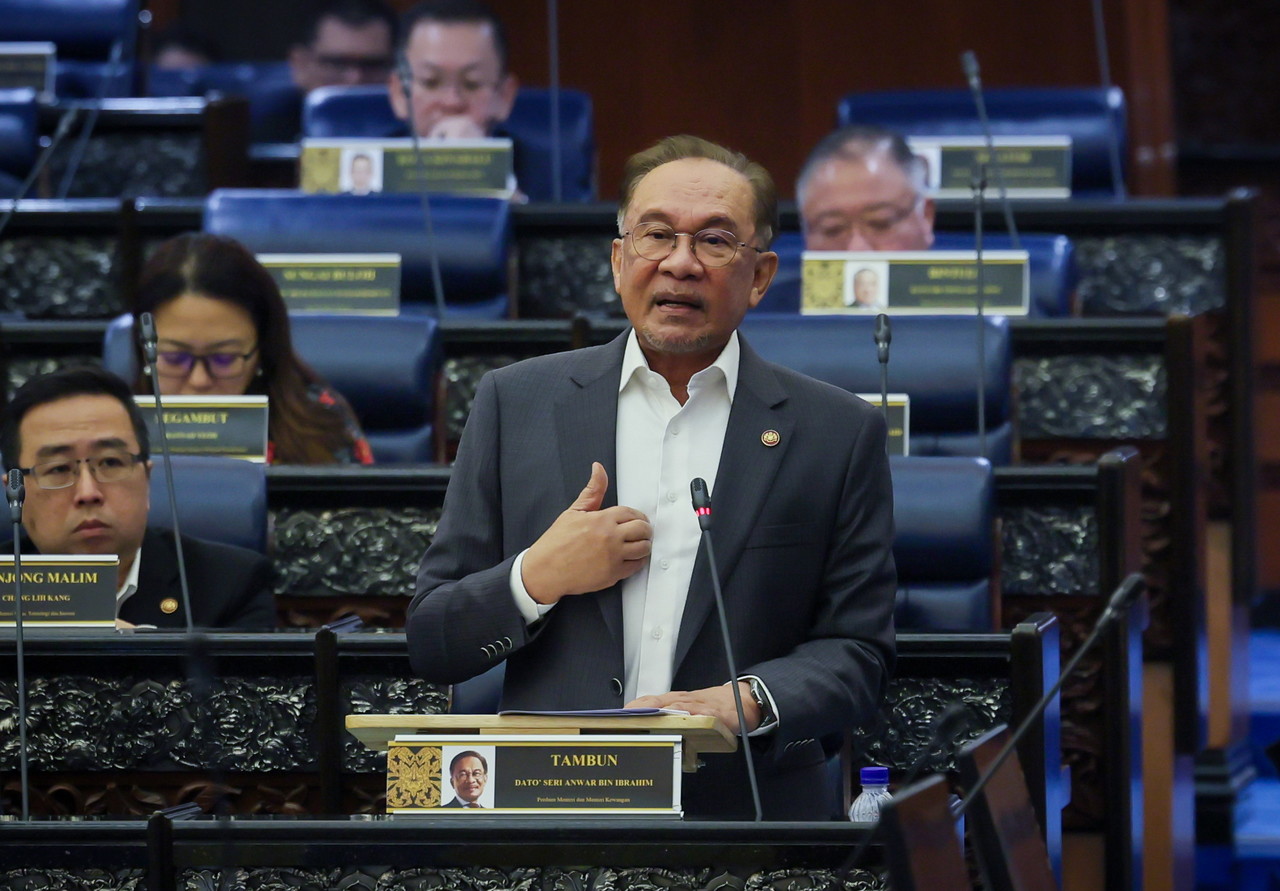
KUALA LUMPUR — The Malaysia-United States (US) Agreement on Reciprocal Trade (ART), signed during the 47th Asean Summit, has not yet come into effect, as the government is still in the negotiation phase, Prime Minister Datuk Seri Anwar Ibrahim revealed.
“The provisions under the agreement have not been enforced, as the US is still allowing room for responses, and there is no fixed timeline for the conclusion of those responses,” he said during the Ministers’ Question Time in the Dewan Rakyat today, Bernama reported.
Anwar, who also serves as the Finance Minister, was responding to a supplementary question from Ahmad Tarmizi Sulaiman (PN-Sik) on whether the ART would affect Malaysia’s sovereignty and whether a written notification about the agreement had been issued.
The Prime Minister further clarified that the government is seeking written assurances through discussions with the US Trade Representative (USTR).
“The assurances were given and recorded in the minutes of the meeting with the USTR. However, we believe those assurances should be in writing and annexed to the agreement. These have yet to be finalised,” Anwar explained.
The matter was also discussed in the Cabinet meeting and is expected to be refined by the Minister of Investment, Trade and Industry (MITI).
Anwar emphasised that the government is taking seriously concerns regarding the potential impact of the agreement on Malaysia’s domestic policies, including subsidies, strategic controls, and the country’s neutral stance. He confirmed that the issue would be reviewed in upcoming Cabinet meetings, including proposals for possible amendments or clarifications.
“I have been informed by the MITI minister that there are 35 questions that need to be addressed,” he added.
He also reassured that the drafting of national policies related to the ART does not necessitate amendments to the Federal Constitution, as the agreement does not conflict with the Constitution’s principles.
Addressing Malaysia’s broader foreign relations, Anwar acknowledged that the country faces economic and security pressures from major powers.
However, he reiterated the government’s ongoing focus on bolstering regional and international cooperation through Asean, enhancing engagement with the European Union (EU), and fostering stronger relations with countries such as Brazil, South Africa, China, Australia, and India.
“We protect our country from excessive pressure by strengthening international relations and maintaining diplomacy,” he said. – January 20, 2026